
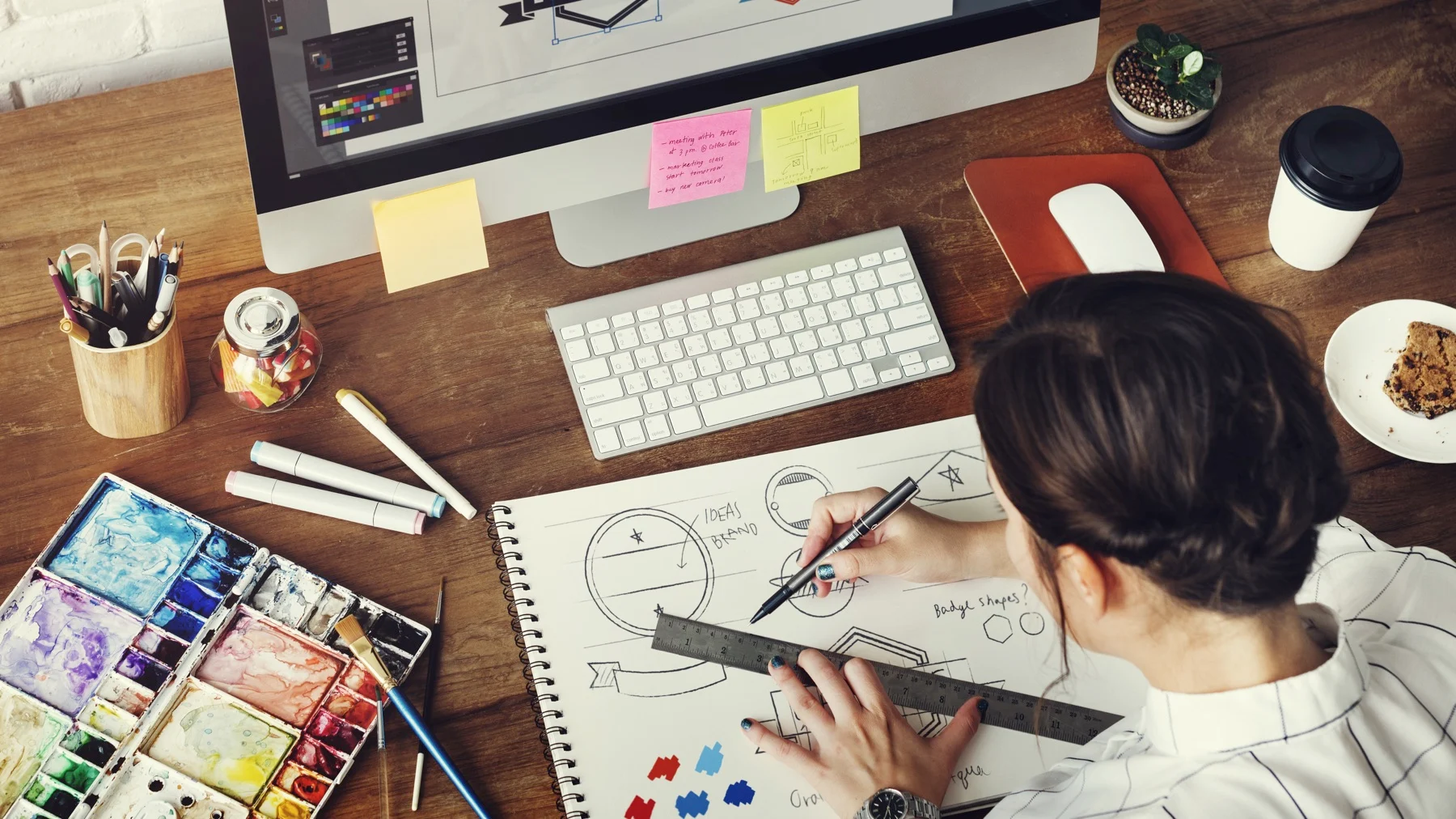
A freelance graphic designer creates visual work such as logos, social media posts, packaging, thumbnails and websites for clients, without being a full time employee of one company. Many people are drawn to graphic design because of the creative freedom, and they also want to know one thing: do graphic designers make good money? The honest answer is that it depends.
In this blog, we look at what decides a designer’s earnings, how freelance work compares with a job, and how to start as a freelance graphic designer in India in 2026.
Do Graphic Designers Make Good Money?
Graphic design pay varies widely. A beginner making social media posts for small shops earns very differently from an experienced brand designer working with large companies.
Salary surveys from sites such as Glassdoor, PayScale and Naukri give rough ranges for jobs, but they change every year and differ by city. Treat them as a starting point, not a promise, and check current listings for the roles you want.
For a freelance graphic designer, income is even less fixed, because it depends on how many clients you find, what you charge and how much time you work. The factors below explain most of the difference.
Experience and Skill Level
Experience and skill are the biggest factors. Designers who solve business problems, not just make things look nice, are usually paid more.
A strong portfolio matters more than years alone. Five excellent projects that show your thinking will win more work than fifty average ones.
Location and Clients
Employed designers in big cities often earn more than those in smaller towns, partly because of living costs and the number of companies hiring.
Freelancers are less tied to location. A freelance graphic designer in a small city can work with clients in other cities or countries, though competition on global platforms is also higher.
Industry
The industry you design for also matters. Advertising, technology, ecommerce and branding work often pays better than very small local jobs, because the design has a direct effect on the client’s revenue.
Specializations
Graphic design covers many areas: logo and brand identity, social media creatives, YouTube thumbnails, packaging, presentations, UI design and motion graphics. Specialising makes it easier for clients to remember you and easier for you to charge for expertise.
Skills that are in demand right now, such as UI design, motion graphics and short video creatives, can help you stand out.
Education and Certification
You can become a designer without a formal degree. Many successful designers are self taught or learned through online courses, as long as their portfolio is strong.
A degree or certificate can still help, especially for agency or corporate jobs where employers screen by qualification. Tool certifications, such as Adobe’s, can show proficiency with professional software.
Freelance Graphic Designer vs Full Time Job
Full time designers usually get a steady salary, paid leave and a team to learn from, but less control over projects. A freelance graphic designer gets control over clients, rates and schedule, but must also handle marketing, invoicing, taxes and slow months.
Many people start with a job or with part time freelancing, then move to full time freelancing once they have regular clients. There is no single right path.
How to Become a Freelance Graphic Designer
- Learn the fundamentals: typography, colour, layout and hierarchy, not only software buttons. The graphic design overview on Wikipedia is a good map of the field.
- Pick your tools: Canva is fine for simple work; Figma, Photoshop and Illustrator are standard for professional jobs.
- Choose a niche: for example thumbnails for YouTubers or social media posts for restaurants.
- Build a portfolio: create 6 to 10 strong sample projects and publish them on Behance, Dribbble or your own site.
- Find first clients: start with your network, local businesses and freelancing platforms.
- Set clear terms: agree on scope, revisions, deadlines and payment before you start.
To compare platforms, read our guide to the best freelancing sites for beginners.

How a freelance graphic designer sets rates
Most freelancers charge per project, per hour or through a monthly retainer for ongoing work. Per project pricing is easiest for clients to understand, while a retainer gives you steadier income.
Start by estimating the hours a job takes, the value it brings the client, and what similar designers charge. Raise your rates as your portfolio and reviews improve.
Skills clients look for in a freelance graphic designer
Clients rarely hire on software skills alone. They look for:
- Clear communication and quick replies on WhatsApp or email
- The ability to understand a brief and ask the right questions
- Reliable delivery on the agreed date
- Ready to use files in the right sizes for each platform
- Basic knowledge of marketing, so designs actually help sales
Soft skills like these often decide whether a freelance graphic designer gets repeat work and referrals.
Mistakes that hold designers back
- Working without a written agreement or advance payment
- Unlimited free revisions
- Using fonts, images or icons without the right licence
- Copying another designer’s work instead of building your own style
- Taking every type of job instead of building one clear niche
Freelance Graphic Designer Plan for Your First 30 Days
Knowing how to become a freelance graphic designer is one thing; doing the steps in order is another. This plan suits a beginner who already knows a design tool and wants a first paying client within a month or two.
Days 1 to 7: Choose a niche and study it
- Pick one type of client, such as cafes, coaching institutes, YouTubers or clothing brands
- Save 20 designs from that niche that you think work well, and note why
- List the files these clients usually need: posts, menus, thumbnails, banners or labels
- Write one line that explains what you do, for example “I design Instagram posts for local cafes”
A narrow focus makes every later step easier. As a freelance graphic designer, it is far simpler to market one clear service than a vague promise to design anything.
Days 8 to 15: Build three portfolio pieces
Create three sample projects for imaginary or real businesses in your niche. Label practice projects honestly as concept work. For each one, show the problem, two or three rough ideas, the final design and the sizes you delivered.
Explaining your thinking shows clients that a freelance graphic designer solves problems, not only decorate pages. Use your own photos, free licence images or images the client provides, never work copied from other designers.
Days 16 to 23: Put your work where clients look
- Publish the three projects on Behance or a simple portfolio page
- Update your Instagram and LinkedIn bios with your niche line and a link to your work
- Create a profile on one or two freelancing platforms, using the same samples
- Share one design tip or before and after post each week
The goal of this week is visibility. When a business owner searches for a freelance graphic designer in your niche, your work should be easy to find and easy to judge.
Days 24 to 30: Reach out personally
Send short, polite messages to 20 businesses in your niche. Mention one specific thing you noticed about their current designs and offer one idea, without criticising their work.
Many beginners skip this step and wait for clients to arrive. A freelance graphic designer who reaches out personally usually learns faster, even when most messages get no reply.
Worked Example: How to Price a Freelance Graphic Designer Project
Imagine a cafe asks for a monthly set of 12 Instagram posts. The numbers below are a method, not suggested amounts, so fill in your own rate.
- Estimate time: say 30 minutes per post for design and 2 hours for planning, feedback and exports, about 8 hours in total
- Multiply by your hourly rate: the rate you need to cover your costs, tools and living expenses
- Add a buffer: about 10 to 20 percent of the time for unexpected changes
- Consider the value: if the posts support a product launch, the work may be worth more to the client than the hours suggest
- Offer a retainer: the same set every month at a fixed fee gives both sides predictability
Write the scope clearly: number of posts, number of revision rounds, file formats and the delivery date. A freelance graphic designer who puts this in writing avoids most disputes before they start.
Free Tools for a Freelance Graphic Designer
As a new freelance graphic designer, you can start without buying expensive software. These free options are enough for many beginner projects:
- Canva free plan: quick social posts, presentations and simple print designs
- Figma free plan: layouts, UI mockups and collaborative design files
- GIMP and Krita: free, open source tools for photo editing and digital painting
- Inkscape: free vector design for logos and icons
- Google Fonts: a large library of fonts with open licences; still check the licence of each font you use
- Behance: a free place to publish case studies and be discovered
Learn the paid industry tools later if your clients ask for their file formats. Many clients care more about the result than the software you used.
Portfolio Checklist for a Freelance Graphic Designer
Before you send your portfolio to anyone, check it against this list:
- Every project shows the brief, your process and the final result
- Only your best 6 to 10 pieces are included, not everything you have made
- The work matches the niche you want to be hired for
- Each image is sharp and shows the design in a realistic setting, such as a phone screen or printed menu
- Your contact details and response time are easy to find
- You have permission to show any client work you include
A focused portfolio tells a client in a few seconds whether you are the right freelance graphic designer for their job.
Common Mistakes New Freelance Designers Make With Clients
Beyond design skill, client handling decides whether a project goes smoothly. Every freelance graphic designer learns these lessons sooner or later, and it is cheaper to learn them from a list. Watch out for these:
- Starting without a brief: always confirm the goal, audience, sizes and deadline in writing
- Sending files before payment is settled: share watermarked previews until the agreed payment is received
- Saying yes to every change: agree on revision rounds and quote separately for new work
- Disappearing during a project: a short update every few days builds trust
- Underpricing for too long: review your rates every few months as your portfolio improves
None of these mistakes needs special talent to fix, only clear habits. Treat them as part of your process, the same way you treat colour and layout.
India Specific Notes: Payments, Invoices and Taxes
Rules can change, so confirm details on official sites or with a chartered accountant before you act on them. A few basics apply to most designers working from India:
- Invoices: send a simple invoice for every project with your name, the client’s name, the work done, the amount and the payment terms
- Advance payments: many freelancers ask for part of the fee upfront and the rest on delivery
- Income tax: freelance income is taxable; you can file returns on the official Income Tax e filing portal
- GST: whether you need to register depends on your turnover and the type of clients, including foreign clients; check the official GST portal or ask a professional
- Foreign clients: use a legitimate payment method that sends money to your bank account, and keep records of every payment
Keeping clean records from the first project makes life easier as a freelance graphic designer when your work grows.
Conclusion
Graphic designers can earn well, but income depends on skill, experience, niche, clients and how well you sell your work. Experience, location, industry, specialisation, education and the choice between freelance and full time all shape the result.
Salary is important, but it is not the only factor. Many people choose to become a freelance graphic designer for the freedom and creative satisfaction, and build income steadily over time. If you want help planning design work alongside a job, our Side Hustle Success guide covers how to start and manage a side business, and our online business guide covers growing it further.
Freelance Graphic Designer FAQs
Can I start freelancing with only Canva?
Yes, for simple social media and print jobs. As you take bigger projects, learning Figma or Adobe tools will open more opportunities.
How long does it take to get the first client?
It varies. Designers who share their work regularly and reach out to local businesses usually find first clients faster than those who only wait on platforms.
Do I need a laptop?
A laptop or desktop makes professional work much easier, but many beginners start practising on a phone or tablet and upgrade later.
Is freelance graphic designer work a good career in India?
It can be a good career for people who enjoy design and are willing to handle sales, communication and admin as well. Demand exists from small businesses, creators and brands, but income is not fixed, so many people start part time before going full time.
Should I start on Fiverr, Upwork or with local clients?
Platforms help a freelance graphic designer get seen, but competition there is high. Many beginners find it easier to win the first few clients locally or through their network, then use those reviews and samples on platforms later.
How many revisions should I include?
Two rounds of revisions is a common starting point for a freelance graphic designer. Write the number in your agreement and quote separately for changes that go beyond the original brief.
How do I protect my work from being used without payment?
Share low resolution or watermarked previews during the project and send final files after payment. A short written agreement that states when ownership of the final design passes to the client also helps.
Read More: Do Graphic Designers Make Good Money?