
Google search ads are the text ads that appear above and below the normal results when someone types a query on Google, and they are run through Google Ads, the platform that was called AdWords until Google renamed it in 2018. Google Ads also runs display, video, shopping and app campaigns, but search is usually the best place for a small Indian business to start, because people are already looking for what you sell.
Creating high converting Google search ads is crucial if you want a good return on investment (ROI) from your ad budget. A high converting ad clearly communicates the value of your product or service and motivates the user to take a desired action, such as calling you, filling a form or making a purchase.
This guide covers the basics, keyword research, ad copy, landing pages and optimisation, and then sums everything up in 9 proven tips you can apply this week.
Understanding the Basics of Google Search Ads
Google search ads appear on Google’s search engine results pages (SERPs) with a small Sponsored label. They are designed to match the user’s search query and show relevant information about products or services that the person may be interested in.
Today every new text ad you create for Google search ads is a responsive search ad. You write up to 15 headlines of 30 characters each and up to 4 descriptions of 90 characters each, and Google mixes them to show the best combination for each search. The ad also shows your display URL, which takes the user to your landing page.
Assets, earlier called ad extensions, add extra information such as sitelinks, callouts, a call button, your location or prices. They make the ad bigger and more useful, and adding them costs nothing extra, because you still pay only when someone clicks.
Ad relevance and Quality Score are important factors in the success of Google search ads. Ad relevance refers to how closely the ad matches the user’s search query, and a highly relevant ad is more likely to be clicked, which can lead to a higher click through rate (CTR) and a lower cost per click (CPC). Quality Score is a 1 to 10 rating for each keyword based on expected CTR, ad relevance and landing page experience, which ties closely to user experience.
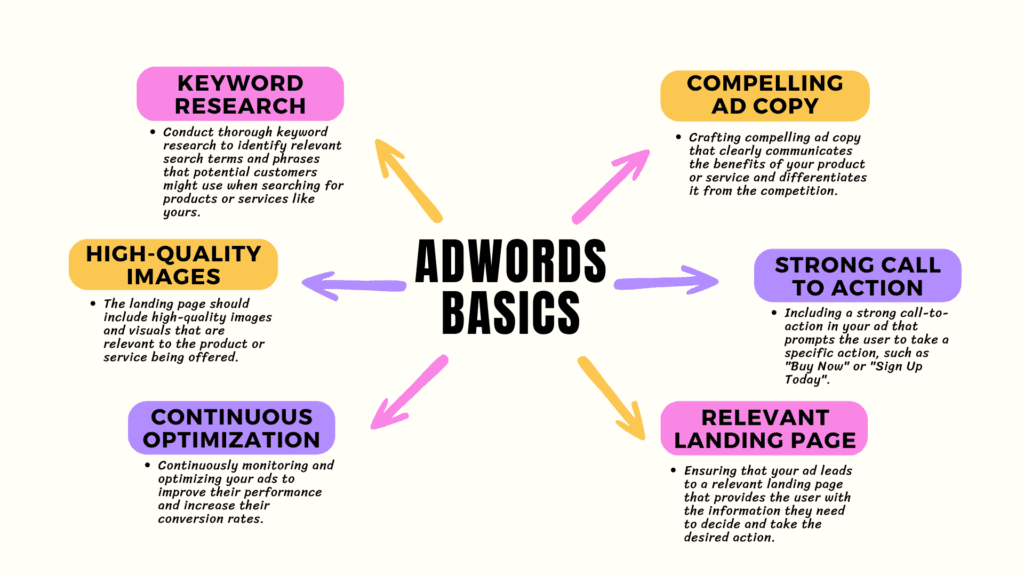
To create high converting search ads, businesses should focus on the following key elements:
- Keyword research: Find the search terms and phrases that potential customers actually use when looking for products or services like yours.
- Compelling ad copy: Write copy that clearly communicates the benefits of your product or service and sets it apart from the competition.
- Strong call to action: Tell the user exactly what to do next, such as “Buy Now”, “Book a Free Demo” or “Call Today”.
- Relevant landing page: Send people to a page that answers their search and makes the next step easy.
- Continuous optimization: Monitor your ads every week and improve what is not working.
In summary, Google search ads are a powerful way to reach people at the exact moment they are searching. By focusing on ad relevance, Quality Score and the other parts of the ad, you can improve performance and reach your marketing goals.
Keyword Research for Google Search Ads
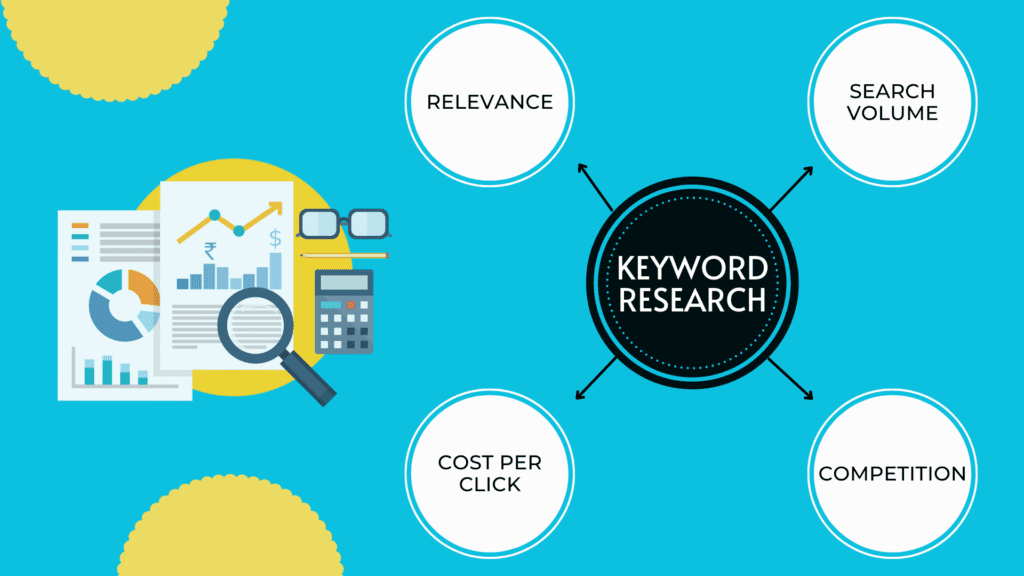
Keyword research is the first real step in building Google search ads that convert. It means finding the words and phrases potential customers use when searching for products or services related to your business, so your ads are shown to the right audience and help you drive traffic and conversions.
Useful tools include Google Keyword Planner, SEMrush, Ahrefs and Moz. Keyword Planner is free inside a Google Ads account and shows search volume, competition and rough bid ranges for India, so you can find relevant keywords and discover new opportunities.
To pick keywords that perform well, consider the following factors:
- Relevance: Choose keywords closely related to your products or services that match the intent of the search.
- Buying intent: Words like “price”, “near me”, “buy” or “best” usually signal someone ready to act, while “what is” or “free” often signals research.
- Search volume and competition: Look for terms with enough searches and a level of competition you can afford to compete in.
- Cost per click (CPC): Check the estimated bid range for each keyword and choose keywords that fit your budget.
Choose the right match type
Match types decide which searches can trigger your Google search ads. Google Ads now has three of them: broad match, phrase match and exact match.
Exact match, written in square brackets like [ca firm in pune], is the tightest. Phrase match, written in quotes, allows searches that include the meaning of your phrase, and broad match reaches the widest set of related searches. Beginners with a small budget usually do better starting with phrase and exact match, and testing broad match only after conversion tracking is working.
Add negative keywords
Along with good keywords, Google search ads also need negative keywords. These are words or phrases that are not relevant to your business or are likely to attract the wrong audience, and adding them stops your ads from showing to people who are unlikely to convert. For example, a seller of a paid course might add “free”, “pdf” and “jobs” as negatives.
To identify negative keywords, look for:
- Irrelevance: Terms that are not related to your products or services.
- Misconceptions: Terms that may be misunderstood or linked to a different type of product or service.
- Exclusions: Terms that bring irrelevant traffic or low quality clicks, which you will spot in the search terms report.
Good keyword research decides whether Google search ads reach buyers or just browsers. By finding strong keywords and blocking the wrong ones, you improve the performance of your ad campaigns and reach your target audience more effectively.
Writing Ad Copy for Google Search Ads
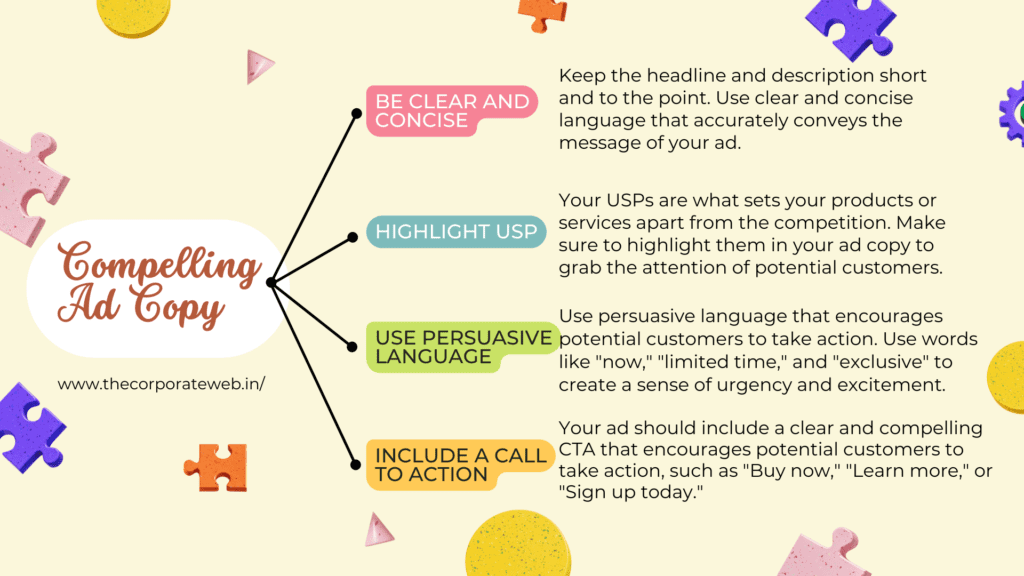
When people see your Google search ads, the headlines and descriptions are the first thing they read, so the copy must be clear and convincing. Here are some tips for writing effective headlines and descriptions:
- Be clear and concise: Keep each headline and description short and to the point, in language your customer uses.
- Highlight unique selling propositions (USPs): Show what sets your products or services apart from the competition.
- Use persuasive but honest language: Words like “now” or “limited time” create urgency, but only use them when the offer really is limited.
- Include a call to action (CTA): Add a clear CTA such as “Buy now”, “Learn more” or “Get a quote”.
- Use the keyword in a headline: Put your main keyword in at least one headline so the ad clearly matches the search.
Your USPs are the features and benefits that set you apart. For Indian businesses running Google search ads, practical USPs often work best: free delivery in your city, a GST invoice, cash on delivery, Hindi support or same day service.
Assets make your copy even stronger. Sitelinks, callouts, call assets, location assets and price assets give more information and options, which makes the ad more useful and increases the chance of action.
Fill as many headline slots as you can with genuinely different messages, because Google can only test combinations you give it. Pin a headline to a position only when it must always show, since pinning reduces the combinations Google can try.
Strong copy is crucial to the success of your Google search ads. By highlighting your USPs, using honest persuasive language and including a clear CTA, you can create ads that attract the right customers and drive conversions.
Creating Effective Landing Pages
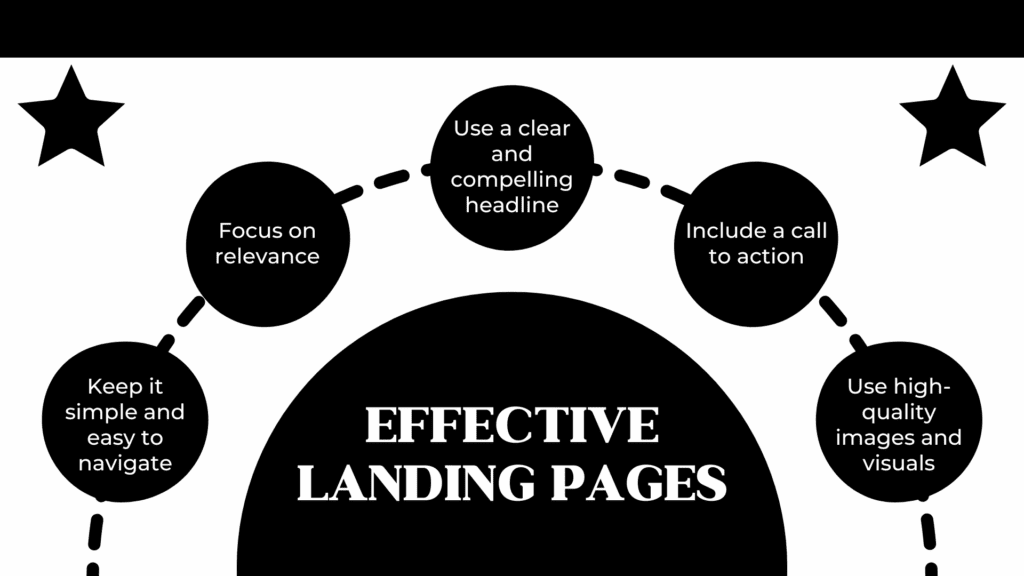
With Google search ads, the landing page users reach after clicking is just as important as the ad itself. It should match the ad and give a smooth experience that encourages conversions. Here are some tips for designing landing pages that convert:
- Keep it simple and easy to navigate: Do not overwhelm the user with too much information, and make it easy to find what they came for.
- Focus on relevance: Use the same keywords, offer and message as the ad.
- Use a clear and compelling headline: It should be consistent with the ad headline and the search.
- Include a call to action (CTA): Make the next step obvious, such as “Buy now”, “Sign up today” or “Get a quote”.
- Make it fast on mobile: Many Indian searchers use phones on mobile data, so the page should load quickly and the buttons should be easy to tap.
A/B testing the landing pages behind your Google search ads is another effective way to improve conversion rates. You create two versions of a page and see which one performs better on elements such as the headline, images or CTA.
When conducting A/B testing, test only one element at a time so you can measure the impact of each change. Run both versions at the same time so outside factors do not skew the results.
Optimizing Ad Performance
To measure the success of Google search ads, you need to understand key performance indicators (KPIs). KPIs show how well the campaign is performing and where it can improve. Here are the most useful ones:
- Click through rate (CTR): Clicks divided by impressions. A higher CTR shows the ad is relevant and engaging.
- Conversion rate: Conversions divided by clicks. A conversion can be a purchase, a form, a call or a download.
- Cost per click (CPC): What you pay on average for each click.
- Cost per conversion: What each lead or sale from Google search ads costs you, which is the number that tells you whether a campaign is worth running.
To improve CTR and conversion rates, you can:
- Refine targeting: Adjust locations, schedule and keywords so you reach the right audience with the right message.
- Optimize ad copy: Test different headlines, descriptions and CTAs to find what works best.
- Improve landing pages: Improve the design, content and CTA so more visitors take action.

Budget and bidding strategy
There is no fixed price for Google search ads. You set a daily budget, and Google charges per click based on an auction that considers your bid and your ad quality.
Start with an amount you are comfortable spending while you learn, and keep it steady for a couple of weeks so the data means something. Maximize Clicks or manual CPC are simple ways to begin, and once you have conversion tracking and some conversions, Smart Bidding strategies such as Maximize Conversions or Target CPA can set bids for you.
Ongoing testing is also important for improving the performance of Google search ads. By testing different elements and reading the data every week, you can make decisions based on facts rather than guesses, which leads to better results and a higher ROI.
9 Proven Tips for Google Search Ads
- Start with one campaign and a few tightly themed ad groups, one per product or service.
- Begin with phrase and exact match keywords, then test broad match once tracking works.
- Check the search terms report every week and add negative keywords.
- Write many genuinely different headlines in each responsive search ad, with the keyword in at least one.
- Add sitelinks, callouts and a call asset to every campaign.
- Send each ad group to the most relevant page, not just your home page.
- Set up conversion tracking before you spend serious money on Google search ads.
- Target only the cities or areas you can actually serve.
- Review Quality Score and cost per conversion regularly, and pause keywords that only spend.
For official step by step instructions on every setting, the Google Ads Help Center is the most reliable source. If you are a founder planning your first campaigns across channels, our Online Advertising for Start Ups ebook explains the wider online ad mix in simple language.
Conclusion
Creating high converting Google search ads requires a strategic approach that covers keyword research, ad copy, landing page design and ongoing optimization. Here are the key takeaways:
- Do thorough keyword research to find strong keywords and negative keywords.
- Write headlines and descriptions that highlight your USPs and include relevant keywords.
- Use assets to add useful information to every ad.
- Design landing pages that are relevant, fast and easy to navigate.
- Measure performance with KPIs such as CTR, conversion rate and cost per conversion.
- Keep testing and optimizing campaigns to improve performance and ROI.
Google Ads keeps changing, so staying up to date with new features and best practices is part of the job. By continuing to learn and experiment, you can stay ahead and run campaigns that bring real results.
Read More: The Future Of SEM: How AI And Machine Learning Are Changing The Game
FAQs About Google Search Ads
What are Google search ads?
They are text ads that appear on Google search results pages with a Sponsored label when people search for keywords you bid on. They are created and managed in Google Ads.
Is AdWords the same as Google Ads?
Yes. Google renamed AdWords to Google Ads in 2018. The search ads you create there are the same kind of ads people used to call AdWords ads.
How can I find good keywords?
Use Google Keyword Planner, which is free inside a Google Ads account, along with tools like SEMrush. Look for keywords with clear buying intent, enough searches and a cost per click that fits your budget.
What are some tips for writing ad headlines and descriptions?
Write many different headlines, use your main keyword in at least one, highlight your unique selling points and end with a clear call to action.
Why does the landing page matter?
Landing page experience is part of Quality Score, and it decides what the user does after clicking. A relevant, fast page leads to more conversions.
How can I design landing pages that convert?
Keep the page simple, match the message of the ad, make it fast on mobile, use clear images and give one obvious call to action.
Which KPIs should I track?
Track click through rate, conversion rate, cost per click and, most importantly, cost per conversion.
How much do Google search ads cost in India?
There is no fixed price. You choose a daily budget and pay per click, and the cost per click depends on competition for your keywords, your Quality Score and your bids.
What are the best practices for ongoing testing?
Test one change at a time, monitor KPIs every week, add negative keywords from the search terms report and make decisions based on data.
How can I keep learning about Google Ads?
Follow the official Google Ads Help Center, take the free Google Ads certifications on Google Skillshop and keep testing new ideas in your own account.
Read More: 7 Tips for Mastering Google Ads Campaigns