

Micro influencer marketing is one of the smartest ways for a small brand to grow on Instagram and other social platforms. The world of marketing is ever evolving, and in recent years influencer marketing has taken center stage. Brands of all sizes are tapping into the power of social media influencers to promote their products or services, but in the midst of all the buzz, many are overlooking the power of micro influencers.
What are micro influencers, you may ask? They are social media influencers with a smaller following, usually between 1,000 and 100,000 followers, and often have a highly engaged audience within a specific niche or community.
In this article, we’ll explore how micro influencer marketing can boost your brand, and why you should consider incorporating them into your marketing strategy.
What Is Micro Influencer Marketing?
Micro influencer marketing means partnering with creators who have a smaller but loyal audience to promote your product, service or brand. Instead of paying one celebrity for a single post, you might work with several niche creators who speak directly to your ideal customers.
For Indian brands this is especially useful because audiences are spread across many languages, cities and interests. A food creator in Pune or a fitness creator posting in Tamil can reach exactly the people a local brand wants.
The Benefits of Micro Influencer Marketing
You may be thinking, “Why should I bother with micro influencers when there are mega-influencers with millions of followers out there?” The truth is, micro influencers have unique benefits that larger influencers rarely offer.
Here are a few reasons why micro influencers may be the perfect fit for your brand:
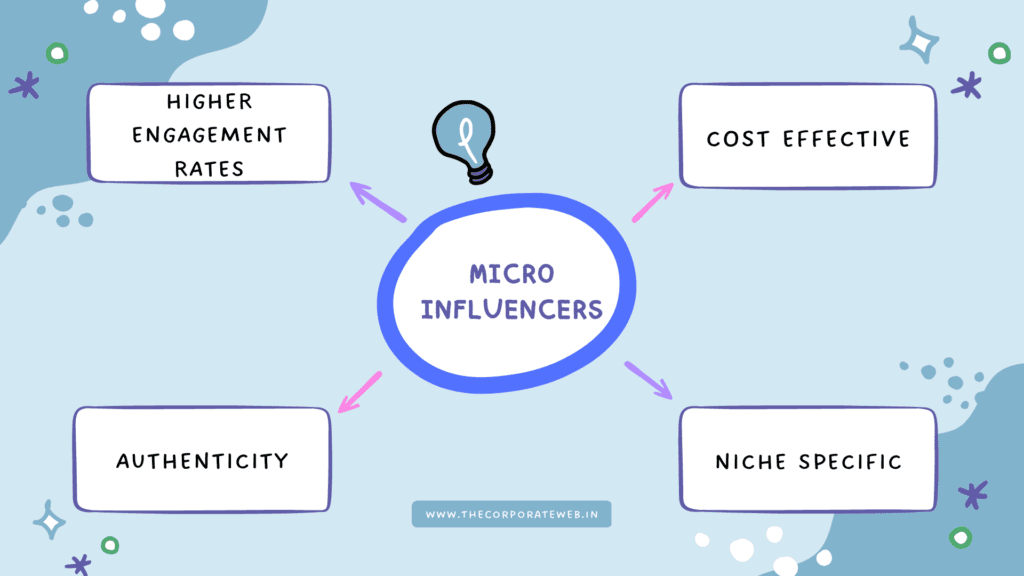
- Higher engagement rates: Micro influencers have a highly engaged audience that trusts and values their opinions. With a smaller following, they are able to engage with their audience on a more personal level, and their followers are more likely to interact with their content.
- Cost-effective: Since micro influencers have a smaller following, they often charge lower rates than larger influencers. This makes them a more cost-effective option for brands with smaller budgets.
- Authenticity: Micro influencers often have a more authentic and genuine relationship with their audience. They are viewed as “real people” rather than celebrity figures, and their followers often trust their opinions more than those of larger influencers.
- Niche-specific: Micro influencers usually have a more defined niche or community they are a part of. This makes them an ideal choice for brands targeting a specific audience or looking to break into a new market.
How to Find the Right Micro Influencers
Now that you know the benefits of micro influencer marketing, the next step is finding the right ones for your brand. Here are a few tips to help you find the right micro influencers:
- Research: Start by researching influencers within your industry or niche. Look for influencers who have a smaller following but high engagement rates.
- Use influencer marketing tools: There are several influencer marketing tools available that can help you find micro influencers in your industry. Some popular tools include BuzzSumo, Hootsuite, and Upfluence, and Instagram’s own search and hashtags work well for a first list.
- Check their engagement rate: When considering micro influencers, it’s important to look beyond their follower count and check their engagement rate. A high engagement rate indicates a more active and engaged audience.
- Analyze their content: Make sure to review the content the influencer shares to ensure that it aligns with your brand values and messaging.
How to Work with Micro Influencers
Micro influencer marketing works a little differently from campaigns with larger influencers, but the process is still relatively simple. Here are a few tips to keep in mind when working with micro influencers:
- Be clear about expectations: Make sure to clearly communicate your expectations for the collaboration with the influencer, including the type of content you want them to create and any deadlines.
- Give creative control: Micro influencers often have a unique perspective and creativity, so be open to their ideas and suggestions. Giving them creative control can lead to more authentic content that resonates with their audience.
- Offer compensation: While micro influencers may charge lower rates, it’s still important to compensate them for their time and effort. You can offer payment, free products or services, or other incentives to show your appreciation.
- Build a long-term relationship: Consider building a long-term relationship with micro influencers who align with your brand values and messaging. This can lead to ongoing collaborations and more authentic content that resonates with their audience.
How to Calculate Engagement Rate: A Worked Example
Engagement rate tells you how actively an audience responds, which matters more than follower count. A simple way to calculate it is to add likes, comments and saves on recent posts, divide by followers, and multiply by 100.
Here is an illustrative example. A creator has 20,000 followers, and her last ten posts averaged 600 likes, 40 comments and 60 saves, so 700 interactions divided by 20,000 gives 3.5%.
Compare creators in the same niche using the same method and the same number of posts. In micro influencer marketing, consistent engagement across many posts is a better sign than one viral video.
How to Spot Fake Followers and Inflated Numbers
- Sudden jumps in followers with no viral post to explain them.
- Comments that are generic, such as nice pic or emoji only, from accounts with no posts.
- A large share of followers from countries where the creator has no audience reason to be popular.
- Very high likes but almost no comments, saves or shares.
Ask creators for screenshots of their Instagram insights, including audience location and age range. Genuine creators are usually happy to share them, which makes vetting much easier.
How to Reach Out to Micro Influencers
A short, personal message works better than a long copied pitch. Mention a specific post you liked, explain who you are, and say clearly what you are proposing.
A simple outreach outline looks like this:
- One line about why you liked their content.
- One line about your brand and product.
- What you would like them to create, and by when.
- What you are offering in return, such as payment, products or both.
- A friendly line inviting questions.
Send messages from your brand account and follow up once after a few days if there is no reply. Respectful outreach is the foundation of long lasting micro influencer marketing relationships.
What to Include in a Creator Brief
A clear brief prevents confusion and saves rounds of revisions. Keep it to one page.
- Goal: Awareness, website visits, app installs or sales.
- Key message: One or two points you want viewers to remember.
- Deliverables: Number of Reels, stories or posts, with formats and lengths.
- Timeline: Draft date, approval date and posting date.
- Disclosure: The required paid partnership label and an #ad or #collab tag.
- Dos and do nots: Claims to avoid, competitor mentions and any brand guidelines.
- Tracking: The unique link or discount code for each creator.
Leave room for the creator’s own style. A brief that controls every word usually produces content that feels like an advertisement rather than a recommendation.
Micro Influencer Marketing on Instagram: Rules in India
Instagram is the main platform for micro influencer marketing in India, and paid posts must be clearly disclosed. Instagram offers a “Paid partnership” label for branded content, explained in the Instagram Help Center.
In India, the Advertising Standards Council of India (ASCI) also has guidelines for influencer advertising that require a clear disclosure label such as #ad or #collab on promotional posts. You can read them on the ASCI website.
Clear disclosure protects your brand, keeps the creator safe and builds trust with followers, so include it in every brief.

How to Measure Micro Influencer Marketing Results
- Set one goal per campaign: awareness, website visits, app installs or sales.
- Give each creator a unique link or code: this shows which partnership actually drove results.
- Track saves, shares and comments: these show genuine interest better than likes alone.
- Compare cost per result: divide what you spent by the visits or sales each creator delivered.
Start with a small test, keep the creators who perform well and build longer partnerships with them. Over a few months, micro influencer marketing becomes a steady channel instead of a one time experiment.
If you also want to grow your own brand page alongside creators, our Instagram Mastery guide covers content, reels and growth basics. For ready ideas, read Instagram business marketing reels ideas.
Micro Influencer Marketing Agreements: What to Agree in Writing
Even small micro influencer marketing deals deserve a written agreement, whether a simple email or a formal contract. It protects both the brand and the creator.
- Deliverables, formats and posting dates.
- Payment amount or product value, and when it will be paid.
- Usage rights, such as whether the brand can reuse the content in ads or on its website, and for how long.
- Disclosure requirements in line with ASCI guidelines.
- What happens if the post is delayed or removed.
Clear terms are especially important when you repurpose creator content in paid ads, so agree on this before the campaign starts.
Budget Options for Small Brands
Budgets for micro influencer marketing vary widely by niche, city, platform and the creator’s experience, so there is no standard rate card. Ask each creator for their rates and compare them with the value of the audience they bring.
- Product barter: The creator receives your product in exchange for honest content. This suits low cost products and first tests.
- Fixed fee: You pay an agreed amount for agreed deliverables, which gives you more say over timing and format.
- Commission or affiliate: The creator earns a share of sales made through their link or code.
- Hybrid: A smaller fixed fee plus commission, which rewards both effort and results.
Whatever model you choose, agree it in writing and pay on time. Many brands start micro influencer marketing with product barter for small tests, then move to paid partnerships once a creator proves results.
Free products given for promotion still count as a material connection under ASCI guidelines, so disclosure is needed in every model.
Common Micro Influencer Marketing Mistakes
- Choosing creators only by follower count and ignoring audience fit.
- Sending the same generic message to dozens of creators.
- Skipping disclosure, which risks complaints and damages trust.
- Running one post and judging the whole channel on it.
- Paying late, which quickly spreads a bad reputation among creators.
- Not tracking links or codes, so results cannot be measured.
Fixing these mistakes often does more for micro influencer marketing results than increasing the budget.
A 30 Day Micro Influencer Marketing Plan
Week 1: Define and Search
Set one goal, write the brief and make a list of twenty creators whose audience matches your customers. Check engagement and audience insights for each. A careful shortlist is where good micro influencer marketing begins.
Week 2: Outreach
Send personal messages to your shortlist and agree terms with the best five to ten. Share the brief, tracking links and disclosure requirements.
Week 3: Content and Posting
Review drafts quickly, give helpful feedback and let creators post on agreed dates. Reshare their content on your own account where allowed.
Week 4: Measure and Decide
Compare results by creator using your links and codes. Keep the strongest partners for longer collaborations and test a few new creators next month.
Running this cycle a few times turns these partnerships from a one time test into a dependable part of your marketing plan.
Conclusion
The power of micro influencer marketing is not to be underestimated. Micro influencers have unique benefits that larger influencers rarely offer, including higher engagement rates, authenticity, and niche-specific audiences.
By following the tips in this article, you can find and work with the right micro influencers to boost your brand and reach new audiences. Don’t overlook the power of small when it comes to influencer marketing.
Read More: 5 Secrets To Successful Influencer Marketing Campaigns
FAQs Related To Micro Influencers
How many micro influencers should I work with?
The number of micro influencers you work with depends on your budget and marketing goals. Consider starting with a few influencers to test the waters and see what works best for your brand.
How can I measure the success of micro influencer marketing?
It’s important to establish clear goals and metrics before starting a campaign. You can measure success by tracking engagement rates, website traffic, sales, and brand awareness.
How do I ensure that the content created by micro influencers aligns with my brand values and messaging?
Before working with micro influencers, make sure to review their content to ensure it aligns with your brand values and messaging. You can also provide them with guidelines and specific messaging to ensure that the content they create is on-brand.
Read More: Micro influencer marketing: The future of digital marketing