


Are you tired of feeling like every search engine marketing (SEM) ads campaign needs more and more money just to stay afloat? Let me tell you the truth, you’re not alone.
Many businesses struggle with finding ways to boost their SEM efforts without breaking the bank. But fear not, because, with the usage of the right strategies and tactics, you can grow your campaigns without sacrificing your budget. In this article, we’ll go over simple, tested steps to scale a Google Ads campaign effectively and efficiently, even on an Indian small business budget.
Understanding the Basics of an SEM Ads Campaign
Before we dive into the specifics of scaling your SEM campaigns, it’s important to understand the basics of SEM. SEM is a type of digital marketing that involves placing ads on search engine results pages (SERPs) to drive traffic to your website.
This can include paid search ads, display ads, and other forms of advertising. SEM is a highly effective way to reach potential customers and increase your website’s visibility.
Creating a Strong Foundation for Your Ads Campaign
Before you start scaling any ads campaign, make sure you have a strong foundation in place. This means having a well-designed website, targeted keywords, and a clear understanding of your target audience.
Without these elements in place, your SEM campaigns are likely to fall flat. Here are some tips for creating a strong foundation for your SEM campaigns:
1. Design a User-Friendly Website
Your website is the backbone of your SEM campaigns. If your website is poorly designed or difficult to navigate, visitors are unlikely to stick around.
Make sure your website is user-friendly and easy to navigate. This includes having clear calls-to-action (CTAs), easy-to-use forms, and a mobile-responsive design.
2. Conduct Keyword Research
Keyword research is an essential part of any search ads campaign. It involves identifying the keywords and phrases that your target audience is using to search for products or services like yours. Use a keyword research tool like Google Keyword Planner to identify relevant keywords and phrases.
3. Understand Your Target Audience
To create effective SEM campaigns, you need to understand your target audience. This includes knowing their demographics, interests, and pain points. Use tools like Google Analytics and Facebook Insights to gather data about your audience.
Tips for Scaling Your Google Ads Campaign
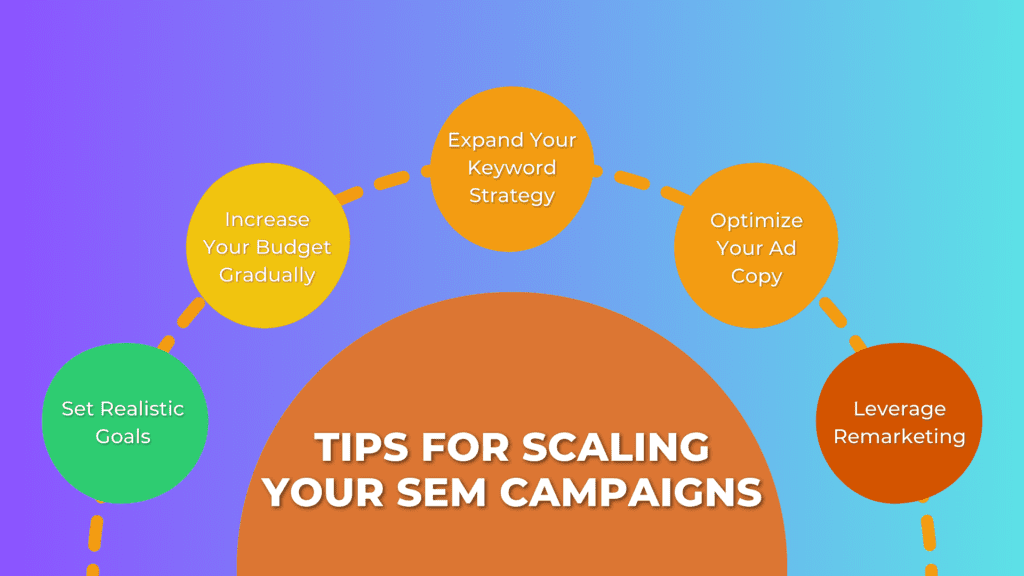
Now that you have a strong foundation in place, it’s time to start scaling your SEM campaigns. Here are some tips for doing so effectively:
1. Set Realistic Goals
Before you scale an ads campaign, set realistic goals. Determine what you want to achieve with your campaigns and set specific, measurable goals. This will help you stay focused and track your progress over time.
2. Increase Your Budget Gradually
One of the biggest mistakes businesses make when scaling their SEM campaigns is trying to do too much too quickly. Instead, increase your budget gradually over time.
This will help you identify what works and what doesn’t, and make adjustments accordingly. A practical habit is to raise the daily budget of a winning campaign in small steps, then give the numbers several days to settle before the next raise.
3. Expand Your Keyword Strategy
As you scale your SEM campaigns, it’s important to expand your keyword strategy. This means targeting more keywords and phrases that are relevant to your business. Use a tool like SEMrush or the free Google Keyword Planner to find new keyword opportunities, and check the search terms report of your current ads campaign for real phrases people already typed.
4. Optimize Your Ad Copy
Optimizing your ad copy is essential when scaling your SEM campaigns. Make sure your ad copy is relevant, compelling, and tailored to your target audience.
Use A/B testing to identify which ad copy performs best. Keep at least two strong ad variations running in each ads campaign so you always have a winner to learn from.
5. Leverage Remarketing
Remarketing is a powerful tool for scaling your SEM campaigns. It involves targeting users who have already interacted with your website or ads. This can include targeting users who have abandoned a shopping cart or visited a specific page on
your website. Remarketing allows you to stay top-of-mind with potential customers and can be highly effective in driving conversions.
6. Utilize Ad Extensions
Ad extensions are additional pieces of information that can be included in your search ads. They can include things like location information, phone numbers, and links to specific pages on your website.
Ad extensions, now called assets in Google Ads, can help increase the visibility of your ads and improve their relevance to potential customers. They cost nothing extra to add, so every ads campaign should use sitelinks, callouts and a call asset where they fit.
7. Monitor and Adjust Your Campaigns
As you scale your ads campaign, monitor its performance closely. Use tools like Google Analytics and SEMrush to track your campaigns and identify areas for improvement. Make adjustments as needed to improve their effectiveness and drive better results.
How to Scale an Ads Campaign Step by Step
Scaling works best as a routine rather than one big decision. Follow these steps in order and change only one thing at a time.
Step 1: Confirm Your Conversion Tracking
Set up conversions in Google Ads with the Google tag, or import them from Google Analytics 4, and test them with a real enquiry or order. If tracking is wrong, every decision you make about the ads campaign after that will be wrong too.
Step 2: Find Your Break Even Cost per Conversion
Work out how much you can afford to pay for one lead or sale and still make a profit. This number tells you whether a campaign deserves more budget.
Step 3: Pick the Campaign to Grow
Choose the ads campaign with steady results and a cost per conversion below your break even number. Leave weak campaigns alone until you have fixed them.
Step 4: Raise the Budget in Small Steps
Increase the daily budget a little at a time and watch the cost per conversion for several days after each change. If it rises sharply, go back to the previous budget and look for the cause.
Step 5: Widen Your Reach
Once budget is no longer the limit, add closely related keywords, new ad groups for other services or new locations you can serve. Give every new ad group its own ads and a matching landing page.
Step 6: Test Bidding Carefully
When a campaign has enough conversion data, try a Smart Bidding strategy such as Maximize conversions or Target CPA. Use the Experiments feature in Google Ads where you can, so the new strategy is compared with the old one on a share of the traffic.
A Worked Example of the Numbers
Here is a simple example with made up numbers, only to show the method. Suppose each sale leaves you 1,000 rupees of profit before ad costs, and your ads campaign brings one sale for every 50 clicks.
In that case you can pay up to 20 rupees per click before a sale stops being profitable. If your average cost per click sits well below that line, there is room to raise the budget, and if it is close to it, improve your ads and landing page first.
Use your own figures from the reports instead of guesses. Run this sum for every ads campaign you plan to grow.
How Much Budget Does an Ads Campaign Need in India?
There is no fixed minimum spend for Google Ads in India. You choose an average daily budget in rupees, and on a busy day Google may spend up to twice that amount while keeping your monthly charge within the limit it explains in the official Google Ads Help Center.
Start with an amount you can afford to spend while you learn. Run the campaign for at least two weeks, then judge it on cost per lead or cost per sale, not on clicks alone.
Smart Ways to Stretch a Small Budget
- Use exact and phrase match for your best keywords before you try broad match.
- Add negative keywords such as free, jobs or course when they bring the wrong visitors.
- Show ads only in the hours when your enquiries actually come in.
- Target only the cities or states you can really serve.
- Send clicks to a fast landing page with one clear action, such as a WhatsApp message or a short form.

Signs Your Ads Campaign Is Ready to Scale
Scale only when your cost per conversion has stayed steady for a few weeks and conversion tracking is set up correctly. Another good sign is that Google shows the campaign as limited by budget.
If any of these is missing, fix it first, because more money only magnifies a weak setup. A clean, well tracked ads campaign grows far more safely than a messy one.
Common Mistakes That Waste Money
- Doubling the budget overnight and resetting the learning period.
- Running one ad group for every keyword, so the ads never match the search.
- Ignoring the search terms report and paying for irrelevant clicks.
- Sending every click to the home page instead of a focused page.
If you want a structured primer before spending more, our online advertising guide for startups covers the basics in plain language.
Ads Campaign Checklist Before You Increase Spend
Tick every item below before you add more money:
- Conversion tracking is tested and counts real leads or sales.
- The search terms report has been reviewed and negative keywords added.
- Each ad group has at least two responsive search ads with relevant headlines.
- Assets such as sitelinks, callouts and calls are added where they fit.
- The landing page loads fast on mobile and matches what the ad promises.
- Location, language and schedule settings match the customers you can serve.
- You know the break even cost per conversion for this ads campaign.
Free Tools for Managing Your Ads Campaign
Google gives you most of what you need without paying for extra software:
- Keyword Planner: keyword ideas and rough search volumes, inside your Google Ads account.
- Search terms report: the real phrases that triggered your ads.
- Google Analytics 4: what visitors do after the click.
- Google Ads Editor: a free desktop app for making bulk changes offline.
- PageSpeed Insights: how fast your landing page loads on phones.
- Google Ads mobile app: budgets, alerts and quick checks on the move.
A 30 Day Plan for Your First Ads Campaign
If you are new to paid search, this plan keeps your spending under control while you learn.
Days 1 to 7: Set Up and Launch
Choose one product or service, build one tightly themed Search campaign with a few ad groups and set a daily budget you are comfortable spending while you learn. Test conversion tracking before you switch the ads on.
Days 8 to 14: Clean Up the Traffic
Check the search terms report every two or three days and add negative keywords for anything irrelevant. Pause keywords that spend money with no conversions and no sign of buying intent.
Days 15 to 21: Improve the Ads and the Page
See which headlines and descriptions in your ads campaign perform best and replace the weak ones. Make sure the landing page answers the question people searched for and offers one clear next step.
Days 22 to 30: Decide What to Scale
Compare each campaign against your break even cost per conversion. Scale the ads campaign that is clearly profitable, fix the one that is close and pause the one that is losing money.
India Specific Tips for Your Ads Campaign
A few settings matter a lot for advertisers in India:
- Choose rupees as the account currency when you create the account, because the currency cannot be changed later.
- Keep your business and tax details correct in the billing settings so that invoices match your records.
- Remember that many people in India search in English, in Hinglish or in their own language, so write keywords and ads the way your customers really type.
- In location settings, choose to reach people in or regularly in your target area, not people who are only interested in it.
- If most enquiries come by phone or WhatsApp, track those calls and clicks as conversions so they show up in your reports.
More Questions About Scaling
How Long Should an Ads Campaign Run Before I Judge It?
Give a new campaign at least two weeks and enough clicks to learn from before you make big decisions. Judging after two or three days usually means reacting to noise.
Should I Use Performance Max to Scale?
Performance Max can reach more people across Google’s channels, but it gives you less control over where your ads appear. Many small businesses first make a Search campaign profitable and then test Performance Max as a separate ads campaign with its own budget.
Is It Better to Raise the Budget or the Bids?
Raise the budget when a profitable campaign is limited by budget. Change bids or targets when you get traffic but the cost per conversion is too high.
Can I Scale an Ads Campaign With a Very Small Budget?
Yes, by focusing. Narrow your locations, hours and keywords to where results come from, and move the money you save into what already works.
Conclusion
Scaling an ads campaign doesn’t have to break the bank. By creating a strong foundation, setting realistic goals, and using the right strategies and tactics, you can grow your campaigns effectively and efficiently.
Remember to monitor their performance closely and make adjustments as needed to ensure you’re getting the most out of your SEM efforts.
Read More: The Rise Of Visual Search: How To Optimize Your SEM Strategy For Images
FAQs Related To Scaling Your SEM
What is SEM?
What is SEM?SEM stands for search engine marketing. It involves placing ads on search engine results pages (SERPs) to drive traffic to your website.
Why is a user-friendly website important for SEM?
A user-friendly website is important for SEM because it can help improve your website’s performance and increase the effectiveness of your SEM campaigns.
What is keyword research?
Keyword research involves identifying the keywords and phrases that your target audience is using to search for products or services like yours. It’s an essential part of any SEM campaign.
How can remarketing help with SEM?
Remarketing can help with SEM by targeting users who have already interacted with your website or ads, allowing you to stay top-of-mind with potential customers and drive more conversions.
How important is monitoring and adjusting your SEM campaigns?
Monitoring and adjusting your SEM campaigns is essential for ensuring their effectiveness and driving better results. It allows you to identify areas for improvement and make adjustments as needed to achieve your goals.
Read More: 3 ways to scale your SEM efforts when you are hitting a wall