
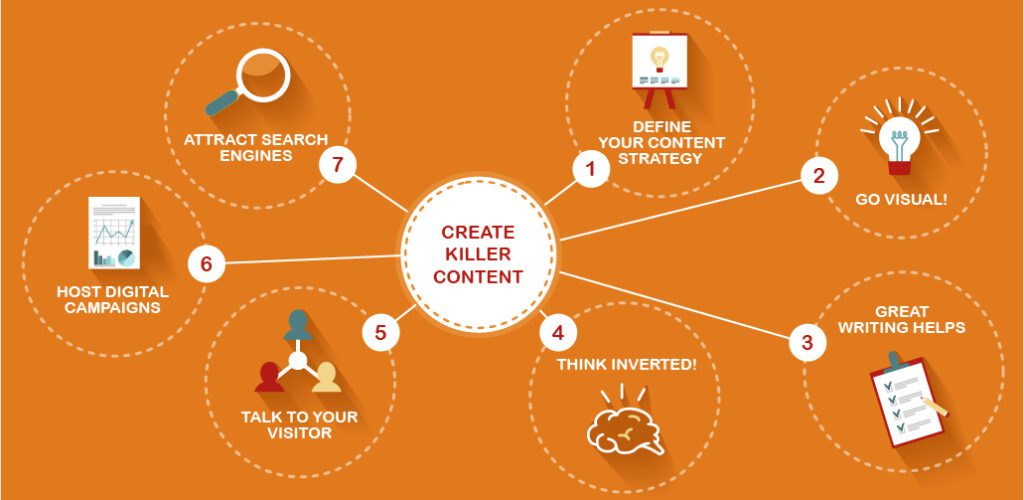
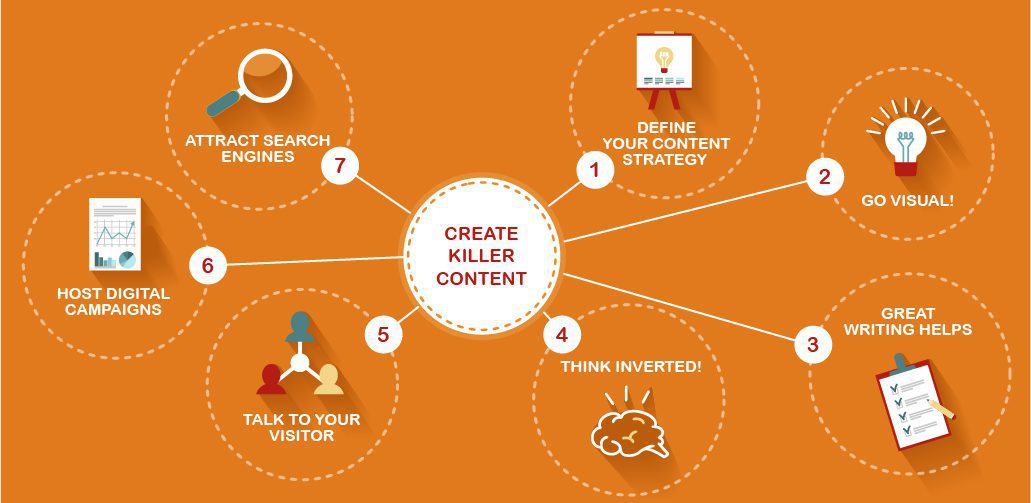
As more and more businesses move online, a clear content marketing strategy has become an essential part of digital marketing. By creating valuable, informative, and engaging content, businesses can attract and retain customers, establish themselves as industry leaders, and drive traffic to their websites.
However, building one that actually works can feel like a daunting task. In this blog post, we’ll outline the key steps to creating a winning content marketing strategy for your business.
How to Build a Content Marketing Strategy in 6 Steps
Step 1: Define Your Audience and Goals
The first step in creating a content marketing strategy is to define your target audience and goals. Who are you trying to reach with your content, and what do you want them to do as a result of engaging with your content?
Your goals may include increasing website traffic, generating leads, building brand awareness, or driving sales. Once you’ve defined your target audience and goals, you can tailor your content to their interests and needs.
Step 2: Conduct Keyword Research
Keyword research is a crucial part of content marketing. By identifying the keywords and phrases that your target audience is searching for, you can create content that is optimized for search engines and more likely to be found by potential customers. Tools like Google Keyword Planner and SEMrush can help you identify high-volume, low-competition keywords that you can target in your content.
Step 3: Develop a Content Plan
Once you have a clear understanding of your audience, goals, and keywords, it’s time to develop a content plan. This plan should include a schedule of when and where you’ll publish your content, as well as the types of content you’ll create (such as blog posts, videos, infographics, or social media posts).
It’s important to create a variety of content types to appeal to different learning styles and preferences. Today, short videos such as Instagram Reels and YouTube Shorts deserve a place in most plans.
Step 4: Create and Optimize Your Content
Now it’s time to create your content! When creating your content, keep your target audience, goals, and keywords in mind. Your content should be informative, engaging, and shareable.
You should also optimize your content for search engines by including your target keywords in your headlines, subheadings, and throughout your content. If you use AI tools to draft, edit carefully and add your own experience, examples and facts.
Step 5: Promote Your Content
Creating great content is only half the battle. You also need to promote your content to ensure that it reaches your target audience.
Share your content on social media, include it in email newsletters, and consider paid advertising to boost its reach. You can also reach out to influencers in your industry and ask them to share your content with their followers.
Step 6: Measure and Adjust Your Strategy
Finally, it’s important to measure the success of your content marketing strategy and adjust it as needed. Use tools like Google Analytics and social media analytics to track the performance of your content, and adjust your strategy based on what’s working and what’s not. You may need to tweak your content plan, adjust your target audience, or change your goals based on your results.
Content Marketing Strategy Example for a Small Business
Imagine a home bakery in Pune that wants more custom cake orders. Its audience is parents planning birthdays nearby, and its goal is a steady flow of WhatsApp enquiries every month.
The plan could be two Reels a week showing cake decoration, one blog post a month answering questions such as eggless cake options, a weekly Google Business Profile update, and a monthly WhatsApp broadcast to past customers.
The owner then checks which posts bring messages and repeats what works. A simple content marketing strategy like this beats a complicated one that is never followed.
Free Tools to Run Your Plan
- Google Search Console, to see the searches that already find you.
- Google Trends, to spot seasonal demand before festivals and sale periods.
- Canva, for quick graphics and short videos.
- A shared spreadsheet or calendar, as your content calendar.
You can explore seasonal interest for free on Google Trends. For a beginner friendly walkthrough of the whole process, see our Content Marketing Rookie guide.
Content Marketing Strategy Template You Can Copy
Writing your plan on one page keeps everyone focused. Copy these headings into a document and fill them in for your own business.
- Business goal: One measurable goal for the next three months, such as more enquiries or more newsletter signups.
- Audience: Who they are, where they live, what they worry about and which apps they use.
- Core topics: Three to five themes your business can speak about with real expertise.
- Formats: The two or three formats you will actually produce, such as Reels, blog posts and email.
- Channels: Where each format will be published and shared.
- Frequency: How often you will post, written as a number you can sustain.
- Owner: Who creates, who checks and who publishes each piece.
- Measurement: Two or three numbers you will review every month.
A content marketing strategy on one page is easier to follow than a long deck nobody opens again. Review it every quarter and update what has changed.
How to Choose Content Pillars
Content pillars are the few big themes you return to again and again. They make planning faster, because every new idea fits under one of them.
A good pillar sits where three things meet: what your customers ask about, what your business knows well, and what leads naturally to your product or service.
For example, a fitness coach might choose workouts at home, healthy Indian meals, and stories from clients. Every Reel, post and email then belongs to one pillar, which keeps the content marketing strategy consistent without becoming repetitive.
Repurpose One Idea Into Many Pieces
Creating fresh content every day is tiring. Repurposing lets one strong idea work across several channels.
- Start with one detailed piece, such as a blog post or a long video that answers a real customer question.
- Cut three or four short clips from it for Reels, YouTube Shorts and stories.
- Turn the key points into a carousel or a simple infographic.
- Send a short summary to your email list with a link to the full piece.
- Answer a related question in a WhatsApp broadcast or community group.
This approach saves time and helps the same message reach people on the platforms they prefer. It is one of the simplest ways to make a content marketing strategy sustainable for a small team.
Content Marketing Strategy for Indian Audiences
India is not one audience. Language, region, festivals and phone habits all affect how content is received, so plan with these in mind.
- Language: Hindi, Hinglish and regional languages can reach people that English alone misses. Test one language at a time and compare the response.
- Festivals and seasons: Diwali, Raksha Bandhan, wedding season, exam season and monsoon all change what people search for and buy.
- Mobile first: Most people will see your content on a phone, so use large text, short paragraphs and vertical video.
- WhatsApp: For many small businesses, WhatsApp Business and broadcast lists are where conversations turn into orders.
- Trust signals: Real customer stories, clear contact details and honest pricing build confidence quickly.
Plan your festival content a month or more in advance as part of your content marketing strategy. Search interest often rises well before the date itself.
Common Content Marketing Mistakes
- Posting without a goal, so there is no way to tell whether it worked.
- Copying trends that have nothing to do with the business.
- Publishing on every platform at once and doing none of them well.
- Writing only about the product instead of the customer’s problems.
- Giving up after a few weeks because results were slow.
- Ignoring old content that could be updated and promoted again.
Most of these mistakes come from trying to do too much. A focused content marketing strategy with fewer, better pieces usually performs better than scattered daily posting.
A 30 Day Plan to Launch Your Content Marketing Strategy
Week 1: Research
Talk to five customers, list the questions they ask most often, and check Google Search Console and Google Trends for related searches. Choose your content pillars.
Week 2: Plan
Fill in the one page template to turn your research into a content marketing strategy, then build a simple content calendar for the next month. Decide who creates, checks and publishes each piece.
Week 3: Create
Produce one detailed piece and repurpose it into short videos, a carousel and an email. Batch create so you are not starting from scratch every day.
Week 4: Publish and Review
Publish on schedule, reply to every comment and message, and note which posts led to enquiries. Use those results to plan the next month.
How to Measure Content Marketing Results
Pick numbers that connect to your goal rather than numbers that only look impressive. Views and likes are useful signals, but enquiries, signups and sales show real impact.
- Awareness: reach, impressions and search clicks.
- Engagement: saves, shares, comments and time on page.
- Leads: form fills, WhatsApp messages and email signups.
- Sales: orders or bookings you can trace back to a piece of content.
Review these once a month in a simple sheet. Over a few months, the numbers show which parts of your content marketing strategy deserve more effort and which can be dropped.
For structured help with planning and promotion, our Ultimate Digital Marketing Bundle covers several related topics in one place.
Content Ideas When You Are Stuck
Every creator runs out of ideas sometimes. These prompts work for almost any business and fit neatly into most content pillars.
- Answer one question a customer asked this week.
- Show how your product is made, packed or delivered.
- Share a before and after from a real customer, with their permission.
- Explain a common myth in your industry and the truth behind it.
- Compare two options your customers often confuse.
- Share a simple checklist related to your service.
- Introduce a team member and what they do.
Keep a running list of ideas in your phone’s notes app. When a customer asks something new, add it immediately, because real questions are the richest source for any content marketing strategy.
Content Marketing Strategy Checklist
Use this list before you publish each month’s calendar.
- Every piece links to a clear goal and a content pillar.
- The audience and the problem it solves are written down.
- Keywords or search phrases are included naturally.
- Each piece has a call to action, such as message us, read more or sign up.
- The format suits the platform, with vertical video for Reels and Shorts.
- Someone other than the creator has checked spelling, facts and links.
- Results from last month have been reviewed and used in this plan.
If most boxes are ticked, your content marketing strategy is ready to run for another month. If not, fix the gaps before adding more posts.
Conclusion:
A winning plan requires a clear understanding of your audience and goals, keyword research, a content plan, content creation and optimization, promotion, and ongoing measurement and adjustment. By following these steps, you can create a successful content marketing strategy that drives traffic, generates leads, and builds your brand.
Read More: The Ultimate Guide To Social Media Advertising For Small Businesses
Some FAQs Related To Content Marketing Strategy
What is content marketing?
Content marketing is a marketing strategy that involves creating and sharing valuable, informative, and engaging content to attract and retain a target audience, establish a brand’s authority, and drive profitable customer action.
Why is content marketing important for businesses?
Content marketing is important for businesses because it can help attract and retain customers, establish a brand’s authority and credibility, and drive traffic, leads, and sales.
How do I define my target audience and goals for my content marketing strategy?
To define your target audience and goals, you should consider factors such as your product or service, your industry, your ideal customer, their demographics, interests, needs, and pain points, and what you want them to do as a result of engaging with your content.
What is keyword research and how do I conduct it?
Keyword research is the process of identifying the keywords and phrases that your target audience is searching for. To conduct keyword research, you can use tools such as Google Keyword Planner and SEMrush to identify high-volume, low-competition keywords that you can target in your content.
How do I develop a content plan?
To develop a content plan, you should consider factors such as your goals, target audience, keywords, types of content you’ll create, and a schedule for publishing and promoting your content.
How do I optimize my content for search engines?
To optimize your content for search engines, you should include your target keywords in your headlines, subheadings, and throughout your content. You should also ensure that your content is informative, engaging, and shareable.
How do I measure the success of my content marketing strategy?
To measure the success of your content marketing strategy, you can use tools such as Google Analytics and social media analytics to track the performance of your content. You can then adjust your strategy based on what’s working and what’s not.
Read More: Content Marketing Strategy: The Best Checklists and Templates