


SEO friendly content is content that answers a real search clearly, is easy to read, and is structured so that search engines can understand it. It plays a vital role in driving free traffic to a website, whether that website is a blog, a coaching business or an online store.
Search engines crawl pages and analyse their text, images, videos and links to judge how relevant and useful each page is. Pages that genuinely help the searcher tend to rank higher than thin or confusing pages.
SEO friendly content uses the words people actually search, but it is written for humans first. Content that informs and engages readers is more likely to be shared and linked to, which further supports rankings.
Creating and maintaining SEO friendly content is an ongoing process that needs time and effort. Done well, it brings steady visitors, more enquiries and more sales without paying for every click.
This article explains the importance of content in SEO and how it can impact a website’s ranking. It is written for website owners, bloggers and digital marketers who want practical steps, not theory.
What Is SEO Friendly Content?
In simple words, SEO friendly content is a page that satisfies one clear search intent better than the other pages ranking for it. It usually has these qualities:
- It targets one main topic and one focus keyword, plus a few closely related phrases
- It answers the question early, then adds depth, examples and steps
- It uses clear headings, short paragraphs and lists so readers can scan it
- It is accurate, up to date and written by someone who understands the topic
- It links to helpful pages on your own site and to trusted outside sources
Google describes what it looks for in its free SEO Starter Guide, which is the best official place to begin. The rest of this guide turns those ideas into a step by step process.
Understanding Your Target Audience
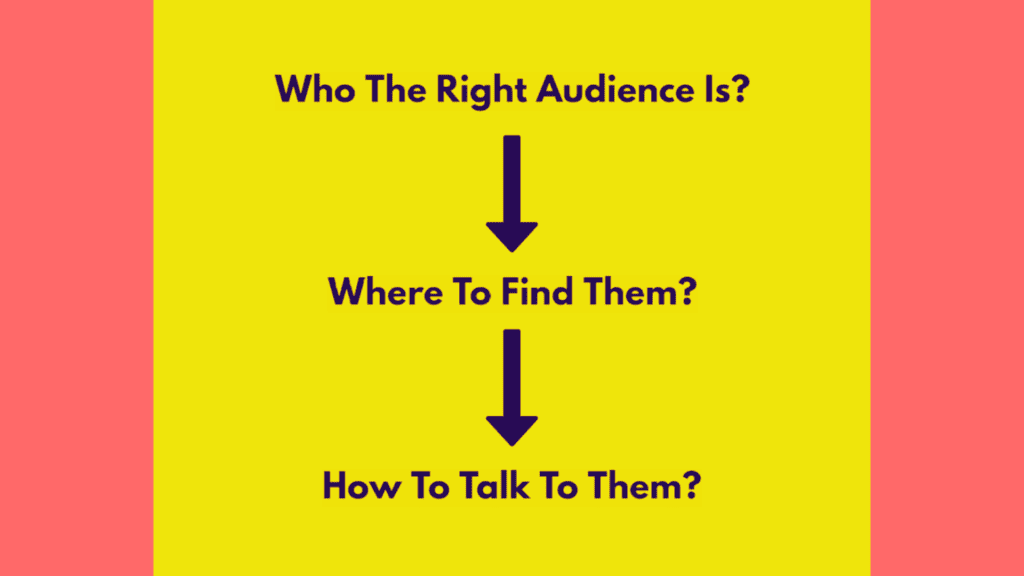
Defining the target audience
Defining the target audience is the foundation of any successful marketing strategy. It is the group of people a business is trying to reach with its products or services.
The target audience can be defined by age, location, language, interests and buying habits. For an Indian audience, also think about whether readers prefer English, Hindi or Hinglish, and whether they mostly read on mobile.
Identifying the audience’s needs and preferences
Once the audience is clear, list their problems, questions and goals. Customer conversations, comments, WhatsApp queries and surveys are great sources for this list.
Each real question from a customer can become a section, an FAQ or even a full article. This is how SEO friendly content starts with people, not with a keyword tool.
Understanding the audience’s search intent
In the context of Search Engine Optimization (SEO), understanding search intent is critical. Search intent is the reason behind a search: to learn something, to compare options, to buy, or to reach a specific website.
For example, a person searching “best running shoes” wants recommendations, while a person searching “how to tie running shoes” wants instructions. Matching that intent helps you create content that addresses the specific need.
A quick way to check intent is to search your keyword and look at the top results. If they are all lists, a list post will fit; if they are all product pages, a blog post may struggle to rank.
Keyword research then shows which phrases matter most. Using them well can improve your search engine rankings.
Audience, needs and intent together form the base of a strong SEO strategy. Get them right and your SEO friendly content will feel written for the reader, because it is.
Keyword Research for SEO Friendly Content
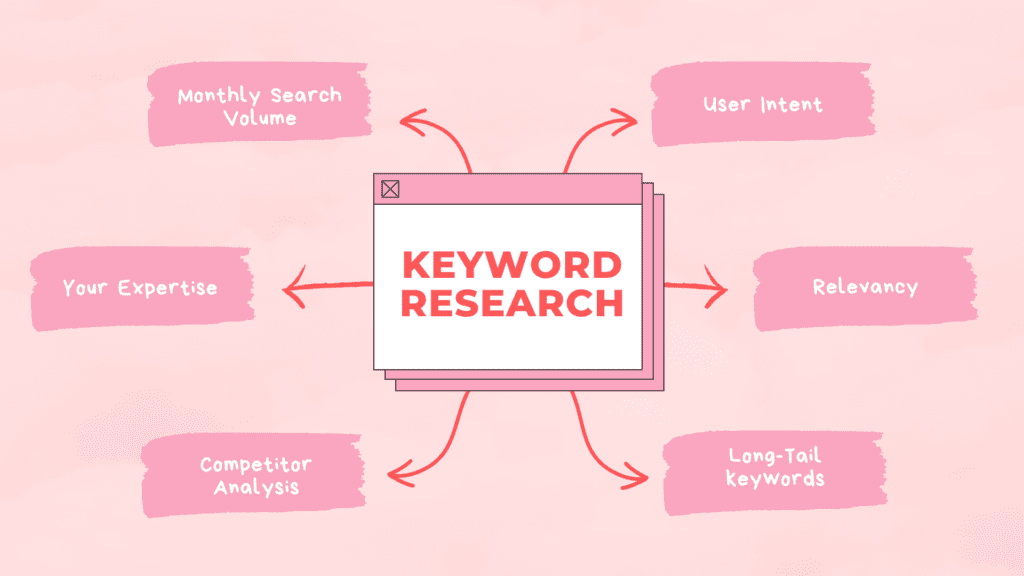
Definition of keyword research
Keyword research is the process of finding the words and phrases people type into search engines like Google. The goal is to find terms that match your topic, your audience and your ability to rank.
It involves checking search volume, competition and relevance, so you can decide which phrases are worth targeting in organic search and in paid search campaigns.
Importance of Keyword Research
Keyword research is an important part of any SEO or digital marketing strategy. It shows what your audience is looking for, so your SEO friendly content can rank in search engine results pages (SERPs).
Ranking higher brings visibility, traffic and conversions. Keyword research also reveals questions that competitors have not answered well yet.
Keyword research tools and techniques
Common keyword research tools include Google Keyword Planner, Google Search Console, Moz Keyword Explorer and the Semrush Keyword Magic Tool. They show search volume, competition and related keywords you can target in SEO friendly content.
Other techniques include studying competitor pages, checking which queries are already driving traffic to your site, and reading the “People also ask” box and Google autocomplete suggestions.
Identifying long tail keywords
Long tail keywords are longer, more specific phrases, such as “reels kaise banaye mobile se” instead of just “reels”. They usually have lower volume and less competition, but the searcher knows exactly what they want.
For a new website, long tail phrases are often the fastest way to get the first rankings. Keyword research is a critical part of any SEO or digital marketing strategy, and long tail terms are where most small sites win.
Creating Quality, SEO Friendly Content

Importance of quality content in SEO
Quality content is essential to a successful search engine optimization (SEO) strategy. Google aims to show content that is helpful, reliable and made for people, so websites that consistently publish SEO friendly content are more likely to rank over time.
Good content also builds trust and authority, which leads to more natural backlinks, shares and repeat visitors.
Tips for writing SEO friendly content
Writing engaging headlines
The headline is the first impression of any SEO friendly content, so make it clear and specific. Numbers and strong words help, but the headline must honestly reflect what the article delivers.
Providing value to the reader
SEO friendly content should answer the reader’s question, solve a problem or give a new insight. Use examples, screenshots, steps and your own experience to show real value.
Ensuring readability
Readable SEO friendly content uses short paragraphs, subheadings, bullet points and bold text for key ideas. Write in simple language and explain any technical term the first time you use it.
Utilizing visual content
Images, short videos, infographics and charts make content easier to follow and remember. Use visuals that add information, not only decoration, and give each one descriptive alt text.
Avoiding common content creation mistakes
Keyword stuffing
Keyword stuffing means repeating a keyword unnaturally to try to rank. It makes the page read badly and goes against Google’s spam policies. Use the keyword where it fits and use natural variations elsewhere.
Duplicate content
Duplicate content is the same or nearly the same text on several pages. It confuses search engines about which page to rank, so write unique text for each page and never copy content from other websites.
Thin content
Thin content lacks depth or usefulness, such as very short posts, pages that only push a sale, or articles with no real information. Fix it by expanding the page with genuine help or merging it with a stronger page.
To create SEO friendly content, focus on clear headlines, real value, easy reading and helpful visuals.
Also avoid common content creation mistakes like keyword stuffing, duplicate content and thin content.
Optimizing Your Content for SEO
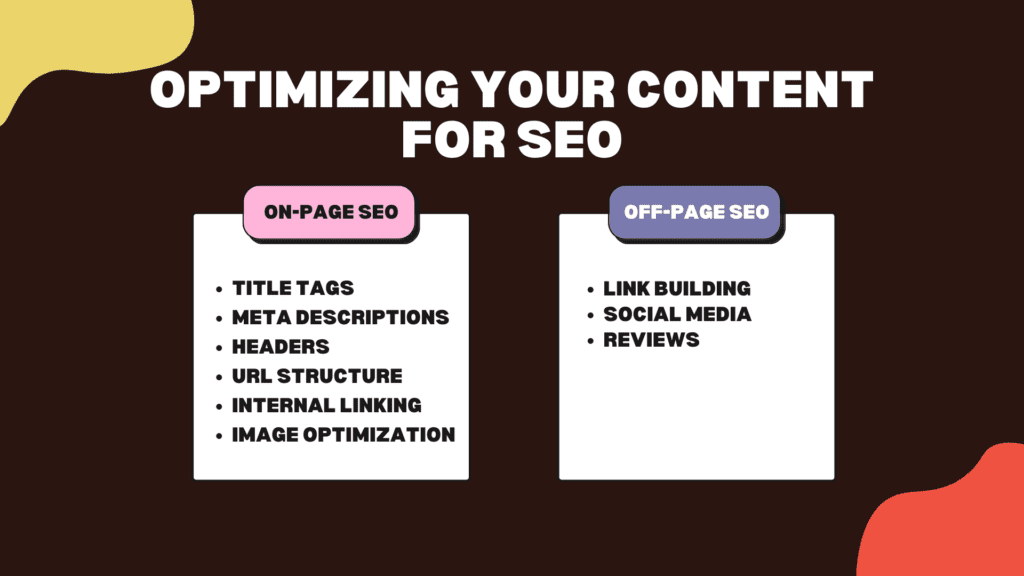
On page SEO
On page SEO is the optimization of each individual page. These are the elements every piece of SEO friendly content needs:
Title tags
The title tag is the clickable headline shown in search results. Keep it accurate, include the main keyword near the start, and keep it short enough that it is not cut off.
Meta descriptions
The meta description is the short summary under the title in search results. It does not directly change rankings, but a clear, honest description can win more clicks.
Headers
Headers structure the page into sections. Use one H1 for the page title, H2s for main sections and H3s for points inside them, in order.
URL structure
A good URL is short, descriptive and easy to read, with words separated by hyphens. Include the main keyword and avoid dates or random numbers you may need to change later.
Internal linking
Internal links connect pages on your own site. They help readers find related help and help search engines understand which pages matter, so link each new piece of SEO friendly content to two or three related pages with descriptive anchor text.
Image optimization
Compress every image in your SEO friendly content, use descriptive file names and add alt text that describes the image. This helps page speed, image search and readers who use screen readers.
Off page SEO
Off page SEO covers signals from outside your website. Two important ones are:
Link building
Backlinks from relevant, trusted websites help show that your page is worth ranking. Earn them with useful resources, original data, guest articles and real relationships, not paid link schemes.
Social media marketing
Social media marketing helps more people discover your content. Sharing posts on social media platforms can bring readers who later link to or recommend your page.
Both on page and off page work matter for improving a website’s search engine rankings. Good on page elements also support user experience.
When SEO friendly content is backed by link building and steady promotion, it can keep bringing visitors for years.
A Quick SEO Friendly Content Checklist
Run through this list before you publish any article:
- One clear search intent and one focus keyword
- Keyword in the title, the first paragraph, the URL and a couple of headings
- The main answer given early, then details, steps and examples
- Short paragraphs, lists and descriptive subheadings
- At least two internal links and one trusted external source
- Images compressed, with alt text
- Facts checked and dates updated for the current year
- A clear next step for the reader at the end
This checklist keeps every piece of SEO friendly content consistent, even when different people write for the same website.
Measuring and Analyzing Your Content’s Performance
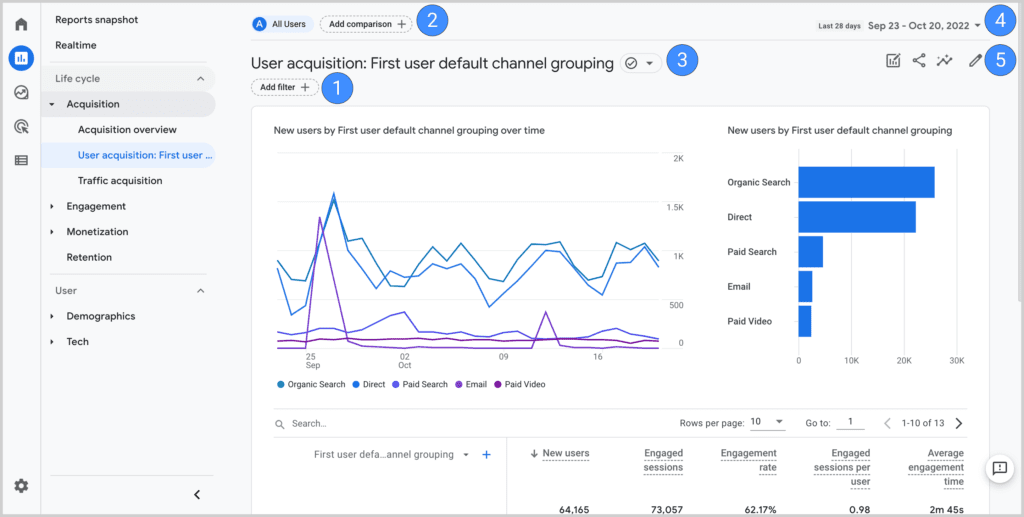
Importance of tracking and analyzing performance
Tracking performance is an essential part of any digital marketing strategy. It shows how people find and use your pages, so you know what to improve next.
Metrics to track
Traffic
Traffic is the number of visitors and where they come from. Organic search traffic tells you whether your SEO friendly content is being found at all.
Engagement
Engagement shows how people interact with a page, using measures like engagement rate, average engagement time and scroll depth. Low engagement may mean you need more engaging content or easier navigation.
Conversions
Conversions are the actions you want, such as a purchase, a sign up or a contact form. Track them so you know which pieces of SEO friendly content actually help the business, not just which get visits.

Tools for measuring and analyzing performance
Google Search Console
Search Console is free and shows the queries a page appears for, its average position, impressions and clicks. It is the most direct way to see how SEO friendly content performs in Google.
Google Analytics
Google Analytics 4 is a free tool that shows traffic sources, engagement and conversions, so you can see what visitors do after they land.
Heatmap tools
Heatmap tools like Microsoft Clarity, Hotjar and Crazy Egg show where people click and how far they scroll. They help you spot sections readers skip.
A/B testing tools
A/B testing tools like VWO let you compare two versions of a page, headline or button to see which performs better.
Tracking is an important part of any successful digital marketing strategy. Review your top pages every month and update the ones that are slipping.
Small, regular improvements based on real data help you drive more traffic and conversions over time.
Conclusion
Recap of the importance of content in SEO
Content is one of the most important factors in search engine optimization. SEO friendly content helps increase website traffic, improve engagement and build long term visibility.
The process is simple to describe and takes practice to master: understand the audience, research keywords, write genuinely helpful content and optimize each page.
Final thoughts and takeaways
Avoid keyword stuffing, duplicate content and thin content. Instead, focus on SEO friendly content that is optimized for search engines and provide real value to readers.
Keep measuring, keep updating, and treat every article as something you can improve. Over time, consistent SEO friendly content is what builds a site that ranks.
If you want to publish faster, our Ultimate Blogging Bundle includes guides and templates for planning and writing blog posts.
Read More: How To Create A Winning Content Marketing Strategy For Your Business
FAQs Related To SEO Friendly Content
What role does content play in SEO?
Content is a critical factor in SEO, as it helps to improve website traffic, user engagement, and search engine rankings.
What are some tips for creating high-quality content for SEO?
To create high-quality content for SEO, businesses should focus on writing engaging headlines, providing value to their audience, ensuring readability, and using visual content.
What are some common mistakes to avoid when creating content for SEO?
Common mistakes to avoid include keyword stuffing, duplicate content, and thin content, as these can hurt search engine rankings and user engagement.
What are some key on-page SEO elements to focus on?
Key on-page SEO elements to focus on include title tags, meta descriptions, headers, URL structure, internal linking, and image optimization.
What is off-page SEO and why is it important?
Off-page SEO refers to activities that are performed outside of a website to improve its search engine rankings. This includes link building and social media marketing, which can help to increase website authority and attract more visitors.
What metrics should I track to measure the success of my SEO efforts?
Key metrics to track include website traffic, user engagement, and conversions, as these can help to identify areas for improvement and measure the effectiveness of SEO strategies.
What tools can I use to measure and analyze website performance?
There are several tools available for measuring and analyzing website performance, including Google Analytics, SEMrush, and Ahrefs, which can provide insights into website traffic, user behavior, and search engine rankings.
How can I improve my website’s search engine rankings?
To improve search engine rankings, businesses should focus on creating high-quality content, optimizing on-page elements, building backlinks, and engaging in social media marketing.
What are long-tail keywords and why are they important for SEO?
Long-tail keywords are more specific search terms that can help businesses target a more niche audience and improve search engine rankings for specific topics. They are important for SEO because they can help businesses attract more qualified traffic to their website.
Why is it important to continually track and analyze website performance for SEO?
By continually tracking and analyzing website performance, businesses can identify areas for improvement, measure the effectiveness of SEO strategies, and stay ahead of the competition in search engine rankings.
Read More: 13 Tips to Help You Create SEO Friendly Content
References and Additional Resources
Sources cited in the article
- Moz: On page ranking factors
- Yoast: On page SEO
- Semrush: Why content is important for SEO
- Backlinko: On page SEO
- Search Engine Journal: Content SEO tips
- HubSpot: On page SEO checklist
- Neil Patel: Off page SEO
- Search Engine Land: What is SEO
- Ahrefs: How to rank for multiple keywords
- Google Analytics Academy
Additional resources for further learning
- Google Search Central SEO Starter Guide, the official Google guide for site owners
- Moz Blog
- Ahrefs Blog
- Semrush Academy
- Backlinko Blog
- Search Engine Journal, covering SEO, PPC and social media
- HubSpot Academy
- Neil Patel Blog
These resources will help you keep learning as search keeps changing.