

Long tail keywords are one of the easiest ways for a small website to win search traffic. Search engine optimization (SEO) is a critical part of digital marketing, and keywords help search engines understand your content and decide where to rank it.
However, not all keywords are equal. Longer, more specific phrases can boost your SEO in a big way, especially for new sites. In this blog, we explore what they are, why they work so well, and how to use them step by step.
What Are Long Tail Keywords?
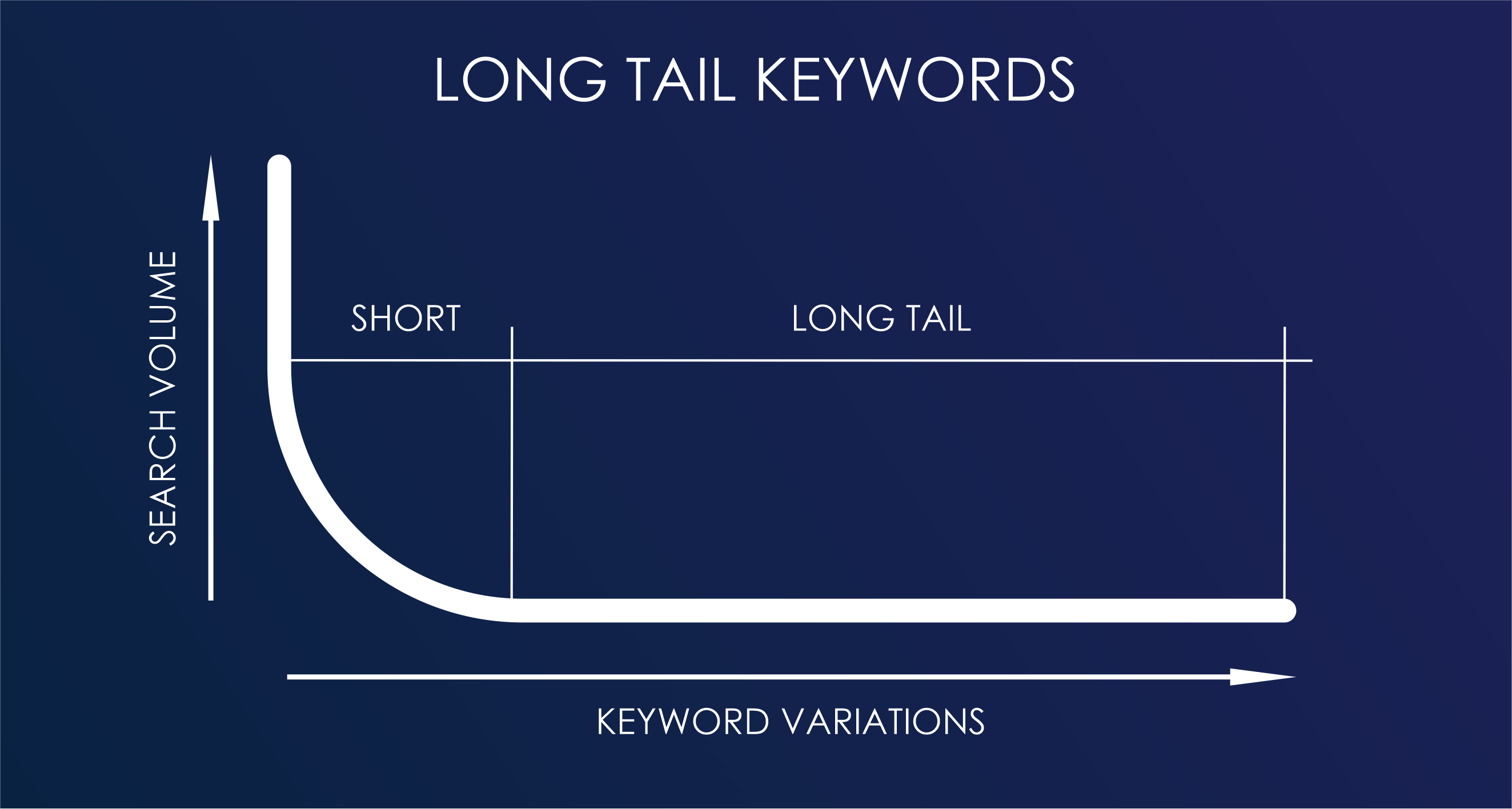
Long tail keywords are search phrases of three or more words. They are more specific than short tail keywords, which are one or two words, and they are usually typed by people who know exactly what they want.
For example, someone searching for “shoes” is using a short tail keyword, while someone searching for “women’s black leather boots” is using a much more specific phrase. The second searcher is far closer to buying.

Why Are Long Tail Keywords So Effective?
There are several reasons why these specific phrases work so well for SEO:
- Less competition: specific phrases are usually less competitive than short, broad terms, so it is often easier to rank for them.
- More targeted traffic: because they are specific, they attract visitors who are more likely to be interested in your product or service.
- Better conversion rates: visitors who search for something specific are more likely to take action, such as making a purchase or filling out a form.
Individually each phrase brings fewer searches than a broad term. Together, dozens of them can bring more qualified visitors than one competitive keyword you may never rank for.
Examples of Long Tail Keywords
To show the idea, suppose you own a bakery in New York City. Short keywords you might want to rank for include “bakery”, “cupcakes” and “pastries”, but these are very competitive and hard to rank for. Instead, you could target phrases like these:
- “best cupcakes in NYC”
- “gluten free pastries in New York”
- “custom cakes for weddings in NYC”
These phrases are more specific, so they attract people who want exactly what your bakery offers. Targeting them brings more relevant traffic and improves your chances of turning visitors into customers.
Long Tail Keywords for Indian Businesses
The same idea works in India, often with Hindi or Hinglish words mixed in. A coaching centre might target “neet coaching in kota with hostel”, and a home baker might target “eggless birthday cake delivery in pune”.
Creators can do the same. Instead of a broad term like “reels”, a beginner might target a phrase such as “reels kaise banaye mobile se”. Our guide on reels kaise banaye is built around exactly this kind of specific search.

How to Use Long Tail Keywords to Boost Your SEO
Now that you know why these phrases matter, here is how to use them:
- Conduct keyword research: use a keyword research tool such as Google Keyword Planner or SEMrush to find specific phrases relevant to your business. Google autocomplete and the “People also ask” box are free sources too.
- Use them in your content: add them to website copy, blog posts and product descriptions. Use them naturally, because keyword stuffing can harm your SEO.
- Optimize your metadata: page titles and descriptions are important for SEO and a great place for your target phrase. This helps search engines understand what each page is about.
- Use them in your URL: instead of a generic URL like “www.bakery.com/cupcakes“, use a more specific URL like “www.bakery.com/best-cupcakes-nyc“.
Create content around long tail keywords: one focused article per phrase is a great way to attract targeted traffic. For example, a post about “custom cakes for weddings in NYC” will attract people interested in exactly that topic.
Monitor your results: track your website traffic in Google Analytics and see which pages bring visits and conversions. Use this to refine your strategy over time.
Google Search Console shows the actual queries that bring visitors to your site, which is one of the best free sources of specific phrases you already rank for. You can learn how it works in the Search Console Help Center.

Common Mistakes With Long Tail Keywords
- Choosing phrases nobody searches: specific is good, but check that real people type the phrase.
- Writing one thin page per tiny variation: group close variations into one strong page instead.
- Ignoring search intent: a phrase like “how to” needs a guide, while “buy” needs a product page.
- Forcing awkward phrasing: write for readers first and fit the phrase in naturally.

How to Find Long Tail Keywords for Free: Step by Step
You do not need a paid tool to start. This free method works well for small Indian websites and creators.
- Type your main topic into Google and note the autocomplete suggestions that appear as you type.
- Add letters after your topic, such as “reels a”, “reels b”, and collect new suggestions for each letter.
- Open the People also ask box and note every question that matches your business.
- Scroll to the related searches at the bottom of the results page for more variations.
- Repeat the same steps in YouTube search, which often shows how people phrase questions in Hinglish.
- Check Google Search Console for queries where your pages already appear but rank low.
- Put every phrase in a simple spreadsheet with columns for the phrase, intent and the page it belongs to.
In one hour this process can give you dozens of long tail keywords that real people are typing, without spending a rupee.
Types of Long Tail Keywords
Grouping phrases by type helps you decide what kind of page to create.
- Question phrases: “how to start a bakery from home” needs a clear guide.
- Location phrases: “ac repair in andheri west” needs a local service page and a Google Business Profile.
- Comparison phrases: “canva vs capcut for reels” needs an honest comparison article.
- Buying phrases: “eggless chocolate cake price 1 kg” needs a product page with clear prices.
- Problem phrases: “instagram reels not getting views” needs a troubleshooting guide.
Matching the page type to the phrase is just as important as finding the phrase. Long tail keywords only work when the page gives the searcher exactly what they wanted.
How to Judge Whether You Can Rank
Free tools rarely show difficulty, but you can judge it yourself by looking at page one. Search the phrase and study the top results.
- Forums, Quora answers, small blogs and old posts on page one usually mean the phrase is winnable.
- Big brands, government sites and major news portals on every result usually mean it is very hard.
- Results that do not fully answer the question are an opportunity for a better, more focused page.
This quick check saves you from spending weeks on phrases you cannot realistically win. For a new site, choosing long tail keywords with weak competition is the fastest route to the first page.
Worked Example: A Home Tuition Website
Rohit runs a small home tuition service in Lucknow. The broad phrase “tuition” is impossible to rank for, and it attracts people from all over India.
Using autocomplete and People also ask, he finds phrases such as “home tutor for class 10 maths in lucknow” and “cbse class 10 maths tuition near gomti nagar”. He creates one strong page for class 10 maths home tuition, mentions the areas he covers, answers common parent questions and adds a clear call or WhatsApp button.
The page will not get huge traffic, but almost every visitor is a parent in his city looking for exactly his service. That is the real value of long tail keywords for a local business.
One Page per Topic, Not per Phrase
Many phrases mean almost the same thing, such as “how to make reels on phone” and “reels kaise banaye mobile se”. Writing a separate thin page for each can make your own pages compete with each other.
Instead, group close variations under one strong page. Use the main phrase in the title and first paragraph, and cover the other variations naturally in subheadings and FAQs.
Keep a simple keyword map in your spreadsheet so every important phrase has exactly one home on your site.
Long Tail Keywords in Google Ads
Specific phrases are useful in paid search too. Ads for a specific search can match the landing page closely, which helps relevance.
Use them in ad groups built around one product or service, and add negative keywords for searches you do not want, such as free or jobs. Google’s Google Ads Help Center explains match types and negative keywords in detail.
Long Tail Keywords and AI Search
More people now search with full questions, both in Google and in AI assistants. These natural, conversational searches are long tail keywords by nature.
Pages that answer one clear question directly, with simple headings and short paragraphs, are easier for both search engines and AI tools to understand. Adding a short FAQ section with real questions from People also ask is a practical way to cover them.
Checklist Before You Publish
- Does the page target one main phrase and its close variations?
- Is the phrase in the title, the first paragraph and at least one subheading?
- Does the content match the intent, guide, product page or comparison?
- Is the URL short and descriptive?
- Have you answered the most common related questions?
- Did you link to the page from at least one related page on your site?
A 30 Day Plan for Beginners
- Week 1: collect 50 phrases using the free method above and group them by topic.
- Week 2: pick five phrases with weak competition and plan one page for each.
- Week 3: write and publish those pages, using the checklist above.
- Week 4: link them from older pages, submit them in Search Console and note their starting positions.
Repeat the cycle every month. Over time, a steady set of pages built on long tail keywords can bring dependable, well targeted visitors to a small website.
Long Tail Keywords for YouTube and Instagram
Search is not only on Google. YouTube search and Instagram search also reward specific phrases, especially for creators.
- On YouTube, put the main phrase early in the title, say it naturally in the first seconds of the video, and repeat it in the description.
- On Instagram, use the phrase in the caption’s first line and in on screen text, because the app reads both to understand your reel.
- Answer one narrow question per video, such as “how to add music to reels without copyright issues”, instead of covering everything at once.
Creators who build a library of focused videos around long tail keywords often find that older videos keep getting found months after posting. Our guide to YouTube video promotion covers more free ways to get those videos seen.
Conclusion
Specific search phrases are a powerful tool for improving your SEO. They are less competitive, attract more targeted traffic and usually convert better than short, broad terms.
By doing keyword research, using specific phrases in your content and metadata, building pages around them and monitoring results, you can attract more customers to your website. So start using them in your digital marketing strategy and watch your rankings grow.
Read More: 10 Ways to Measure The ROI Of Your Digital Marketing Efforts
FAQs Related To Long Tail Keywords
What are long tail keywords?
Longer, more specific search phrases, usually three or more words. They have less search volume than short terms but are more targeted and less competitive.
Why do specific keywords matter for SEO?
They are easier to rank for, attract more targeted traffic and usually have higher conversion rates.
How do I find long tail keywords for my website?
Use tools like Google Keyword Planner, Ahrefs or SEMrush, plus free sources such as Google autocomplete, People also ask and Google Search Console.
How can I use them to boost my SEO?
Include them naturally in your content, page titles, descriptions and URLs, and create focused pages around the most valuable ones.
How do I monitor my results?
Use Google Analytics and Google Search Console to see which pages and queries bring traffic and conversions, then refine your strategy.
Can I use both short and long keywords in my SEO strategy?
Yes. Short terms help you reach a broad audience, while specific phrases bring a more targeted audience. Balancing both gives the best results.
Read More: The Benefits Of Long Tail Keywords In Your SEO Strategy