


SEO mistakes can quietly push a useful website down Google’s results, and most of them are easy to fix once you know where to look. This guide covers the five that hurt small websites the most, updated for 2026.
Search Engine Optimization (SEO) is a crucial component of any digital marketing strategy. It involves optimizing a website’s content and structure to make it more visible and easily accessible to search engines. A well-executed SEO strategy can help businesses rank higher on search engine results pages (SERPs) and drive more organic traffic to their website.
The importance of SEO lies in its ability to improve a website’s visibility, credibility, and ultimately, its conversion rate. By optimizing a website’s content and structure for search engines, businesses can attract more qualified leads and increase their chances of converting them into customers. SEO also helps businesses stay ahead of their competitors by ranking higher for relevant search queries.
However, there are common SEO mistakes that businesses can make that can hurt their website’s ranking. Here are the top 5 SEO mistakes to avoid:
Keyword stuffing: Overusing keywords in an attempt to rank higher is a common SEO mistake. Keyword stuffing can make a website appear spammy and can result in penalties from search engines.
Duplicate content: Having identical or very similar content on different pages of a website can hurt its ranking. Search engines tend to favor unique, high-quality content.
Ignoring mobile optimization: With more and more people accessing the internet on their mobile devices, it’s essential to optimize a website for mobile. Not doing so can result in a poor user experience and a lower ranking.
Neglecting meta tags and descriptions: Meta tags and descriptions are essential elements of SEO. Ignoring them or leaving them blank can hurt a website’s ranking.
Slow loading speed: A website’s loading speed is a crucial factor in its ranking. A slow-loading website can result in a poor user experience and a lower ranking.
SEO is a critical component of any digital marketing strategy. By avoiding these common SEO mistakes, businesses can improve their website’s ranking, attract more qualified leads, and increase their chances of converting them into customers. A well-executed SEO strategy can help businesses stay ahead of their competitors and achieve their business goals.
SEO Mistakes to Avoid #1: Keyword Stuffing

What Is Keyword Stuffing?
Keyword stuffing refers to the practice of overusing or cramming keywords into a webpage or article in an attempt to manipulate search engine rankings. In the early days of SEO, keyword stuffing was a common practice as search engines used keywords as a primary factor in determining a website’s relevance and ranking.
The negative impact of keyword stuffing on a website’s ranking
Today, keyword stuffing is one of the SEO mistakes that Google’s spam policies specifically warn against. Pages that repeat a phrase unnaturally can be pushed down or ignored.
Like other SEO mistakes, keyword stuffing can harm a website’s ranking in several ways. First, it can make the content appear spammy and unnatural, resulting in a poor user experience.
Second, it can lower the website’s credibility and authority as search engines consider keyword stuffing as a manipulative tactic. Third, it can lead to a lower ranking as search engines penalize websites that engage in this practice.
Ways to avoid keyword stuffing
To avoid this and similar SEO mistakes, focus on producing informative, engaging content that satisfies the user’s intent. Here are some ways to avoid keyword stuffing:
Conduct keyword research: Instead of stuffing keywords, conduct keyword research to identify relevant keywords and phrases that are commonly used by your target audience.
Use keywords strategically: Use keywords strategically in the content, title tags, meta descriptions, and headings to help search engines understand the content’s relevance.
Focus on natural language: Write content in natural language and avoid using the same keyword repeatedly. Instead, use synonyms and related phrases to convey the same meaning.
Avoid irrelevant keywords: Using irrelevant keywords can result in penalties from search engines. Ensure that the keywords used are relevant to the content and the user’s intent.
Prioritize user experience: Focus on creating content that provides value to the user and satisfies their intent. This can help improve the user experience and boost the website’s ranking.
Of all SEO mistakes, keyword stuffing is the easiest to avoid. Write for people first, use the keyword where it fits naturally, and let related words do the rest.
SEO Mistakes to Avoid #2: Ignoring Title Tags and Meta Descriptions
Importance of title tags and meta descriptions
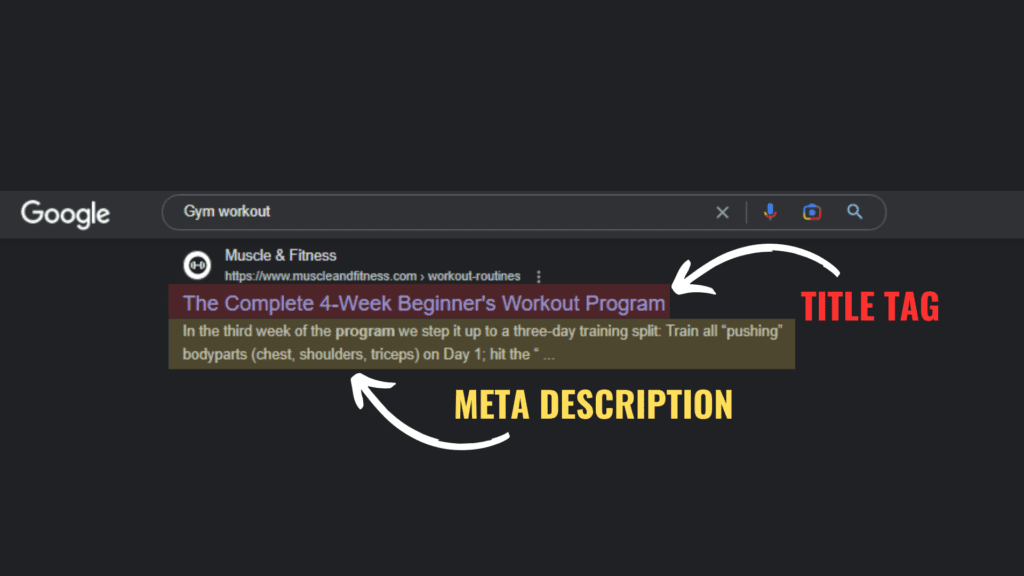
Title tags and meta descriptions are critical elements of on-page SEO that can significantly impact a website’s ranking on search engines. The title tag appears at the top of the browser window and in search engine results pages (SERPs), while the meta description appears below the title tag and provides a brief summary of the webpage’s content.
How ignoring them can impact your website’s ranking
Like most SEO mistakes, ignoring title tags and meta descriptions hurts you in several ways. First, search engines use these elements to understand the webpage’s content and relevance to the user’s search query. If they are missing or poorly written, search engines may not rank the webpage as highly as they could be.
Second, the absence of title tags and meta descriptions can result in a poor user experience as users may not know what the webpage is about before clicking on it. Finally, missing or poorly written title tags and meta descriptions can lower a website’s click-through rate (CTR), which can affect its ranking on SERPs.
Best practices for optimizing title tags and meta descriptions
To avoid these SEO mistakes, follow these best practices:
Use relevant keywords: Include relevant keywords in the title tag and meta description to help search engines understand the webpage’s content and relevance to the user’s search query.
Keep them concise: Keep title tags to around 50-60 characters and meta descriptions to around 155-160 characters to ensure they fit within search engine results pages (SERPs).
Write compelling copy: Write a compelling title tag and meta description that entices users to click on the webpage. Use action-oriented language, such as “Learn more” or “Discover,” and include a benefit or value proposition.
Be unique: Avoid duplicating title tags and meta descriptions across multiple pages. Each page should have a unique title tag and meta description that accurately reflects its content.
Include branding: Add your brand name at the end of the title tag where space allows, so searchers recognise you in the results.
Blank or copied titles are among the most common SEO mistakes on small Indian websites. A plugin such as Rank Math or Yoast makes it simple to write a unique title and description for every page.
SEO Mistakes to Avoid #3: Not Optimizing for Mobile
Rise of mobile search
With the rise of smartphones and other mobile devices, mobile search has become increasingly important for businesses. In fact, mobile search now accounts for more than half of all internet traffic, making it essential for businesses to optimize their websites for mobile devices.
The negative impact of not optimizing for mobile devices
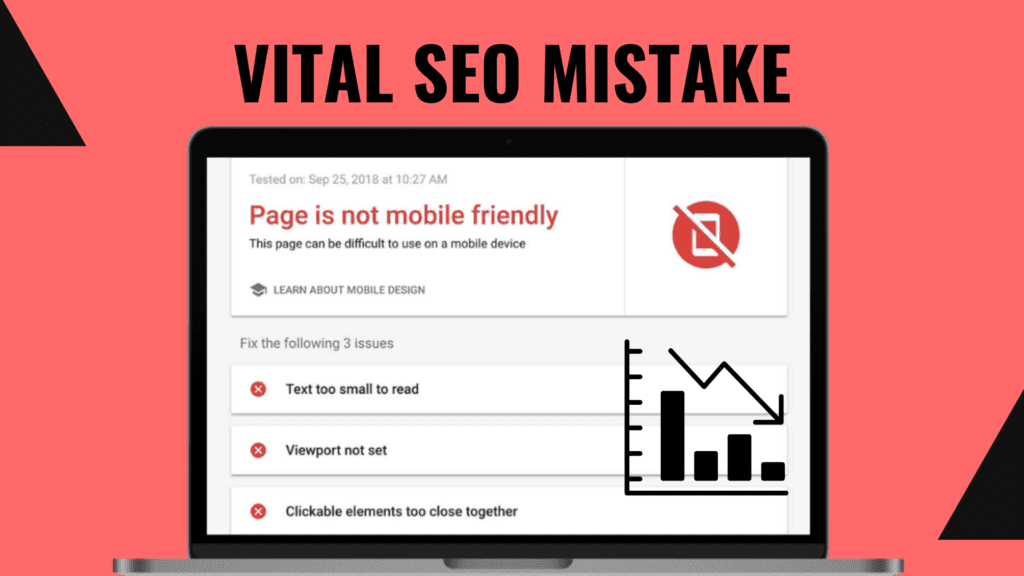
Mobile SEO mistakes hurt a website in several ways. First, mobile users may have a poor user experience on a non-optimized website, resulting in high bounce rates and low engagement.
Second, search engines now prioritize mobile-friendly websites in their search results, meaning that a non-optimized website may rank lower than its optimized competitors. Finally, failing to optimize for mobile devices can cause a business to miss out on potential customers and revenue.
Best practices for optimizing for mobile devices
To avoid mobile SEO mistakes, follow these best practices:
Use responsive design: Use responsive design to ensure that the website adapts to different screen sizes and orientations. This can help improve the user experience and ensure that the website ranks well on mobile search results.
Optimize page speed: Mobile users expect fast-loading websites, so optimize page speed by minimizing file sizes and reducing server response times. This can help improve the user experience and reduce bounce rates.
Simplify navigation: Simplify navigation by using a hamburger menu or other mobile-friendly navigation methods. This can help users find what they need quickly and easily.
Prioritize content: Prioritize content by placing important information and calls-to-action (CTAs) above the fold. This can help users quickly find what they need and take action.
Test for mobile-friendliness: Google retired its Mobile Friendly Test tool in December 2023, so check pages with Lighthouse in Chrome or with PageSpeed Insights instead. Both show what to fix on small screens.
Mobile search is now the default for most Indian users, so mobile SEO mistakes cost more traffic than desktop ones. Check every new page on a phone before you publish it.
SEO Mistakes to Avoid #4: Poor Structure and Navigation
Importance of website structure and navigation
Website structure and navigation are crucial elements of on-page SEO that can significantly impact a website’s ranking on search engines. A well-structured and easy-to-navigate website not only improves the user experience but also helps search engines understand the website’s content and relevance to the user’s search query.
How poor structure and navigation can hurt your website’s ranking
Structure related SEO mistakes harm a website in several ways. First, a confusing or poorly organized website structure can make it difficult for users to find what they’re looking for, resulting in high bounce rates and low engagement.
Second, search engines use website structure and navigation to understand the hierarchy and relationship between web pages. If they are poorly structured, search engines may not rank the website as high as they could be. Finally, poor structure and navigation can lead to duplicate content issues, which can also hurt a website’s ranking.
Best practices for improving website structure and navigation
To fix structure SEO mistakes, follow these best practices:
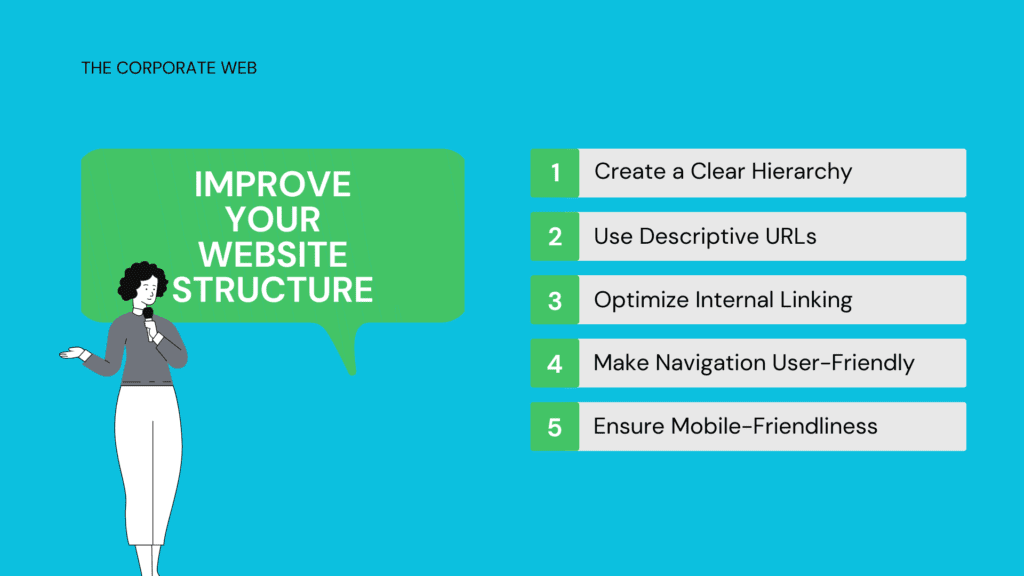
Create a clear hierarchy: Create a clear hierarchy by organizing web pages into categories and subcategories. Use descriptive labels and avoid using too many levels of depth.
Use descriptive URLs: Use descriptive URLs that reflect the content of the web page. This can help users and search engines understand the content and relevance of the webpage.
Optimize internal linking: Use internal linking to help users navigate the website and help search engines understand the hierarchy and relationship between web pages.
Make navigation user-friendly: Make navigation user-friendly by using a consistent navigation menu, using descriptive labels, and including a search bar.
Ensure mobile-friendliness: Ensure that the website is mobile-friendly and easy to navigate on mobile devices.
Structure problems are quiet SEO mistakes because the site still looks fine to its owner. A clear hierarchy, descriptive URLs and good internal links help both visitors and Google.
SEO Mistakes to Avoid #5: Slow Page Speed
Importance of Page Speed for SEO
Page speed, which refers to how quickly a web page loads and response to user interactions, has become increasingly important for SEO (search engine optimization) in recent years. This is because search engines like Google prioritize user experience, and a slow-loading website can negatively impact that experience, leading to a lower search ranking.
consequences of Slow Page Speed on Website’s Ranking
Slow pages are among the costliest SEO mistakes, and they hurt in several ways. Users are less likely to remain on a slow-loading site, which can increase bounce rates and reduce engagement metrics like time on site and pages per session. Search engines may perceive a slow-loading site as less authoritative or relevant, which can lead to a lower search ranking.
Best Practices for Improving Page Speed
Fixing speed related SEO mistakes needs a mix of technical work and good design choices. Some key strategies for improving page speed include:
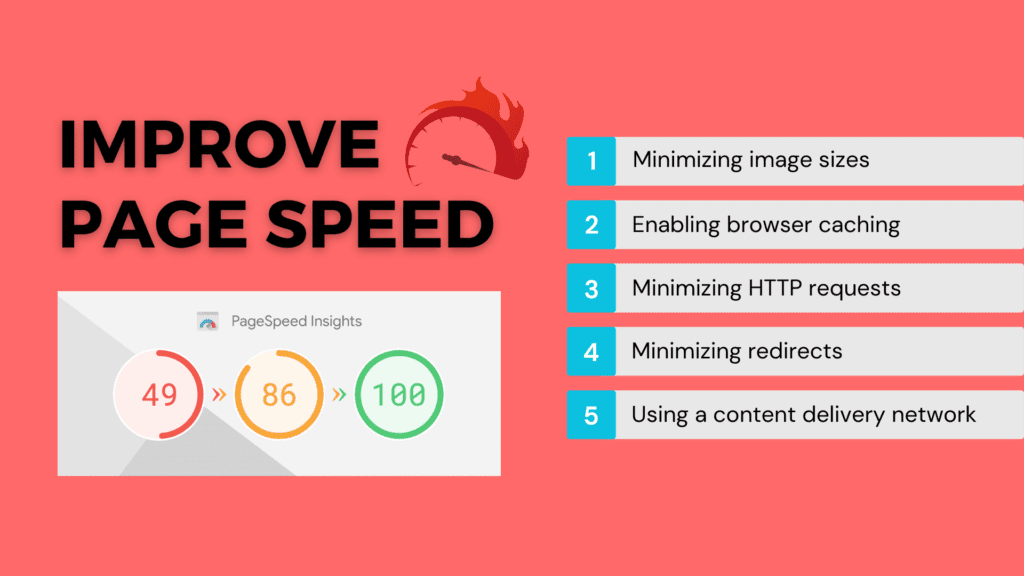
Minimizing image sizes: Large image files can slow down page loading times, so it’s important to optimize images for web use by compressing them and reducing their file size.
Enabling browser caching: Browser caching allows frequently-accessed files to be stored on a user’s device, reducing the need to re-download them every time the page is loaded.
Minimizing HTTP requests: The more HTTP requests required to load a page, the slower it will be, so minimizing the number of requests can improve page speed.
Minimizing redirects: Redirects can slow down page loading times, so it’s important to keep them to a minimum.
Using a content delivery network (CDN): A CDN can distribute website content across multiple servers, reducing the distance between the server and the user and improving page loading times.
Speed is one of the few SEO mistakes you can measure exactly. Check your key pages in PageSpeed Insights every month and fix the biggest issue first.

How to Find SEO Mistakes on Your Own Website
You do not need an expensive audit to spot the big problems. Free tools from Google and a little patience will show you most SEO mistakes on a small site.
- Open Google Search Console and check the Pages report for pages that are not indexed, and the Core Web Vitals report for slow pages.
- Search site:yourdomain.com on Google to see which pages are indexed and how their titles look in results.
- Run your home page and top posts through PageSpeed Insights, and note the largest issues.
- Use a free crawler such as Screaming Frog, which checks up to 500 URLs free, to find missing titles, duplicate descriptions and broken links.
- Open your site on an ordinary phone using mobile data, and try to complete one task like reading a post or buying a product.
Google’s own Search Central documentation explains each report and its fixes. If you run WordPress, our guide to the best WordPress SEO plugins helps you fix titles, sitemaps and schema in one place.
Fix one group of SEO mistakes at a time, then wait a few weeks to see the effect in Search Console before changing more. For a full learning path, The Ultimate Digital Marketing Bundle covers SEO alongside other channels.
Conclusion
Recap of the top 5 SEO mistakes that can easily impact your website’s ranking Negatively
1. Keyword Stuffing: Including too many keywords in your content, titles, and descriptions can make it difficult for readers to understand and can even result in penalties from search engines.
2. Ignoring Title Tags And Meta Descriptions: Title tags and meta descriptions are essential for search engines to understand the content of your website. Neglecting them can result in poor rankings and reduced click-through rates.
3. Not Optimizing For Mobile Devices: With more people accessing the internet through mobile devices, it’s crucial to have a mobile-friendly website. Failing to optimize for mobile can result in lower rankings and lost traffic.
4. Poor Website Structure And Navigation: A poorly structured website can be confusing for both search engines and visitors. This can lead to lower rankings, reduced traffic, and increased bounce rates.
5. Slow Page Speed: A slow website can be frustrating for visitors and result in a poor user experience. It can also harm your website’s rankings as search engines prioritize faster-loading sites.
Why Fixing SEO Mistakes Matters for Your Strategy
Search is still one of the most reliable sources of free, steady traffic for a small business. But even good content struggles to rank if these SEO mistakes keep getting in the way.
Natural keywords, clear titles, a mobile friendly design, a logical structure and fast pages all work together. Fixing SEO mistakes in these five areas makes your site easier for Google to understand and easier for visitors to use.
The reward is simple: visitors find what they need quickly, stay longer and are more likely to become customers.
Avoiding these common SEO mistakes can have a significant impact on your website’s ranking and online visibility. By focusing on creating high-quality content, optimizing your website for mobile devices, and ensuring a user-friendly experience, you can develop a successful SEO strategy that attracts more traffic to your website and helps you grow your business.
Read More: The Power Of Keywords: How To Use Them To Boost Your SEO
FAQs Related To SEO Mistakes
What are the top 5 SEO Pitfalls that are killing my website’s ranking?
A: The top 5 SEO mistakes that can negatively impact your website’s ranking are: not having a mobile-friendly website, ignoring on-page SEO, using keyword stuffing, neglecting link building, and not focusing on user experience.
Why is having a mobile-friendly website important for SEO?
A: With the majority of internet searches now happening on mobile devices, having a mobile-friendly website is crucial for SEO. Google’s algorithms prioritize mobile-friendly sites, so if your website is not optimized for mobile, it will likely receive lower rankings in search results.
What is on-page SEO and why is it important?
A: On-page SEO refers to optimizing individual web pages for specific keywords in order to improve their rankings in search results. Ignoring on-page SEO can make it harder for search engines to understand what your website is about and what keywords to rank it for.
What is keyword stuffing and why is it bad for SEO?
A: Keyword stuffing is the practice of cramming a page with too many keywords in an effort to manipulate search rankings. This practice is penalized by search engines and can result in lower rankings or even being banned from search results.
What is link building and why is it important for SEO?
A: Link building is the practice of acquiring links from other websites back to your own. These links are a key factor in search engine algorithms and can help improve your website’s authority and rankings in search results.
How do I build links for my website?
A: There are several strategies for building links, including creating high-quality content that other websites will want to link to, guest blogging on other websites, and reaching out to other website owners to request links.
What is user experience and how does it impact SEO?
A: User experience refers to how easy and enjoyable it is for users to navigate and interact with your website. Search engines prioritize websites that provide a positive user experience, so neglecting this aspect of your website can result in lower rankings in search results.
What are some common user experience mistakes to avoid?
A: Common user experience mistakes include slow page load times, confusing navigation, hard-to-read text, and intrusive pop-ups or ads.
How can I optimize my website for user experience?
A: You can optimize your website for user experience by ensuring fast page load times, simplifying navigation, using clear and easy-to-read fonts, and minimizing pop-ups and ads.
What are some tools or resources I can use to improve my SEO?
A: There are many tools and resources available to help improve your SEO, including Google Analytics, Google Search Console, Moz, SEMrush, and Ahrefs. These tools can help you identify areas for improvement and track your progress over time.
Read More: What are the Common SEO Mistakes and How to Fix Them