
Social media ads have transformed the marketing landscape in recent years, providing businesses with an opportunity to reach millions of potential customers at a fraction of the cost of traditional advertising methods.
With platforms like Facebook, Instagram, YouTube, X (formerly Twitter) and LinkedIn used by hundreds of millions of Indians, leveraging social media advertising can provide businesses with explosive growth opportunities.
In this blog, we will explore the concept of social media advertising and its benefits for businesses. We will also dive into the various social media platforms available for advertising, the types of social media ads, and some best practices for creating effective social media ad campaigns.
What Are Social Media Ads?
Social media ads are paid messages that promote a product or service to a targeted audience on social platforms. Social media platforms allow businesses to create ads and target specific demographics, interests, behaviors, and locations, making it possible to reach potential customers who are most likely to be interested in their offerings.
Social media advertising is different from organic social media marketing in that it involves paying to have your content seen by a specific audience, whereas organic social media marketing involves creating and sharing content with your followers without paying to boost its visibility.
Benefits of Social Media Advertising
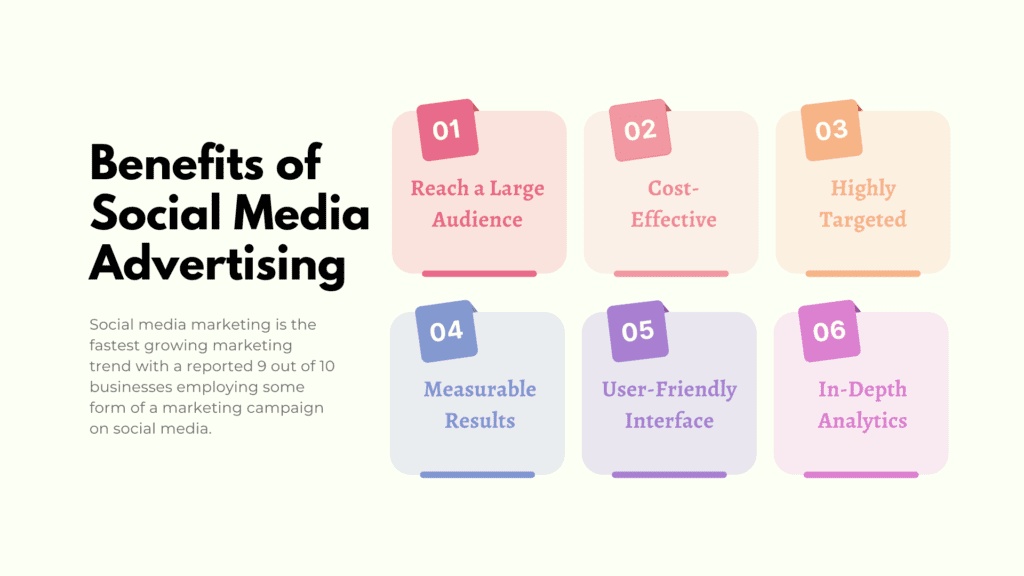
1. Reach a Large Audience
Social media platforms have billions of active users, making it possible for businesses to reach a massive audience with their ads. With social media advertising, businesses can target specific demographics, interests, and behaviors to ensure that their ads are seen by the right people.
2. Cost-Effective
Compared to traditional advertising methods like TV or print ads, social media advertising is relatively inexpensive, and you can start with a small daily budget. With social media ads, businesses can set their own budgets and only pay for the clicks, impressions, or actions that their ads generate.
3. Highly Targeted
Social media platforms have a vast amount of data about their users, including their demographics, interests, behaviors, and locations. This makes it possible for businesses to target their ads to specific audiences and ensure that their ads are seen by the right people.
4. Measurable Results
Social media ads provide businesses with real-time data and analytics about the performance of their ads. This allows businesses to track the success of their campaigns, make adjustments to their strategies, and optimize their ads for better results.
Social Media Platforms for Advertising
There are several social media platforms available for advertising. Here are some of the most popular ones:
1. Facebook
With billions of users worldwide, Facebook is one of the largest social media platforms. Its ads are created in Meta Ads Manager, which also runs Instagram ads.
Facebook advertising allows businesses to create ads that appear in users’ newsfeeds, on the right-hand column of the desktop version, or in the stories section. Businesses can target their ads based on demographics, interests, behaviors, and locations.
2. Instagram
Instagram is a photo and video sharing app with more than a billion users, and India is one of its biggest markets. Instagram ads can appear in feeds, Stories, Reels and Explore. Businesses can target their ads based on demographics, interests, behaviors, and locations.
3. X (Formerly Twitter)
X, renamed from Twitter in 2023, is a microblogging platform popular for news, sport and tech conversations. Ads on X can appear in timelines, search results or profiles. Businesses can target their ads based on demographics, interests, behaviors, and locations.
4. LinkedIn
LinkedIn is the leading social media platform for professionals and is the natural choice for B2B social media ads. LinkedIn advertising allows businesses to create ads that appear in users’ newsfeeds, inboxes, or on the right-hand column of the desktop version. Businesses can target their ads based on demographics, job titles, company size, and locations.
Types of Social Media Ads
There are several types of social media ads available for businesses. Here are some of the most popular ones:
1. Image Ads
Image ads are the most basic type of social media ad and are straightforward, consisting of a single image and a short caption. They can be used to showcase products or services and are suitable for raising brand awareness or promoting a sale or offer.
2. Video Ads
Video ads are becoming increasingly popular on social media platforms. They can be used to tell a brand’s story, demonstrate a product or service, or showcase customer testimonials. Video ads can be in the form of a pre-roll ad, in-feed video ad, or story ad.
3. Carousel Ads
Carousel ads are a series of images or videos that users can swipe through. They can be used to showcase a range of products or services, provide a step-by-step guide, or tell a story. Carousel ads are available on Facebook, Instagram, LinkedIn and X.
4. Collection Ads
Collection ads are a type of ad format available on Facebook and Instagram. They allow businesses to showcase multiple products in a single ad. When users click on a collection ad, they are taken to an instant experience, which is a fullscreen landing page within the Facebook or Instagram app.
5. Sponsored Content
Sponsored content is a type of ad that appears in users’ feeds on social media platforms. It is designed to look like a regular post, but with a “sponsored” label. Sponsored content is an effective way to reach a specific audience and generate engagement.
6. YouTube and WhatsApp Ads
YouTube ads run through Google Ads and include skippable video ads and Shorts ads, which suit tutorials and product demos. On Meta, Click to WhatsApp ads open a chat with your business, which many Indian shoppers prefer before they buy.
How to Run Social Media Ads in India: Step by Step
- Pick one goal, such as sales, leads, WhatsApp chats or website visits.
- Choose the platform where your buyers already spend time: Instagram and Facebook for most consumer products, LinkedIn for B2B, YouTube for products that need explaining.
- Set up a business account, install the Meta Pixel or Google tag on your website, and connect a payment method.
- Create one campaign with a small daily budget and two or three ad versions with different hooks.
- Target by location, age and interests, but keep the audience broad enough for the platform to learn.
- Run the ads for at least a week, then keep the best performer and replace the weakest.
Before you publish, read the ad rules for each platform, because ads that break them get rejected or limited. Meta lists its policies and setup guides in the Meta Business Help Centre.
How Much Do Social Media Ads Cost?
There is no fixed price. You set a daily or lifetime budget, and the platform charges per click, per thousand impressions or per result, depending on your objective.
Your cost changes with competition, season, audience size and how relevant people find your ad. The practical approach is to start small, measure your cost per sale or lead, and increase spend only on social media ads that earn back more than they cost.
Best Practices for Creating Effective Social Media Ads
1. Know Your Audience
The success of your social media ad campaign depends on how well you know your audience. Understanding their demographics, interests, behaviors, and locations is crucial for creating ads that resonate with them.
2. Set Clear Goals
Before creating your social media ad campaign, set clear goals for what you want to achieve. Whether it’s increasing brand awareness, driving traffic to your website, or generating leads, having a clear goal will help you create ads that are aligned with your business objectives.
3. Use Eye-Catching Visuals
Social media users are bombarded with ads on a daily basis, so it’s important to use eye-catching visuals that grab their attention. Use high-quality images or videos that showcase your product or service in the best possible way.
4. Keep Your Messaging Clear and Concise
Social media users have short attention spans, so it’s important to keep your messaging clear and concise. Use simple language and a clear call-to-action to encourage users to engage with your ad.
Use Vertical Video for Social Media Ads
Most people scroll on phones, so vertical 9:16 video fits Reels, Stories and Shorts best. Show the product or the hook in the first two seconds and add captions, since many people watch without sound.
5. Test and Iterate
Social media ads are not a one size fits all approach. Test different ad formats, targeting options, and messaging to see what works best for your audience. Use the data and analytics provided by the social media platforms to iterate and optimize your ad campaigns for better results.
Worked Example: Social Media Ads for a Local Boutique
A small ethnic wear boutique in Surat wants more walk in customers before Diwali. The owner sets one goal, WhatsApp enquiries, and runs a click to WhatsApp campaign on Instagram and Facebook.
She targets women in her city within a short distance of the shop, uses three reels showing new arrivals on real customers, and adds a clear line: “Message us to book a try on slot.” After a week she keeps the reel with the most enquiries and pauses the other two.
The result is not measured in likes but in conversations and visits. Judging social media ads by the business result, not by vanity numbers, is what makes a small budget work.
Common Mistakes With Social Media Ads
- Boosting random posts without a clear goal or audience.
- Sending ad traffic to a home page instead of the exact product or form.
- Changing targeting and budgets every day, so the platform never learns.
- Using text heavy images that are hard to read on a phone.
- Ignoring comments and messages that the ads generate.
- Using music, logos or video clips you do not have the rights to use.
Each of these quietly wastes money. Fixing them often improves social media ads more than any new targeting trick.
Checklist Before You Launch Social Media Ads
- One clear goal and one main action for viewers.
- Tracking set up, such as the Meta Pixel or Google tag, and tested.
- A mobile friendly landing page or a ready WhatsApp reply flow.
- At least two ad versions with different hooks.
- A daily budget you are comfortable testing for a week or two.
- Ad copy and visuals checked against the platform’s ad policies.
- A simple sheet to record spend, results and cost per result each week.
A 30 Day Plan for Beginners
- Week 1: define your audience and goal, set up tracking and create three short videos or images.
- Week 2: launch one small campaign and do not change it for at least five days.
- Week 3: keep the best ad, replace the weakest with a new hook, and reply to every message quickly.
- Week 4: compare cost per result with your profit per sale and decide whether to scale, pause or rethink the offer.
Running social media ads this way turns guesswork into a simple monthly routine that any small business owner can follow.
Conclusion
Social media ads give businesses an opportunity to reach a massive audience, generate leads, and drive sales at a fraction of the cost of traditional advertising methods.
With the various social media platforms available for advertising and the different types of social media ads, businesses can create ad campaigns that are tailored to their specific audience and business objectives.
If you want more help planning content and paid campaigns together, Profiting From Facebook Ads is a beginner friendly guide to Meta campaigns. By following best practices for creating effective social media ads, businesses can leverage social media advertising for explosive growth and take their business to the next level.
Read More: The Ultimate Guide To Social Media Advertising For Small Businesses
Some FAQs Related To Social Media Advertising
What social media platforms are best for advertising?
There are several social media platforms that are great for advertising, including Facebook, Instagram, Twitter, LinkedIn, and Pinterest. The best platform for your business will depend on your target audience and business objectives.
How much does social media advertising cost?
The cost of social media advertising varies depending on the platform and the type of ad. Most social media platforms use a cost-per-click or cost-per-impression model, with costs ranging from a few cents to several dollars per click or impression.
What are the best types of social media ads to use?
The best type of social media ad to use will depend on your business objectives and target audience. Some popular types of social media ads include image ads, video ads, carousel ads, collection ads, and sponsored content.
How do I create effective social media ads?
To create effective social media ads, it’s important to know your audience, set clear goals, use eye-catching visuals, keep your messaging clear and concise, and test and iterate to optimize your ad campaigns.
How can social media advertising help my business grow?
Social media advertising can help your business grow by reaching a massive audience, generating leads, driving sales, and raising brand awareness. It’s a cost-effective way to promote your business and connect with potential customers.