

At the core of search engine marketing (SEM) lies the understanding of user intent. Knowing what a user wants to achieve through their search query can help you tailor your website’s content and structure to better serve their needs.
In this article, we will explore the psychology of search and how it relates to SEM. We will also discuss how you can optimize your website to provide the best user experience and outrank your competition.
Understanding User Intent
User intent refers to the reason behind a search query. It’s the “why” behind the search. A user may be looking for information, trying to make a purchase, or seeking a specific website. Knowing the user’s intent can help you create content that aligns with their needs and provides a positive user experience.
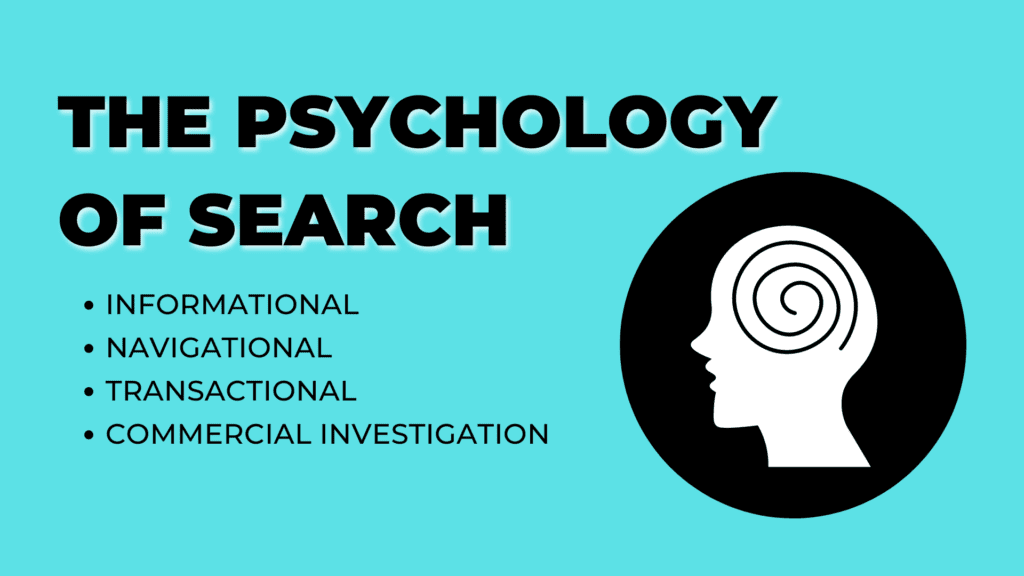
There are four main types of user intent: informational, navigational, transactional, and commercial investigation.
Informational intent is when a user is looking for information. For example, “How to bake a cake” or “Best coffee shops near me.” Users with informational intent are not necessarily looking to make a purchase, but rather to gain knowledge on a particular topic.
Navigational intent is when a user is looking for a specific website. For example, “Amazon” or “Facebook.” Users with navigational intent are already familiar with the website and are simply trying to access it quickly.
Transactional intent is when a user is looking to make a purchase. For example, “buy a new pair of shoes” or “book a flight to New York.” Users with transactional intent are looking for a website where they can complete a transaction.
Commercial investigation intent is when a user is comparing products or services before making a purchase decision. For example, “best laptops for college students” or “compare car insurance quotes.” Users with commercial investigation intent are looking for information to help them make a purchase decision.
Optimizing for User Intent
Now that we understand the four types, how can we optimize our website to better serve the user’s needs? Here are some tips:
1. Create content that aligns with user intent
If a user has informational intent, create content that answers their questions and provides valuable information. If a user has transactional intent, create content that showcases your product or service and provides an easy way to make a purchase.
2. Use keyword research to target user intent
Keyword research can help you understand the language users are using when searching for information or products. Use this information to create content that aligns with their search queries and provides a positive user experience.
3. Use clear and concise headings
Headings can help users quickly scan your content to find what they’re looking for. Use clear and concise headings that align with user intent to make it easier for users to find what they need.
4. Optimize your website structure
Ensure that your website’s structure is intuitive and easy to navigate. Use menus and internal linking to guide users to the content they’re looking for.
5. Focus on user experience
Provide a positive user experience by ensuring that your website is easy to use, loads quickly, and provides relevant information. Users are more likely to engage with your website if they have a positive experience.
How to Find User Intent for Any Keyword
You do not need a paid tool to work out intent. Google already shows you what it thinks searchers want, so the results page is your best clue.
- Search the keyword in an incognito window and note what ranks: blog guides, product pages, comparison lists, videos or map results.
- Read the People also ask box. These questions show what else searchers want to know on the same topic.
- Type the keyword slowly and look at autocomplete. Words like price, buy, best, near me or kaise reveal the intent behind it.
- Open Google Search Console and check which queries already bring visitors to each page.
If the top ten results are all buying guides, a product page will struggle to rank, and the reverse is also true. Google explains how it builds helpful results in Google Search Central.
Match the Page Type to User Intent
- Informational: a clear guide or how to article with steps, examples and FAQs.
- Navigational: a fast, well labelled home page or brand page that loads the right section quickly.
- Commercial investigation: comparison posts, best of lists and honest reviews with pros and cons.
- Transactional: a product or landing page with price, delivery details, trust signals and one clear button.
User Intent in Indian Searches
Indian searchers often mix Hindi and English, so queries like reels kaise banaye or laptop under 50000 are common. Kaise and kya usually signal informational intent, while price in India, under a budget and near me usually signal buying or local intent.
Write for the words people actually type. A page that answers a Hinglish question in simple language can beat a bigger site that only targets the formal English version.
If you run a WordPress site, a good SEO plugin makes it easier to set titles and descriptions that match the searcher’s goal. See our comparison of WordPress SEO plugins, or learn the wider basics with The Ultimate Digital Marketing Bundle.
Outranking Your Competition
Understanding user intent and optimizing your website accordingly can help you outrank your competition in search engine results pages (SERPs). Here are some additional tips to help you outrank your competition:
1. Conduct a competitor analysis
Understand your competition by analyzing their website content, structure, and keywords. Use this information to create a strategy that differentiates your website from theirs.
2. Create high-quality content
Create content that provides value to users and aligns with their search queries. High-quality content is more likely to be shared and linked to other websites, which can improve your website’s visibility in search engines.
3. Use targeted keywords
Use targeted keywords that align with user intent and are relevant to your website. Use keyword research tools to identify keywords with high search volumes and low competition.
4. Optimize your website for mobile devices
More and more users are accessing the internet through their mobile devices. Ensure that your website is optimized for mobile devices to provide a positive user experience for all users.
5. Use social media to promote your website
Use social media platforms to promote your website and share your content. Social media can help increase your website’s visibility and drive traffic to your website.
Worked Example: Mapping User Intent for One Topic
Take a small Indian business that sells Instagram reels templates. The same topic produces very different searches, and each one needs a different kind of page.
- reels ideas for business: the searcher wants inspiration, so a long list post with examples fits best.
- how to make reels on mobile: the searcher wants to learn, so a step by step guide with screenshots and a short video works well.
- best reels bundle for small business: the searcher is comparing options, so an honest comparison with pros, cons and samples fits.
- buy reels bundle: the searcher is ready, so a product page with a clear price, preview and one button is right.
- brand name plus login: the searcher wants a specific page, so a fast and well labelled account page is all they need.
If the business tried to rank one page for all five searches, it would serve none of them well. Splitting the topic by intent gives every searcher a page that answers exactly what they typed.
How Google Reads Searcher Goals Today
Google does not rely only on matching words. It looks at the meaning of the query, the location and language of the searcher, and which results people find useful, then shows the formats that best fit.
This is why some results pages show videos, some show shopping listings and some show a map. The format itself is a strong hint about what you should build.
Google’s own guide to creating helpful content explains the questions it wants creators to ask about their pages. Read it once and use it as a checklist for every new article.
A User Intent Audit Checklist for Existing Pages
Old pages often rank badly because they answer a different question from the one people ask. Run this quick audit on your ten most important pages:
- Write down the main keyword each page targets.
- Search that keyword and note the format of the top results.
- Compare: is your page the same format, or something else?
- Check whether the answer appears in the first few lines, or only after a long introduction.
- Look at Search Console queries for the page and spot questions you do not answer yet.
- Add a clear next step, such as a related guide, a product link or a contact option.
Fix the biggest mismatch first. Changing the format of one key page often helps more than publishing three new ones.
Common Mistakes to Avoid
- Pushing a sales page for a question that clearly needs a guide.
- Writing a long story before giving the answer the searcher came for.
- Targeting a broad word like shoes when your page only serves one narrow need.
- Copying the structure of a top result without adding anything new or useful.
- Ignoring Hinglish and local phrasing that your real customers use.
Using User Intent in Paid Search Campaigns
In Google Ads, matching intent decides where your money goes. Group keywords by intent, write ads that speak to that goal, and send each group to the page that fits it.
- Buying words such as price, buy, order or near me deserve your strongest ads and product or landing pages.
- Research words such as what is, how to or ideas usually belong to content, not expensive ads.
- Negative keywords such as free, jobs or course stop your ads from showing to people who will not buy.
- Match types control how closely a search must match your keyword, so start narrow and widen only with data.
The Google Ads Help Centre explains match types and negative keywords in detail. Read it before you raise any budget.
A 30 Day Plan to Apply This on Your Site
- Week 1: list your top pages and label each target keyword by intent type.
- Week 2: run the audit checklist above and note every mismatch.
- Week 3: rewrite the opening, headings and format of the three weakest pages.
- Week 4: add internal links between guides and product pages, then compare Search Console data with the month before.
Keep notes on what you changed and when. Over a few months, these notes show you which kinds of fixes move your rankings and which do not.
If you sell your own products, our guide on how to sell digital products online in India shows how to turn this kind of traffic into real orders. Thinking about user intent at every step keeps that path simple for the buyer.
Conclusion
Understanding user intent is crucial for SEM success. By knowing what users want to achieve through their search queries, you can create content that aligns with their needs and provides a positive user experience. Use keyword research and website optimization to improve your website’s visibility in search engines and outrank your competition.
Remember to focus on user experience and create high-quality content that provides value to users. By following these tips, you can improve your SEM strategy and achieve better results in search engine rankings.
Read More: How I Make Undetectable AI Content (That Google Loves)

FAQs Related To User Intent
What is user intent in search engine marketing?
User intent refers to the goal or objective behind a user’s search query. Understanding user intent can help marketers create content that aligns with the user’s needs and provides a positive user experience.
Why is user intent important for SEM?
User intent is important for SEM because it helps marketers create content that aligns with user needs and provides a positive user experience. By understanding user intent, marketers can create targeted content that is more likely to rank in search engine results pages (SERPs) and drive traffic to their website.
How can I determine user intent for my target audience?
You can determine user intent by analyzing search queries and identifying patterns in the types of queries your target audience is making. Keyword research tools can also help identify keywords with high search volumes and low competition, which can give you insights into user intent.
What is the role of keywords in SEM?
Keywords play a critical role in SEM because they help search engines understand the content of a webpage and match it to relevant search queries. By using targeted keywords in your content and metadata, you can improve your website’s visibility in search engine results on pages.
How can I optimize my website for mobile devices?
To optimize your website for mobile devices, you should ensure that your website is designed to be mobile-friendly and responsive. This means that the website should adjust to different screen sizes and be easy to navigate on a mobile device.
What is the importance of social media in SEM?
Social media can be an effective tool for promoting your website and driving traffic to your content. By sharing your content on social media, you can increase your website’s visibility and engage with your audience.
How do I create high-quality content for my website?
To create high-quality content for your website, you should focus on providing value to your audience and addressing their needs. Your content should be well-researched, informative, and engaging.
Can I improve my SEM strategy without spending money on advertising?
Yes, there are many ways to improve your SEM strategy without spending money on advertising. By creating high-quality content that aligns with user intent and optimizing your website for search engines, you can improve your website’s visibility in search engine results from pages.
What are some common mistakes to avoid in SEM?
Common mistakes to avoid in SEM include targeting the wrong keywords, ignoring user intent, and neglecting to optimize your website for search engines. It’s also important to avoid spammy or low-quality content, as this can harm your website’s reputation and visibility in search engines.
How long does it take to see results from SEM?
The time it takes to see results from SEM can vary depending on the competitiveness of your industry and the effectiveness of your strategy. It’s important to be patient and persistent in your efforts and to continually monitor and adjust your strategy based on performance metrics.
Read More: How People Search: Understanding User Intent