
If you want to rank on Google, start with why it matters: Google is the most widely used search engine, and it plays a vital role in the success of any online business or website. Every day, millions of people use Google to search for information, products, and services, making it a critical platform for businesses to attract and convert potential customers.
However, with billions of websites on the internet, getting your website to the top of Google search results is no easy feat. This is where Search Engine Optimization (SEO) comes in. In this ultimate SEO guide, we will unlock the secrets to top Google rankings, showing you how to rank on Google step by step in 2026.
Understanding SEO and How to Rank on Google
Before delving into the nitty-gritty of SEO, it is essential to understand what it is and how it works. SEO is the process of optimizing your website’s content, structure, and technical aspects to improve its visibility on search engines like Google. The ultimate goal of SEO is to rank your website higher on search engine results pages (SERPs) for specific keywords or phrases that are relevant to your business.
Search engines like Google use complex algorithms to determine which websites to show on SERPs. These algorithms take into account various factors such as website structure, content relevance, backlinks, user experience, and many others. To rank on Google, you need to understand these factors and improve your website accordingly.
On Page SEO Steps to Rank on Google

On-page SEO refers to all the elements that you can control on your website to improve your rankings on search engines. These elements include your website’s content, structure, and HTML source code. Here are some on-page SEO factors that you should consider:
Keyword Research:
Keyword research is the foundation of SEO. It involves identifying the keywords or phrases that your target audience is using to search for products or services similar to yours.
You can use tools like Google Keyword Planner, SEMrush, or Ahrefs to find the best keywords for your business. Pages that rank on Google usually focus on one clear topic each.
Title Tag:
The title tag is an HTML element that describes the title of a web page. It is displayed on SERPs as the clickable link to your website. Your title tag should be concise and descriptive and include your primary keyword, because a clear title helps you rank on Google and earn the click.
Meta Description:
The meta description is a short summary of your web page that appears below the title tag on SERPs. It should be compelling, and relevant, and include your primary keyword.
Header Tags:
Header tags (H1, H2, H3, etc.) are HTML elements used to structure your content. They help search engines understand the hierarchy of your content and improve the user experience. Your primary keyword should be included in your H1 tag.
Content Optimization:
Helpful, original content is the most reliable way to rank on Google today. It should also include your primary keyword and other related keywords. Your content should also be well-structured, easy to read, and visually appealing.
URL Structure:
Your website’s URLs should be simple, descriptive, and include your primary keyword. Avoid using dynamic URLs or session IDs.
Internal Linking:
Internal linking is the process of linking to other pages on your website. It helps search engines understand the structure of your website and improve the user experience. Linking from your strongest pages to new ones also helps those new pages rank on Google sooner.
Off Page SEO: Build Trust to Rank on Google
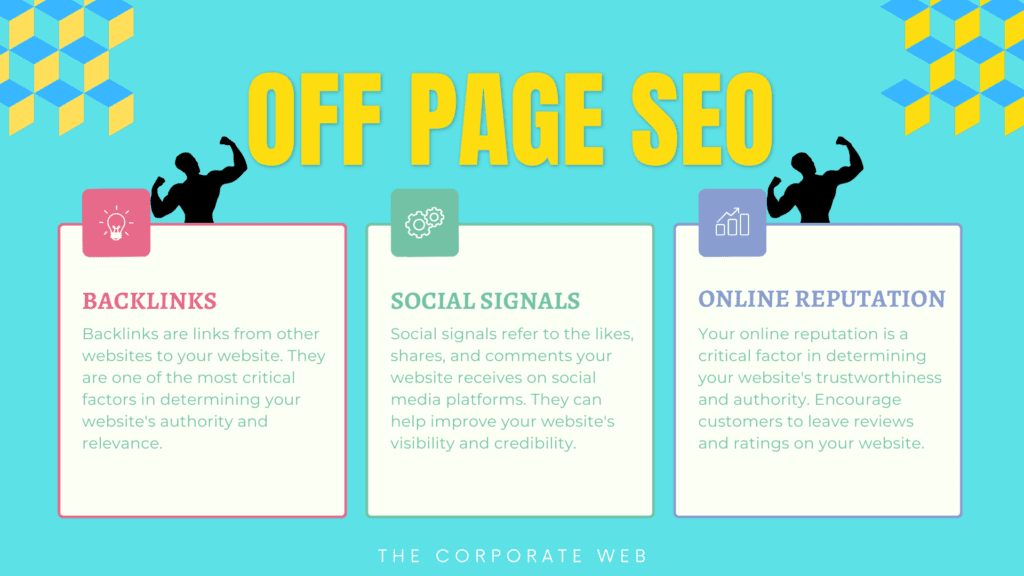
Off-page SEO refers to all the external factors that can affect your website’s search engine rankings. These factors include backlinks, social signals, and online reputation. Here are some off-page SEO factors that you should consider:
Backlinks:
Backlinks are links from other websites to your website. They are one of the most critical factors in determining your website’s authority and relevance.
You should focus on building high-quality backlinks from authoritative websites in your niche. Avoid paid link schemes, because they break Google’s spam policies.
Social signals:
Social signals refer to the likes, shares, and comments your website receives on social media platforms. They are not a direct ranking signal, but they help people discover, share and link to your content. Make sure to have active social media profiles and share your website’s content on them.
Online Reputation:
Your online reputation is a critical factor in determining your website’s trustworthiness and authority. Encourage customers to leave reviews and ratings on your website and other review platforms like Google Business Profile, Justdial or Trustpilot. Genuine reviews matter most when you want a local business to rank on Google Maps.
Technical SEO Checklist to Rank on Google
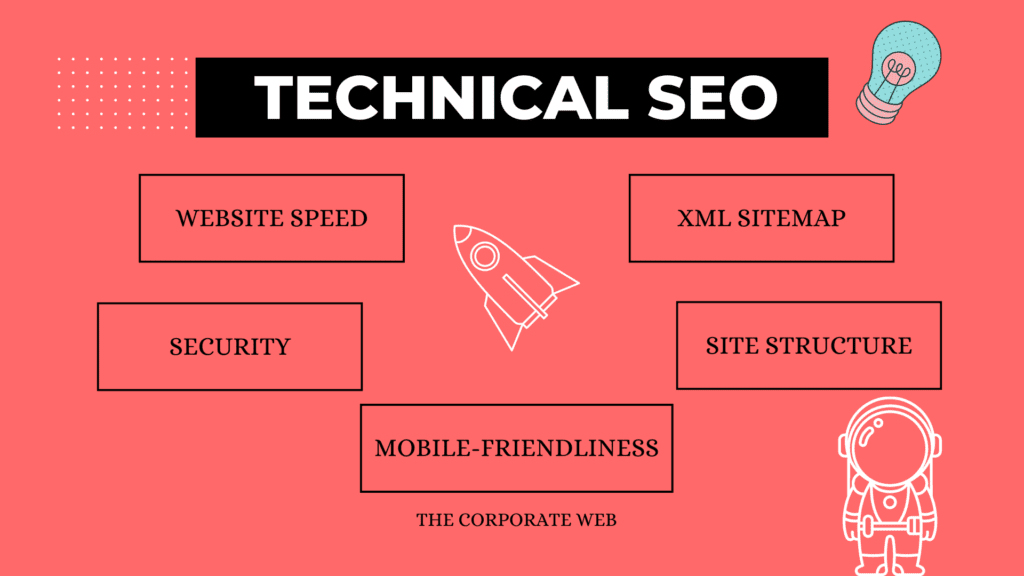
Technical SEO refers to all the technical aspects of your website that affect its search engine rankings. These aspects include website speed, mobile-friendliness, security, and other technical factors. Here are some technical SEO factors that you should consider:
Website speed:
Website speed is a critical factor in determining user experience and search engine rankings. Use tools like Google PageSpeed Insights or GTmetrix to test your website’s speed and identify areas for improvement. Speed alone will not make a page rank on Google, but a slow page loses visitors before they read a word.
Mobile-friendliness:
Google now uses the mobile version of your site for indexing and ranking, so a site that works well on phones is essential. Make sure your website is optimized for mobile devices and has a responsive design.
Security:
Having a secure website with an SSL certificate is essential for user trust and search engine rankings. Make sure your website has HTTPS in its URL and is protected against malware and other security threats. HTTPS is a light signal, but it is basic hygiene for any site that wants to rank on Google.
Site structure:
Your website’s structure should be easy to navigate and well-organized. Use a logical hierarchy of categories and subcategories to improve user experience and search engine rankings. A clear structure also helps new pages rank on Google because crawlers reach them quickly.
XML sitemap:
An XML sitemap is a file that lists all the pages on your website. It helps search engines crawl and index your website more efficiently. Submit it in Google Search Console, which also shows the searches your pages appear for.
How Long Does It Take to Rank on Google?
There is no fixed timeline. A new site in a competitive niche can take many months, while a page answering a specific, low competition question can start appearing within weeks of being indexed.
The quickest way to rank on Google is to pick searches you can genuinely answer better than the current results. Broad terms owned by big brands can wait until your site has some trust.
A Simple Weekly Routine
- Check Search Console for pages with impressions but few clicks, and improve their titles.
- Update one older post with fresh, accurate facts.
- Add internal links from your most visited pages to newer ones.
- Answer one new customer question with a new page.
Google collects its own advice in the SEO Starter Guide, which is worth reading once a year. Small, steady steps like these are how most small sites rank on Google over time.
How to Rank on Google Step by Step for a New Page
The sections above explain the pillars. Here is how to put them together when you publish one new page.
- Find one search to target. Look for a specific question your customers ask, such as “best cotton saree shop in Indore”, rather than a broad word like “saree”.
- Study the current results. Search the phrase yourself and note what the top pages cover, how long they are and what they miss.
- Plan a better answer. List the questions a searcher will have and answer each one in its own section with a clear subheading.
- Write for people first. Use simple language, real examples and your own experience. Put the main answer near the top.
- Add the basics. Write a clear title tag, a meta description, a short URL and descriptive image alt text.
- Link to it. Add internal links from two or three related pages on your site.
- Request indexing. Use the URL Inspection tool in Google Search Console after publishing.
- Review after a few weeks. Check impressions, clicks and the searches the page appears for, then improve it.
Worked Example: A Local Tuition Centre
Imagine a tuition centre in Lucknow that wants more enquiries for Class 10 maths coaching. Trying to rank on Google for “maths tuition” alone would be hard, because large platforms already hold those results.
Instead, the owner creates a page for “Class 10 maths tuition in Gomti Nagar”. The page lists batch timings, teaching method, fees as charged by the centre, how to book a demo class, and answers to common parent questions.
The centre also keeps its Google Business Profile complete and asks parents for honest reviews. Over time, a focused page like this has a realistic chance to rank on Google for local searches that turn into real enquiries.
Rank on Google Checklist Before You Publish
Run through this list for every new post or page.
- One clear topic and one main search phrase.
- Title tag under about 60 characters with the main phrase near the start.
- Meta description that tells the reader what they will get.
- Short, readable URL.
- Main answer in the first few paragraphs.
- Subheadings that match the questions people ask.
- Images compressed and given descriptive alt text.
- At least two internal links to and from related pages.
- Page loads quickly and reads well on a phone.
- Facts, dates and prices checked and current.
Common SEO Mistakes That Hold Pages Back
Many small sites struggle to rank on Google because of a few repeated mistakes rather than one big problem.
- Targeting only broad keywords. A new site rarely beats established brands for one word searches.
- Keyword stuffing. Repeating a phrase unnaturally makes content hard to read and can break Google’s spam policies.
- Thin pages. Short pages that add nothing new rarely rank on Google.
- Buying links. Paid link schemes risk manual action and waste money.
- Never updating old posts. Outdated information loses readers and rankings over time.
- Ignoring Search Console. It tells you for free which searches already show your pages.
Free SEO Tools to Start With
You can work to rank on Google without paid software. Begin with these free options:
- Google Search Console: impressions, clicks, indexing status and the searches your pages appear for.
- Google Keyword Planner: search volume ranges, available inside a Google Ads account.
- Google PageSpeed Insights: speed and Core Web Vitals reports for any URL.
- Google autocomplete and People Also Ask: real questions to answer in your content.
If your site runs on WordPress, our comparison of WordPress SEO plugins explains how to handle titles, sitemaps and schema without coding.
A 30 Day Plan to Rank on Google
New site owners often feel lost about where to begin. This plan breaks the first month into simple weekly goals.
Week 1: Set Up the Foundations
Connect your site to Google Search Console, submit your XML sitemap, and fix any obvious speed or mobile issues PageSpeed Insights reports.
Week 2: Research and Plan
List twenty questions your customers ask. Check each in Google and pick five specific ones where the current results are weak or outdated.
Week 3: Publish and Improve
Write two genuinely helpful pages for your chosen searches, since helpful pages are what rank on Google. Update one older post with fresh facts and better internal links.
Week 4: Build Trust
Share your new pages on your social channels, ask happy customers for reviews, and reach out to one relevant local or industry site that might link to a useful resource.
India Specific Tips
Many Indian searchers mix English and Hindi, like “SEO kaise kare” or “best tiffin service near me”. Look at autocomplete in both styles and write pages in the language your customers actually use.
Most Indian visitors browse on mobile data, so light pages and compressed images matter a lot. A local business should also keep the same name, address and phone number on its website, Google Business Profile, Justdial and IndiaMART.
More Questions About Ranking
Can I rank on Google without backlinks?
For very specific, low competition searches, a genuinely helpful page can rank with few or no backlinks. Competitive searches usually need links and a trusted site.
Conclusion
SEO is an essential aspect of online marketing, and getting it right can make all the difference in your website’s success. By understanding the different SEO factors and implementing the right strategies, you can improve your website’s visibility and attract more potential customers.
Remember that SEO is an ongoing process that requires continuous monitoring, testing, and optimization. Keep track of your website’s performance and make adjustments as needed to stay ahead of the competition. With the steps in this guide, you can rank on Google for the searches that matter most to your business.
Read More: 7 Best WordPress SEO Plugins Compared
FAQs Related To SEO
What is SEO?
SEO stands for Search Engine Optimization, which is the practice of optimizing your website and content to improve its visibility and ranking in search engine results pages (SERPs).
Why is SEO important for my website?
SEO is essential because it helps your website get more organic traffic, which can translate into more leads, sales, and revenue. By optimizing your website for search engines, you can attract more potential customers who are actively searching for the products or services you offer.
What are the different types of SEO?
There are three main types of SEO: on-page SEO, off-page SEO, and technical SEO. On-page SEO refers to optimizing your website’s content and structure, while off-page SEO involves building links and online reputation. Technical SEO refers to optimizing the technical aspects of your website to improve its performance and user experience.
How can I improve my on-page SEO?
To improve your on-page SEO, you should focus on creating high-quality, relevant, and engaging content that is optimized for target keywords. You should also optimize your website’s structure, titles, meta descriptions, images, and internal links to improve user experience and search engine rankings.
What is link building in off-page SEO?
Link building is the practice of acquiring high-quality backlinks from other websites to your own. Backlinks are a critical ranking factor in search engine algorithms, and acquiring them from authoritative and relevant sources can improve your website’s credibility and authority.
How can social media help my SEO?
Social media can help your SEO by increasing your website’s visibility and driving traffic to your website. By sharing your website’s content on social media and engaging with your audience, you can improve your online reputation and attract more potential customers to your website.
Why is website speed important for SEO?
Website speed is important for SEO because it affects user experience and search engine rankings. Slow websites can negatively impact user experience and lead to higher bounce rates, while fast websites can improve user experience and search engine rankings.
Read More: The ultimate SEO guide for your website