
An influencer marketing campaign is a planned partnership where a brand works with social media creators to reach their followers. The influencer promotes the brand’s products or services, usually through posts, reels and stories on Instagram, YouTube, Facebook and X.
It has become popular because people often trust a creator they follow more than a regular advertisement, especially in niches like beauty, fitness, food, tech and finance.
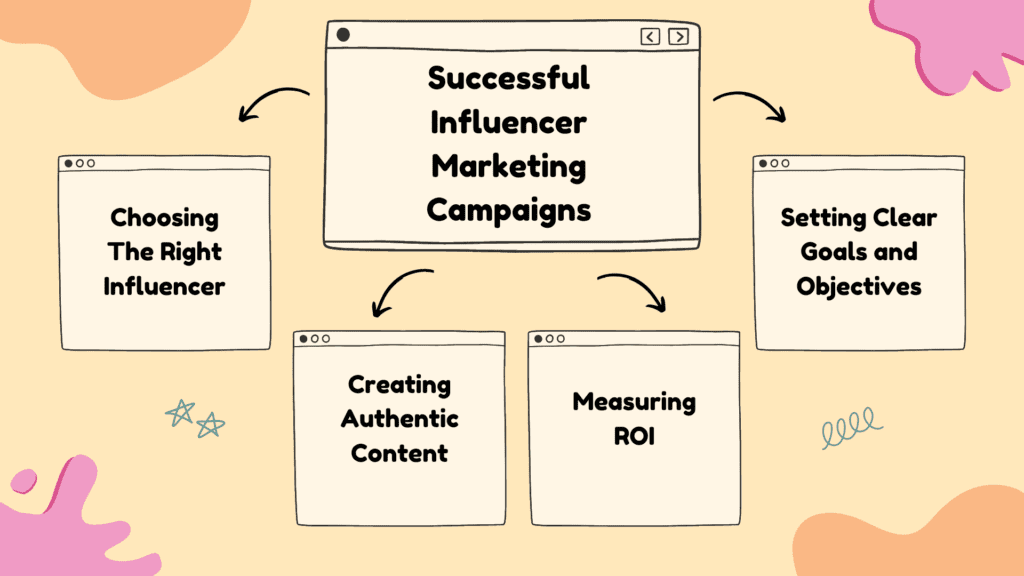
Influencer marketing is a powerful way to reach a targeted audience and build brand awareness. However, it requires careful planning and execution to be successful. Here are five secrets that make any influencer marketing campaign successful, followed by a simple step by step plan for Indian brands.
Choosing the Right Influencer
Choosing the right influencer is critical to the success of an influencer marketing campaign. The influencer should share your brand’s values and have a following that matches your target audience.
When choosing, look at their niche, engagement rate, the city and language of their audience, and how genuine their past brand posts feel. A smaller creator with a loyal, relevant audience often works better than a huge account with a mixed following.
Setting Clear Goals and Objectives
Before launching an influencer marketing campaign, set clear goals. They should be specific, measurable, achievable, relevant and time bound (SMART).
For example, a goal could be 500 new email signups or 200 orders with a creator’s discount code within six weeks. A clear goal tells you which creators to pick and what to measure.
Creating Authentic Content
Authenticity is crucial in influencer marketing. Viewers can easily spot a forced, scripted post and scroll past it.
Work with influencers who genuinely like and use your products or services. Give them a short brief with key points, then let them create content in their own style and voice.
Measuring ROI
Measuring the return on investment (ROI) of an influencer marketing campaign tells you whether it worked. Track reach, engagement rate, link clicks and sales generated by each creator.
Give every influencer a unique discount code or tracking link (UTM link) so you can see exactly who drove results. Use this data to decide whom to work with again.
Building Long Term Relationships with Influencers
Building long term relationships with influencers can benefit your brand. Repeated posts by the same creator feel more natural to their audience than a single paid mention.
Loyal creators may also mention your brand on their own when they genuinely like it. Pay on time, communicate clearly and share results with them.
How To Plan An Influencer Marketing Campaign Step By Step
- Set your goal and budget: decide what success looks like and how much you can spend, in money or free products.
- Pick the creator size: nano (under 10,000 followers), micro (10,000 to 100,000), macro or celebrity creators, based on budget and goal.
- Shortlist and check creators: look at recent posts, comments and audience location, not only follower count.
- Send a clear brief: key message, dos and don’ts, deadlines and the disclosure label to use.
- Agree in writing: deliverables, payment, usage rights and timelines.
- Track and review: compare results with your goal and the cost of the campaign.
Follow India’s Disclosure Rules
In India, paid or gifted promotions must be clearly labelled. The Advertising Standards Council of India (ASCI) asks influencers to use clear labels such as #ad, #collab or #sponsored, and the Department of Consumer Affairs has issued similar endorsement guidelines.
Before every influencer marketing campaign, read the latest guidelines on the ASCI website and make sure your contract asks creators to disclose the partnership properly.
Use Reels To Make Campaigns Work Harder
Short videos usually get the widest reach on Instagram. Plan reels with the creator, and repost the best ones on your own page. For ideas, see our list of reels ideas for Instagram business marketing.
If you are also growing your own brand account, our Instagram Mastery guide covers profile setup, content planning and growth basics.
Influencer Marketing Campaign Budget: What You Pay For
There is no fixed rate card for creators in India. Fees depend on the niche, audience size, engagement, the number of deliverables, usage rights and whether you want exclusivity.
Instead of guessing, ask three or four shortlisted creators for a quote against the same brief. Comparing quotes for identical deliverables quickly shows you the fair range for your niche.
- Barter or gifting: the creator receives your product instead of a fee. It is common with nano creators, and it still has to be disclosed.
- Flat fee: a fixed payment for an agreed number of posts, reels or stories.
- Commission or affiliate: the creator earns a share of every sale made through their code or link.
- Hybrid: a smaller flat fee plus a commission, which shares the risk between you and the creator.
How to Write a Creator Brief That Works
A good brief can be read in two minutes. It keeps every creator in your influencer marketing campaign on the same message without scripting every word.
- The goal, and the one action you want viewers to take.
- Product facts, the claims the creator may make, and the claims they must not make.
- The key message in a single line.
- Deliverables: formats, number of posts, length and posting dates.
- The disclosure label to use and where it must appear.
- The link, discount code or UTM tag to use.
- The approval process and how many rounds of changes are included.
- Usage rights: whether you may repost the content or run it as an ad, and for how long.
Leave room for the creator’s own style. Their followers stay for their voice, not yours.
Worked Example: A Small Skincare Brand
Imagine a small skincare brand in Pune launching a sunscreen. Its goal is a set number of orders in six weeks, tracked through creator discount codes.
Instead of one celebrity, it shortlists eight micro creators who talk about skincare in Hindi and Marathi, reads their comments for real conversations, and asks each one for a quote on two reels and three stories. Every creator gets a unique code and a tracking link.
After two weeks, the brand compares orders per creator with what each one was paid. It moves the rest of the budget to the creators whose codes are being used, and asks them for a second reel.
That is the heart of a lean influencer marketing campaign: start wide, measure early, then put more money behind what works.
Influencer Marketing Campaign Checklist
Go through this list before anything goes live. Every unchecked item is a common reason campaigns disappoint.
- The goal is written as a number with a deadline.
- The budget and payment model are decided.
- Creators are shortlisted and their audience location, language and comments are checked.
- The brief is shared and agreed.
- A written agreement covers deliverables, dates, payment and usage rights.
- The disclosure label is agreed and placed where viewers will clearly see it.
- Unique codes or UTM links are created for each creator.
- A tracking sheet is ready for reach, clicks, codes used and sales.
- There is a plan to reshare the best content on your own page.
Common Influencer Marketing Mistakes to Avoid
Watch for these when you review any influencer marketing campaign plan, your own or an agency’s.
- Picking creators only by follower count.
- Ignoring signs of bought followers, such as sudden jumps in followers or many generic comments.
- Over scripting the post so it sounds like an advertisement.
- Paying the full fee upfront with nothing in writing.
- Forgetting the disclosure label, or hiding it where nobody will notice.
- Judging the whole channel on a single post.
- Running a creator’s video as an ad without agreeing usage rights first.
Free Tools to Run an Influencer Marketing Campaign
You can run your first campaign without any paid platform.
- Instagram search and hashtags: find creators in your niche and city, then study their recent posts and comments.
- Creator insights: ask shortlisted creators to share screenshots of their audience insights, such as top cities and age groups. The Instagram Help Centre explains what professional accounts can see.
- Paid partnership label: Instagram’s built in branded content label makes the collaboration visible on the post.
- UTM links: Google’s free campaign URL builder tags each creator’s link, so Google Analytics shows exactly who sent each visitor.
- Google Sheets: one row per creator with cost, posts, clicks, codes used and sales.
- Canva free plan: handy for mood boards and a visual brief.
A 30 Day Plan for Your First Influencer Marketing Campaign
This plan assumes a small budget and one product. Stretch it if you work with more creators.
- Days 1 to 5: set the goal and budget, choose the one product to promote, and write the brief.
- Days 6 to 12: shortlist 15 to 20 creators, check their audience and comments, and contact the best ten.
- Days 13 to 18: agree terms in writing with four to eight creators, create codes and links, and ship the products.
- Days 19 to 26: creators publish; you reshare, reply to comments and check code usage every day.
- Days 27 to 30: compare results per creator with cost, thank everyone, and choose whom to work with again.
India Specific Notes
ASCI publishes guidelines for influencer advertising, and the Department of Consumer Affairs has issued endorsement guidelines too. Rules can be updated, so check the current version on the ASCI website as a general reference before you brief anyone.
Regional language creators deserve a serious look. If your influencer marketing campaign targets one state or city, a creator speaking Tamil, Bengali or Marathi to a local audience can fit better than a bigger English account.
Be extra careful in health, finance and beauty claims. Give creators only claims your product can back up, and ask your accountant how creator fees and gifted products should be recorded for tax.
More Questions About an Influencer Marketing Campaign
How many creators should a small brand start with?
Start with a number you can manage personally, often four to eight. That is enough to compare results without losing track of anyone.
Does a gifted product need a disclosure label?
Yes. A free product is still a brand connection, so the post should be labelled clearly, just like a paid one.
Should I work with nano or micro creators first?
For most small brands, yes. They are usually easier to reach, more open to barter or small fees, and often closer to their followers.
How soon can I judge results?
Codes and link clicks show early signals within days of posting. Give each creator at least two weeks before you decide whether to work with them again.
Conclusion
In conclusion, influencer marketing can be a powerful way to increase brand awareness and drive sales. Choose the right influencer, set clear goals, encourage authentic content, measure ROI and build long term relationships.
Follow these five secrets and the disclosure rules, and your next influencer marketing campaign will have a much better chance of success.
Read More: Scaling Your SEM: How To Grow Your Campaigns Without Breaking The Bank
FAQs Related To Influencer Marketing Campaigns
What is an influencer marketing campaign?
An influencer marketing campaign is a type of marketing strategy where businesses partner with individuals who have a large following on social media. The influencer promotes the brand’s products or services to their followers through posts on social media platforms.
How do I choose the right influencer for my brand?
When choosing an influencer for your brand, consider their niche, engagement rate, authenticity, and following that matches your target audience. Look for an influencer who resonates with your brand’s values and has a style and voice that aligns with your brand’s messaging.
What are the benefits of influencer marketing?
Influencer marketing can be a powerful strategy to increase brand awareness, drive sales, reach a targeted audience, and build brand trust and credibility.
How do I measure the success of an influencer marketing campaign?
To measure the success of an influencer marketing campaign, track the engagement rate, reach, and sales generated by the campaign. Use this data to adjust your strategy and improve future campaigns.
How can I create authentic content for my influencer marketing campaign?
To create authentic content, work with influencers who genuinely like and use your products or services. Encourage the influencer to create content that reflects their personal style and voice.
What are some common mistakes to avoid in influencer marketing campaigns?
Common mistakes to avoid in influencer marketing campaigns include choosing the wrong influencer, not setting clear goals and objectives, creating inauthentic content, and not measuring ROI.
How do I build a long-term relationship with an influencer?
To build a long-term relationship with an influencer, provide them with a positive and personalized experience, communicate effectively, and offer incentives and perks such as exclusive discounts or access to new products.
How do I set clear goals and objectives for my influencer marketing campaign?
To set clear goals and objectives, make sure they are specific, measurable, achievable, relevant, and time-bound. For example, the goal of an influencer marketing campaign could be to increase brand awareness by 20% within the next six months.
What are some effective ways to measure ROI in influencer marketing campaigns?
Effective ways to measure ROI in influencer marketing campaigns include tracking engagement rate, reach, and sales generated by the campaign, and comparing these metrics to the cost of the campaign.
How can I ensure the success of my influencer marketing campaign?
To ensure the success of your influencer marketing campaign, choose the right influencer, set clear goals and objectives, create authentic content, measure ROI, and build long-term relationships with influencers.
Read More: 13 Influencer Marketing Campaigns to Inspire and Get You Started With Your Own