
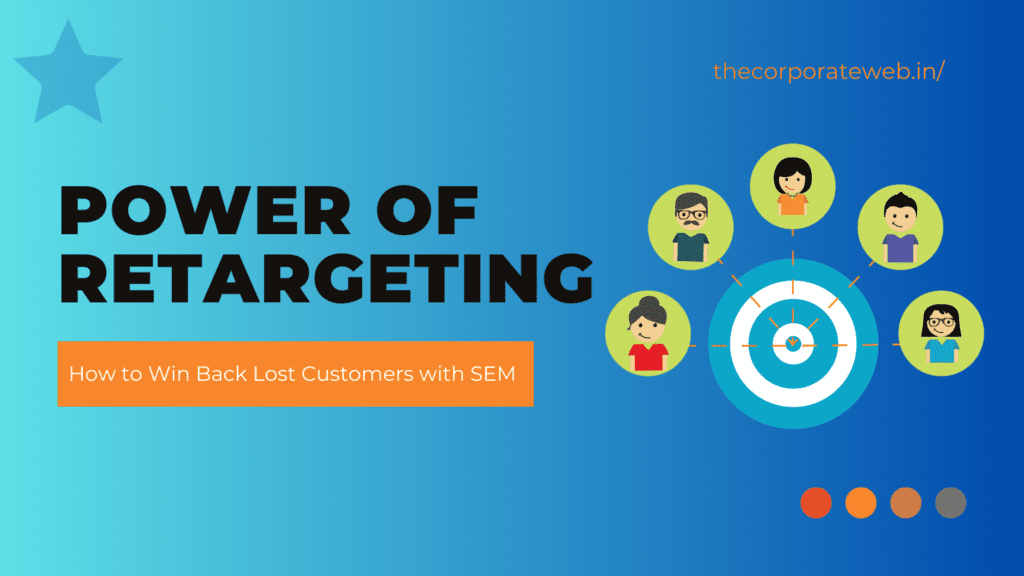

Are you tired of losing visitors who leave your website without buying, and wondering whether Facebook retargeting can bring them back? Retargeting, also known as remarketing, is a powerful technique on search engines and social media that can help you win back lost customers and increase your conversion rates. In this article, we’ll explain how retargeting works on Google and Meta, and how you can use it to your advantage.
What is Retargeting and Facebook Retargeting?
Retargeting is a type of online advertising that targets users who have previously visited your website but did not convert. When a user visits your website, a cookie is placed on their browser.
This cookie allows you to track their activity and serve them ads when they visit other websites or social media platforms. The goal of retargeting is to bring back lost customers and convert them into paying customers.
Facebook retargeting is the same idea on Meta’s platforms. People who visited your site, watched your videos or messaged your page see your ads again while they scroll Facebook and Instagram.
How Does Retargeting Work?
Retargeting works by using data collected from your website visitors to serve them personalized ads. This data includes the pages they visited, the products they viewed, and the actions they took on your website. Based on this data, you can create custom audiences and target them with ads that are relevant to their interests.
There are two types of retargeting: pixel-based retargeting and list-based retargeting. Pixel-based retargeting involves placing a pixel on your website that tracks user behavior.
For Facebook retargeting, this is the Meta Pixel, often paired with the Conversions API so fewer events are lost. List-based retargeting involves uploading a list of customer email addresses or phone numbers to target them with ads.
Benefits of Retargeting
Retargeting has many benefits, including:
- Increased conversion rates: Retargeted visitors are more likely to convert into paying customers because they have already shown interest in your products or services. This is why Facebook retargeting usually sits at the bottom of a sales funnel.
- Improved brand awareness: Retargeting keeps your brand top-of-mind by serving ads to visitors who have previously interacted with your website.
- Higher ROI: Retargeting is a cost-effective way to advertise because you are targeting users who are already familiar with your brand and have a higher likelihood of converting.
How to Set Up Facebook Retargeting in 5 Steps
- Install the Meta Pixel: Add it through Events Manager, or use the built in integration of WordPress, WooCommerce or Shopify.
- Check your events: Make sure key events such as ViewContent, AddToCart and Purchase fire on the right pages.
- Create a custom audience: In Ads Manager, build an audience from website visitors, for example people who added to cart in the last 30 days but did not buy.
- Pick the right objective: Create a campaign with a sales or leads objective and choose that custom audience.
- Answer the doubt: Show an ad that addresses what stopped them, such as delivery time, price or reviews, and exclude people who already bought.
Meta explains each of these screens in its Business Help Center. Facebook retargeting audiences can also be built from people who engaged with your Instagram account, watched your Reels or filled a lead form, which helps when your website traffic is still small.
Facebook Retargeting Ideas for Indian Small Businesses
- Cart reminders for an online store, with a clear return and delivery policy.
- A free sample, trial or demo for people who read your pricing page.
- Customer testimonials for people who watched most of a product video.
- A WhatsApp click to chat ad for people who visited but did not enquire.
Keep audience windows short for low priced products and longer for considered purchases such as courses or furniture. A sensible rule is to match the window to how long your buyers usually take to decide.
Facebook Retargeting Audiences You Can Build
Meta lets you build custom audiences from several sources. Each one suits a different stage of the buying decision, so it helps to know them before you plan any campaign.
- Website visitors: everyone who visited, or only people who viewed a product, added to cart or started checkout
- Video viewers: people who watched a set share of your Facebook or Instagram videos
- Instagram account engagers: people who visited your profile, saved a post or sent a message
- Lead form openers: people who opened or submitted an instant form
- Customer lists: phone numbers or email addresses of customers who agreed to hear from you
Start with the audience closest to a purchase, such as cart abandoners. Facebook retargeting works best when the ad matches exactly what the person did, so a cart reminder should show the product they left behind.
How to choose the time window
The time window decides how far back an audience looks. Short windows of 7 to 14 days suit low priced, impulse products, while 30 to 90 days suit courses, furniture or services that need more thought.
If your audience is very small, widen the window or combine website visitors with video viewers. Too small an audience can stop ads from delivering at all.
A Worked Example of Facebook Retargeting
Imagine an Indian creator who sells an online course for beginners. Many people visit the sales page from Instagram, read for a minute and leave.
Here is a simple Facebook retargeting setup for that creator:
- Audience A: sales page visitors in the last 14 days who did not purchase
- Ad for A: a 30 second video of a real student explaining what they learnt, shared with permission
- Audience B: people who reached checkout in the last 7 days but did not pay
- Ad for B: a short answer to the most common doubt, such as how access works after payment
- Exclusion: everyone who already bought, so customers never see the sales ad again
The creator checks results weekly and changes one element at a time. If Audience B responds well, that is a sign the checkout doubt was the real barrier, and the course page itself can be improved too.
What a good retargeting ad looks like
A good ad speaks to someone who already knows you. It does not need to introduce the brand again; it needs to remove the reason they did not act.
- Show the exact product or offer they viewed
- Answer one doubt: price, delivery, quality, refunds or support
- Use proof such as a genuine review or a short demo
- Give one clear action, such as Shop Now or Send Message
These four points keep Facebook retargeting ads short, relevant and easy to act on.
Facebook Retargeting Budget for Small Businesses
There is no single right budget, because costs change with your audience, season and competition. A sensible approach is to start with a small daily budget you are comfortable losing while you learn.
Run the campaign for at least a week before judging it, because results swing from day to day. Increase spending slowly, only after you see real purchases or enquiries, not just clicks.
Because retargeting audiences are smaller than cold audiences, the Facebook retargeting share of a total ad budget is usually modest. Most spending still goes to reaching new people, and retargeting then follows up with the warmest ones.
Facebook Retargeting vs Google Remarketing
Google remarketing follows people across YouTube, Gmail and sites in the Google Display Network, and can also adjust search bids for past visitors. Facebook retargeting reaches them on Facebook and Instagram, where visual ads and short videos tend to work well.
Most small budgets do best by starting on one platform, proving it works, then adding the second. Whichever you choose, mention cookies and tracking in your privacy policy and follow India’s Digital Personal Data Protection Act, 2023 as its rules take effect.
Best Practices for Retargeting
To get the most out of your retargeting campaigns, follow these best practices:
- Use clear and concise ad copy: Your ads should clearly communicate the value proposition of your product or service and include a clear call-to-action.
- Segment your audiences: Create custom audiences based on user behavior to serve them personalized ads, such as product viewers versus cart abandoners.
- Set frequency caps: Don’t overwhelm your audience with too many ads; in Facebook retargeting, watch the frequency column in Ads Manager and refresh creatives when it climbs. Set a frequency cap to limit the number of times a user sees your ad.
- Test and optimize: Continuously test and optimize your ad copy and targeting to improve your conversion rates and ROI. With Facebook retargeting, change one thing at a time, such as the image or the offer, so you know what made the difference.
Common Facebook Retargeting Mistakes
- Not excluding buyers: customers keep seeing ads for something they already bought
- One audience for everyone: a product viewer and a cart abandoner need different messages
- Broken tracking: the Pixel fires on the wrong page, so audiences and reports are wrong
- Same creative for months: people stop noticing an ad they have seen many times
- Judging too early: switching off a campaign after one or two days
- Ignoring the landing page: the ad brings people back to a page that still does not answer their question
Fixing these usually does more for Facebook retargeting results than raising the budget.
Free Tools to Set Up and Test Retargeting
- Meta Events Manager: install the Pixel, see events as they arrive and use the Test Events screen
- Meta Pixel Helper: a free Chrome extension that shows whether the Pixel fires on a page
- Meta Ad Library: see the ads other businesses are running, for ideas on format and offers
- Google Tag Assistant: check Google tags if you also run Google remarketing
- Your own phone: visit your site, add a product to cart and confirm the event appears
Your First 30 Days With Facebook Retargeting
Week 1: Tracking
Install the Meta Pixel and check that ViewContent, AddToCart and Purchase events fire correctly. Write a short note in your privacy policy about cookies and advertising.
Week 2: Audiences
Create two or three custom audiences: product viewers, cart abandoners and buyers to exclude. Add a video viewer audience if your Instagram content gets regular views.
Week 3: First campaign
Launch one Facebook retargeting campaign with two ads, each answering a different doubt. Keep the budget small and do not edit it every day.
Week 4: Review
Compare cost per purchase or cost per lead between the two ads. Keep the winner, replace the loser with a new idea, and plan the next month from what you learnt.
Privacy, Consent and Facebook Retargeting in India
Retargeting depends on tracking what people do on your site, so be open about it. Mention cookies, the Meta Pixel and advertising use in your privacy policy, and upload customer lists only for people who agreed to hear from you.
India’s Digital Personal Data Protection Act, 2023 sets rules on how businesses collect and use personal data, with its rules coming into effect in stages. This section is general awareness, not legal advice, so check the current position or ask an expert before you scale Facebook retargeting with customer data.
Meta also has its own advertising standards and policies on personal attributes in ad copy. For example, an ad should not suggest that it knows something personal about the viewer, so write “Still thinking about it?” rather than lines that point at their private details.
Facebook retargeting checklist
- Meta Pixel installed and key events tested
- Buyers excluded from sales campaigns
- Separate audiences for viewers and cart abandoners
- Each ad answers one clear doubt
- Privacy policy mentions cookies and advertising
- Results reviewed weekly, creatives refreshed monthly
Facebook Retargeting: Quick Answers
Does Facebook retargeting work with a small website?
It can, but a very small audience may not deliver well. Build audiences from Instagram engagers and video viewers as well, which grow faster than website traffic.
Can I retarget people from WhatsApp?
You can retarget people who clicked your ads or engaged on Facebook and Instagram. For WhatsApp chats, use a customer list only when those people agreed to receive marketing.
Is Facebook retargeting better than Google remarketing?
Neither is better for every business. Ads on Facebook and Instagram suit visual products and social audiences, while Google remarketing reaches people searching with clear intent, so test what fits your buyers.
Conclusion
Retargeting, whether through Google remarketing or Facebook retargeting, is a powerful technique that can help you win back lost customers and increase your conversion rates. By using data collected from your website visitors, you can create custom audiences and serve them personalized ads that are relevant to their interests. Follow best practices such as using clear ad copy, segmenting your audiences, setting frequency caps, and testing and optimizing your campaigns to get the most out of your retargeting efforts.
For a deeper walkthrough of Meta ads, including audiences and budgets, see our Profiting From Facebook Ads guide.
Read More: Mastering AdWords: How To Create High-Converting Search Ads
FAQs Related To Retargeting
What is the difference between retargeting and remarketing?
Retargeting and remarketing are often used interchangeably, but they refer to the same thing: targeting users who have previously interacted with your website or brand.
How do I set up a retargeting campaign?
To set up a retargeting campaign, you will need to create a pixel or upload a list of customer email addresses or phone numbers. Then, you can create custom audiences and target them with personalized ads.
What is a frequency cap?
A frequency cap is a limit on the number of times a user sees your ad. Setting a frequency cap can help prevent ad fatigue and keep your brand from feeling pushy.
Read More: What Is Retargeting? How To Set Up an Ad Retargeting Campaign