


Shareable content is any post, reel, image or article that people want to send to a friend, repost to their story or save for later. With the rise of social media, creating it has become one of the cheapest ways for businesses and creators to grow their reach. In this post you will learn why sharing matters, the psychology behind it, and practical strategies for Instagram, WhatsApp, YouTube and blogs in 2026.
Why is Shareable Content Important?
Shareable content is important because it helps increase your reach and engagement on social media. When your followers share your content, it exposes your brand to their followers, increasing your potential audience.
Additionally, social media algorithms often prioritize content that receives more engagement, such as likes, comments, and shares, making it more likely that your content will be seen by a wider audience.
Instagram, for example, has said publicly that sends, when people share a post in DMs, are one of the strongest signals for showing content to new people. The platform explains how its recommendations work in the Instagram Help Centre.
In addition to increasing your reach and engagement, shareable content can also help establish your brand as a thought leader in your industry. When you create content that is informative, entertaining, or thought-provoking, it can position your brand as a valuable resource for your followers.
Why People Share Content
Before you plan posts, understand why people press the share button at all. Most shares come from one of a few motives:
- To help someone: “This tip is useful for you.”
- To say something about themselves: a quote or opinion that matches who they are.
- To make someone laugh: memes and relatable reels are sent in DMs all day.
- To save it for later: checklists, templates and how to guides.
- To start a conversation: a surprising fact or a question that invites replies.
If a post does not trigger at least one of these motives, it may get views but very few shares. Planning around the motive is the simplest way to make shareable content on purpose.
Strategies for Creating Shareable Content
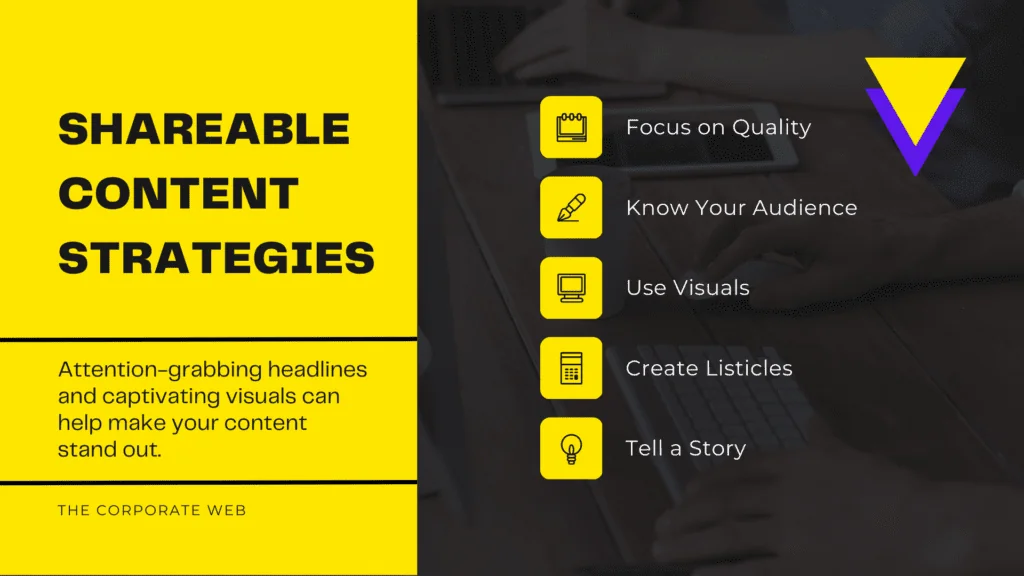
Focus on Quality
The first strategy for creating shareable content is to focus on quality. While it may be tempting to churn out a large volume of content to keep up with social media algorithms, it’s important to remember that quality is more important than quantity. Focus on creating content that is informative, engaging, and visually appealing.
Know Your Audience
To create content that resonates with your followers, it’s important to know your audience. Who are they? What are their interests and pain points? What type of content do they typically engage with? By understanding your audience, you can create content that speaks directly to their needs and interests.
Use Visuals
Visual content is more likely to be shared on social media than text-only content. Consider incorporating images, short videos, carousels and infographics. On mobile, the first frame or first slide decides whether people stop scrolling, so make it bold and easy to read.
Create Listicles
Listicles, or articles that are formatted as lists, are a popular format for shareable content. This is because they are easy to scan and provide readers with quick, actionable information. Consider creating listicles that provide tips, resources, or ideas related to your industry.
Tell a Story
People do love stories, and creating content that tells a story can help increase engagement and shareability. Consider sharing personal anecdotes or case studies that illustrate the value of your products or services.
Use Humor
Humor is a great way to make your content more shareable. Relatable humour about office life, exams, family or the daily struggles of your audience travels fast on WhatsApp and Instagram. If memes suit your brand, our guide to meme pages on Instagram shows how creators plan them.
Keep It Timely
Creating content that is timely and relevant to current events can help increase engagement and shareability. Consider tying your content to holidays, current events, or trending topics to make it more timely and relevant.
Make It Interactive
Interactive content, such as polls, quizzes, or surveys, can help increase engagement and shareability by providing a fun and interactive way for your followers to interact with your brand.
Use Influencers
Partnering with influencers in your industry can help increase the reach and engagement of your content. Consider reaching out to influencers in your industry to collaborate on content or promote your content to their followers.
Sharing Ideas by Platform
Reels with a quick, useful tip, carousels that work as mini guides, and relatable memes get sent in DMs the most. End with a light prompt such as “send this to a friend who needs it” only when it fits naturally.
For business accounts, see our Instagram business marketing reels ideas for formats that are easy to repeat.
Short videos, festival greetings, simple infographics and status friendly vertical clips are shared widely in family and community groups. Keep text large and your brand mark small so people are happy to forward it.
YouTube and blogs
On YouTube, Shorts and practical tutorials get shared, while long videos get saved and linked from other places. On a blog, checklists, free templates and genuinely useful guides earn shares and links over time.
How to Measure Sharing
- Shares and sends: the clearest sign that a post works.
- Saves: show that people want to come back to it.
- Reach from non followers: shows the post is travelling beyond your audience.
- Profile visits and follows after a post: show whether sharing turns into growth.
Check these in Instagram Insights or YouTube Studio once a week. Note which topics and formats get shared, then make more of those and fewer of the rest.
Common Mistakes to Avoid
- Asking for shares on every post, which feels needy
- Copying other creators’ videos or memes instead of making your own version
- Posting long, text heavy images that are hard to read on a phone
- Chasing every trend even when it does not fit your audience
How to Create Shareable Content, Step by Step
Tips are easier to use when they follow a routine. This simple workflow works for a Reel, a carousel, a WhatsApp image or a blog post.
- Collect real questions. Note what customers ask in DMs, comments, WhatsApp and at the counter. These questions are the raw material for shareable content.
- Pick one reason to share. Decide whether the post will make people laugh, help a friend, look smart, or feel understood. One clear reason beats a mix.
- Write the hook first. The first line or first two seconds must show why the post is worth a friend’s time.
- Make it easy to read. Use large text, short lines and one idea per slide or scene, so it works on a small phone screen.
- Add a share prompt. A soft line such as “send this to the friend who always forgets” gives people permission to share.
- Brand it lightly. Add your handle or logo in a corner, so the post still points back to you after it travels.
- Publish, then watch the first day. Note shares, saves and sends, and reply to comments quickly.
Shareable Content Examples for Indian Audiences
Here are a few formats that fit everyday Indian life and are easy for small brands to make.
- Festival checklists: a Diwali cleaning list or a wedding shopping checklist that people forward to family groups.
- Money saving tips: simple, honest tips such as comparing prices before buying, with no promises of returns.
- Relatable office or college humour: situations your audience lives through, without mocking any person or community.
- Step by step guides: how to fill a common form, set up a UPI app safely, or prepare for an interview.
- Local guides: the best places to eat or shop in your city, made from your own visits.
- Myth versus fact posts: short corrections of common misunderstandings in your field, with a reliable source.
Each of these works because the viewer thinks of a specific person while watching. That moment is what turns a post into shareable content, so design for it.
Shareable Content Checklist Before You Post
Use this quick checklist to catch weak posts before they go live.
- Would I send this to a friend myself?
- Is the main idea clear within two seconds?
- Can it be understood without sound?
- Is every fact correct, and is the source reliable?
- Is the text readable on a phone, with good contrast?
- Is my brand handle visible but not distracting?
- Does it avoid copyrighted film clips, songs or photos I have no rights to?
If you answer no to any line, fix it first. A single wrong fact can spread just as fast as a good post, and it hurts trust.
Free Tools to Make Shareable Content
You can create most shareable content with free tools before paying for anything.
- Canva for carousels, quote cards and WhatsApp status images.
- CapCut or the built in Instagram editor for Reels with captions.
- Google Trends to see which topics people in India are searching right now, at trends.google.com.
- Instagram and YouTube insights to check shares, saves and sends on each post.
- A simple notes app to save ideas the moment a customer asks a good question.
Turn One Idea Into Shareable Content for Every Platform
You do not need a new idea for every channel. One strong idea can be reshaped to fit the way people share on each platform.
- Instagram: a carousel of five to seven slides, or a 20 to 30 second Reel with captions.
- WhatsApp: a single clear image or a short video under a minute, sized for status and groups.
- YouTube: a Short for quick reach, and a longer video that explains the idea in depth.
- Blog: a detailed article with steps and examples, which people can bookmark and send as a link.
- Email: a short note to your list that links to the full article.
Repurposing saves time and gives each idea several chances to travel. Keep the core message the same and change only the format.
A 30 Day Plan for Beginners
If you are starting from zero, keep the first month simple and focused on learning.
- Week 1: list 30 customer questions and pick the 10 that come up most.
- Week 2: turn five of them into carousels or Reels using the step by step workflow above.
- Week 3: post the remaining five, and test two different share prompts.
- Week 4: compare shares and sends, then make a second version of your best post.
After a month you will know which topics your audience actually passes on. Build your next batch of posts around those winners rather than around guesses.
Conclusion
Shareable content is an important part of any social media strategy in 2026. By focusing on quality, knowing your audience, using visuals, creating listicles, telling a story, using humor, keeping it timely, making it interactive, and using influencers, you can create content that is more likely to be shared and increase your reach and engagement on social media.
If you want ready material to test these ideas faster, the Viral Meme Bundle gives you editable meme templates you can adapt with your own message.
Read More: How To Create A Winning Content Marketing Strategy For Your Business
FAQs Related To Shareable Content Strategies
What is shareable content?
Shareable content is any type of content, such as blog posts, videos, images, or social media posts, that is more likely to be shared by users on social media platforms. This can include content that is informative, entertaining, visually appealing, or emotionally resonant.
Why is shareable content important?
Creating shareable content is important because it helps increase your reach and engagement on social media platforms. When your followers share your content, it exposes your brand to a wider audience and increases the likelihood that your content will be seen by potential customers. Additionally, shareable content can help establish your brand as a thought leader in your industry.
How To create shareable content?
To create shareable content, it’s important to focus on quality, know your audience, use visuals, create listicles, tell a story, use humor, keep it timely, make it interactive, and use influencers. By incorporating these strategies into your content creation process, you can create content that is more likely to be shared and increase your reach and engagement on social media.
What are some examples of Content That Are Shareable?
Examples of shareable content include blog posts that provide valuable information or actionable tips, videos that are entertaining or informative, images or infographics that are visually appealing and easy to understand, social media posts that use humor or engage with current events or trending topics, and interactive content such as polls or quizzes.
How can I measure the success of my shareable content?
You can measure the success of your shareable content by tracking metrics such as likes, comments, shares, click-through rates, and engagement rates. These metrics can help you understand which types of content are resonating with your audience and adjust your content strategy accordingly.
Read More: 9 Examples of Highly Shareable Content