
Link building is a crucial component of search engine optimization (SEO) and digital marketing. It involves the process of acquiring links from other websites to your own website. The importance of link building lies in the fact that search engines like Google and Bing use links to determine the credibility and authority of a website.
However, not all links are created equal. There are high-quality links and low-quality links. High-quality links are those that come from reputable and authoritative websites that are relevant to your niche or industry.
These links can help boost your website’s visibility, search engine ranking, and organic traffic. On the other hand, low-quality links come from spammy or irrelevant websites that can harm your website’s credibility and ranking.
In this article, we will guide you through the basics of link building and show you how to acquire high-quality backlinks for your website.
Why Is Link Building Important for SEO?

Search engines like Google use complex algorithms to determine the relevance and authority of a website. These algorithms consider various factors, such as content quality, user experience, on-page optimization, and off-page optimization. It is an essential off-page optimization technique that helps search engines determine the credibility and authority of a website based on the quality and quantity of links pointing to it.
Link building can help improve your website’s search engine ranking, which can result in more organic traffic, leads, and sales. Here are some of the main benefits:
Increased visibility:
High-quality links from authoritative websites can improve your website’s visibility in search engine results pages (SERPs). This can lead to more clicks, impressions, and traffic to your website.
Higher search engine ranking:
Good backlinks can help improve your website’s search engine ranking for your target keywords. This can lead to more organic traffic and higher visibility for your website.
Better credibility and authority:
When reputable websites link to your website, it signals to search engines that your website is trustworthy and authoritative. This can help improve your website’s credibility and authority in your niche or industry.
How to acquire high-quality backlinks?
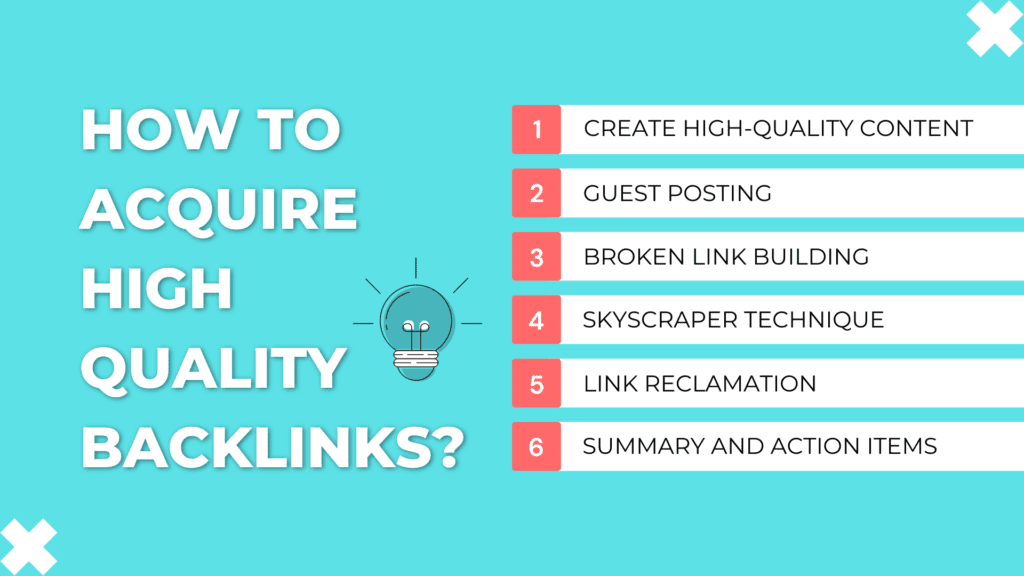
Now that you understand the importance of link building for SEO, let’s dive into the process of acquiring high-quality backlinks for your website.
Create high-quality content:
The first step to acquiring high-quality backlinks is to create high-quality content that is valuable, informative, and relevant to your target audience. High-quality content can attract natural links from other websites that find your content useful and informative.
Guest posting:
Guest posting involves writing a blog post for another website in your niche or industry. In exchange, you can include a link back to your website in the author bio or within the content. Guest posting can help you build relationships with other websites and acquire high-quality links.
Broken link building:
Broken link building involves finding broken links on other websites in your niche or industry and offering to replace them with links to your own content. This technique can help you acquire high-quality links from authoritative websites.
Skyscraper technique:
The Skyscraper technique involves finding popular content in your niche or industry and creating a better version of it. You can then reach out to websites that have linked to the original content and offer them your improved version. This technique can help you acquire high-quality links from relevant and authoritative websites.
Link reclamation:
Link reclamation involves finding mentions of your brand or website on other websites that do not include a link back to your website. You can reach out to these websites and ask them to include a link back to your website. This technique can help you acquire high-quality links from relevant and authoritative websites.
Interviews:
Interviews are a great way to build relationships with other websites and acquire high-quality links. You can reach out to experts in your niche or industry and request an interview. Once the interview is published, you can ask for a link back to your website.
Competitor analysis:
Competitor analysis involves analyzing the link profiles of your competitors to identify high-quality link opportunities. You can use tools such as Ahrefs or SEMrush to identify your competitors’ backlinks and reach out to the same websites for link opportunities.
Social media promotion:
Social media promotion involves promoting your content on social media platforms such as Facebook, X (formerly Twitter), Instagram and LinkedIn. This can help you attract natural links from other websites that find your content useful and share-worthy.
Resource page link building:
Resource page link building involves finding resource pages on other websites in your niche or industry and offering to include your website or content on those pages. This technique can help you acquire high-quality links from authoritative websites that have strong relevance to your website’s niche or industry.
Infographic outreach:
Infographic outreach involves creating a high-quality infographic that is relevant and informative to your target audience. You can then reach out to websites and offer them to feature your infographic on their website with a link back to your website as the source. This technique can help you acquire high-quality links from relevant and authoritative websites.
Link roundups:
Link roundups are weekly or monthly blog posts that feature a list of the best content in a particular niche or industry. You can reach out to websites that publish link roundups and offer your content for inclusion in their future posts. This technique can help you acquire high-quality links from relevant and authoritative websites.
Build relationships:
Building relationships with other websites in your niche or industry can help you acquire high-quality links in the long term. You can start by commenting on their blog posts, sharing their content on social media, and reaching out to them for guest posting or collaboration opportunities.
Avoid black hat SEO tactics:
Black hat tactics such as buying links or using automated software can harm your website in the long run. Google lists these practices as link spam in its official spam policies, so stick to white hat methods and focus on earning natural links.
A Step by Step Link Building Process for Beginners
Knowing the tactics is one thing, running them every week is another. This simple process works for a small team or a solo owner.
Step 1: Build One Page Worth Linking To
Pick a topic your customers ask about often and create the most useful page on it, such as a checklist, a calculator or a clear guide with your own photos. Links follow usefulness, so start with an asset, not with outreach.
Step 2: Make a List of Relevant Sites
Search Google for your topic plus words like “resources”, “guide” or “blog” and note the sites that serve the same audience. Check that each site is real, regularly updated and read by people, not a page built only to sell links.
Step 3: Write a Short, Personal Email
Find the editor or the author and mention a specific article of theirs. Explain in two or three lines why your page helps their readers, and never offer money for a link.
Step 4: Follow Up Once, Then Move On
Send one polite follow up after about a week if there is no reply. Keep a simple sheet with the site, the contact, the date and the result so that you never email anyone twice.
Step 5: Measure What You Earned
Check the Links report in Google Search Console every month to see which sites now link to you. Compare it with your rankings and traffic for the pages you promoted.
Common Link Building Mistakes to Avoid
Most wasted effort comes from a few habits. Watch out for these:
- Chasing a large number of links from unrelated sites instead of a few relevant ones.
- Using the same exact match anchor text again and again, which looks unnatural.
- Sending the same template email to hundreds of sites.
- Paying for “guest posts” on sites that publish anything for a fee.
- Pointing links at thin pages that give visitors nothing new.
- Giving up after a month, before your link building has had time to show results.
Link Building Ideas for Indian Small Businesses
You do not need a big agency budget to earn good links. Many of the best opportunities for Indian businesses are local and based on real relationships.
- Local associations and chambers: member directories of trade bodies often link to member websites.
- Suppliers and partners: ask brands you stock or work with to list you on their dealer or partner page.
- Local news and blogs: share a genuine story, event or useful data with city news sites and bloggers.
- College and alumni networks: alumni features and event pages can link back to your site.
- Helpful guides: publish a practical resource, such as a price guide or checklist, that others want to reference.
Track your new links and their results in Google Search Console, which shows the sites linking to you. Patience matters here, because link building compounds slowly over months, not days.
If you want a complete starter kit for SEO and online promotion, The Ultimate Digital Marketing Bundle brings our marketing ebooks together in one place.
Your First 30 Days of Link Building
If you are starting from zero, this plan keeps the work small and steady:
- Week 1: fix your own site first. Add internal links between related pages and make sure your best pages load fast and read well.
- Week 2: create or upgrade one linkable asset, such as a local guide, a checklist or an original photo set.
- Week 3: list 20 relevant sites and send personal emails to the best 10 of them.
- Week 4: claim easy wins such as supplier pages, association directories and unlinked brand mentions, then review the results in Search Console.
Repeat the cycle every month. Small, steady link building beats a one time burst of activity.
Free Tools to Start With
Paid suites are useful at scale, but you can begin with these:
- Google Search Console: shows which sites link to you and which of your pages are linked most.
- Google Alerts: emails you when your brand name appears online, which helps with link reclamation.
- Google Sheets: enough to track outreach, contacts and replies.
- Ahrefs Webmaster Tools: free for site owners who verify their site, and gives a wider view of your backlinks.
A beginner can get started with these free options alone, as long as the content behind the links is genuinely useful.
Conclusion
Link building is a crucial component of SEO and digital marketing. Acquiring high-quality backlinks from authoritative websites can help improve your website’s search engine ranking, visibility, credibility, and authority. However, it is a complex and time consuming process that requires patience, persistence, and a solid strategy.
By following the tips and techniques outlined in this article, you can start building high-quality backlinks for your website and improve your online presence. Remember, the key to successful link building is to focus on quality over quantity and to build relationships with other websites in your niche or industry.
Read More: The Top 5 SEO Mistakes That Are Killing Your Website’s Ranking
FAQs Related To Link Building
What is link building in SEO?
Link building in SEO refers to the process of acquiring hyperlinks from other websites to your own website. It is an important aspect of SEO that helps improve your website’s search engine ranking and visibility.
How do I know if a backlink is high-quality?
A high-quality backlink is one that comes from a relevant and authoritative website that has a strong reputation in your niche or industry. You can use tools like Ahrefs or Moz to check a website’s domain authority and page authority to determine if it is a high-quality website.
What is the best way to acquire high-quality backlinks?
The best way to acquire high-quality backlinks is through a combination of techniques such as guest posting, fixing broken links, getting listed on resource pages and infographic outreach. However, it is important to focus on quality over quantity and avoid spammy or manipulative practices.
Can I buy backlinks for my website?
Buying backlinks for your website is not recommended as it goes against Google’s guidelines and can result in penalties or lost rankings. It is important to focus on natural and ethical techniques.
How long does it take to see the results of link building?
The results of link building can vary depending on the quality and quantity of backlinks acquired, as well as other factors such as website content and competition. It can take several weeks or even months to see the full impact on your website’s search engine ranking and traffic.
Can internal linking help with SEO?
Yes, internal linking can help with SEO as it helps distribute link equity throughout your website and improves website navigation and user experience. It is important to use descriptive anchor text and link to relevant pages within your website.
What is anchor text and how important is it for link building?
Anchor text is clickable text that appears as a hyperlink and directs users to another page or website. It matters because it helps search engines understand the relevance and context of the linked content. It is important to use descriptive and relevant anchor text for optimal SEO results.
What is a nofollow link and how does it impact link building?
A nofollow link is a hyperlink that has the rel=”nofollow” attribute, which tells search engines not to pass any link equity or authority to the linked page or website. Nofollow links can still drive traffic and improve visibility, but they do not directly impact search engine ranking.
Can I remove backlinks that are harming my website’s SEO?
First ask the linking site to remove a truly harmful link. Google’s disavow tool in Search Console exists for serious cases, such as a manual action for unnatural links, but most sites never need it because Google usually ignores spammy links on its own.
What is the role of content in link building?
Content plays a crucial role in link building as high-quality and relevant content is more likely to attract natural backlinks from other websites. It is important to create informative, valuable, and share-worthy content that addresses the needs and interests of your target audience.
Read More: Link Building for SEO: The Beginner’s Guide