


Voice search SEO is the work of making your website easy to find when people ask a question out loud to Google Assistant, Siri or Alexa instead of typing it. Search Engine Optimization (SEO) is the practice of helping a website rank higher in search results organically, and voice is now one more way people reach those results.
In India this matters even more, because millions of people search by voice in Hindi, English and mixed Hinglish, mostly on mobile phones. This guide explains how voice changes SEO and what you can do about it.
Voice search and its growing importance
Voice search lets users search the internet by speaking instead of typing. Smartphones, smart speakers, smart TVs and cars all support it, so spoken queries are now a normal part of how people search.
Good voice search SEO uses natural language, clear answers and structured data, so that your page is a strong candidate when an assistant reads out a result.
It also improves accessibility for users who find typing difficult, such as older users or people who are more comfortable speaking in their own language.
Purpose of the blog
The purpose of this blog is to explain voice search SEO in simple terms and show why it matters for businesses to succeed online.
You will learn practical steps that can help increase website traffic and visibility. It is written for business owners, bloggers, marketers and anyone improving their online presence.
Voice Search
What Is Voice Search?
Voice search means using a spoken command to search for information. You speak to a phone, speaker or other device, and it either reads out an answer, shows results, or performs an action such as calling a shop or opening directions. Voice search SEO is about making your page the answer the device chooses.
The evolution of Voice Search
Voice assistants became mainstream after Apple launched Siri in 2011, followed by Google Assistant and Amazon Alexa. These assistants use natural language processing and artificial intelligence to understand spoken questions.
Today, voice input is built into Google Search on almost every Android phone, and AI assistants can hold longer conversations. That is why voice search SEO has moved from a niche idea to a normal part of an SEO plan.
How voice search is changing SEO
People speak in full sentences. Instead of typing “pizza near me”, they ask “which pizza place near me is open now?” This shift is why voice search is changing SEO by emphasizing long tail keywords and natural language queries.
Assistants also prefer short, direct answers. Pages that answer a question clearly near the top, often in 40 to 60 words, are better candidates for featured snippets and spoken answers.
Impact of Voice Search SEO on Your Strategy
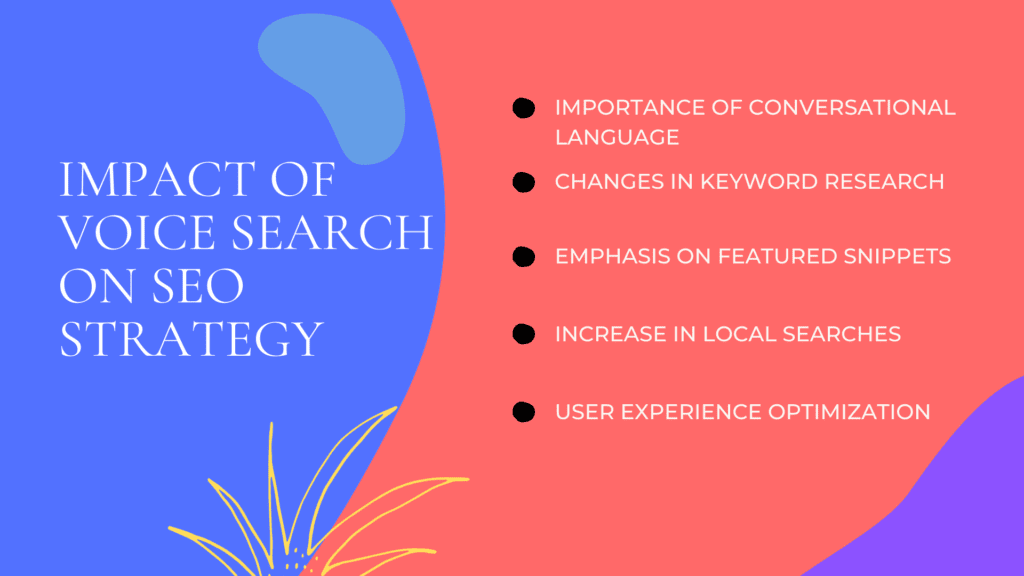
Importance of conversational language
Spoken queries are longer and more conversational than typed ones. Your content should use the same kind of language your customers use when they talk, not only formal industry terms.
A simple voice search SEO habit is to read your answer aloud. If it sounds natural when spoken, it is more likely to match how people ask.
Changes in keyword research
Keyword research for voice search SEO focuses on questions and long phrases: who, what, where, when, why and how. Look at Google’s “People also ask” box, autocomplete suggestions and your own customer queries on WhatsApp or email.
For Indian audiences, include the Hindi and Hinglish versions people actually say, such as “reels kaise banaye” next to “how to make reels”. Voice search SEO works best when you match the exact words people speak.
Emphasis on featured snippets
Featured snippets are short answers shown at the top of some search results, and assistants often read them aloud. In voice search SEO, the usual way to aim for them is to put a clear question as a heading and answer it directly in the first sentence or two below it.
Lists and short tables also help, because search engines can easily pull them into a snippet.
Increase in local searches
Many voice searches are local searches, such as “chemist near me” or “best salon in Pune”. To compete, your business needs strong local SEO.
That starts with a complete Google Business Profile (earlier called Google My Business), with the correct address, phone, opening hours, photos and regular reviews. Local voice search SEO depends heavily on this information being accurate.
User experience optimization
Most voice searches happen on phones, so the page that opens must be fast, mobile friendly and easy to use. A slow page wastes the visit even if you rank well, so focus on a positive user experience.
Good voice search SEO also means putting the key answer, the price or the contact button where people see it without scrolling.
Importance of Structured Data

Explanation of Structured Data
Structured data, also called schema markup, is code that labels the information on a page so search engines understand it. It can describe products, prices, reviews, events, recipes, local businesses and more. It is the most technical part of voice search SEO, but plugins make it simple.
Significance of structured data in voice search SEO
Structured data does not guarantee a spoken answer, but it helps search engines understand exactly what your page offers. For a local business, schema for the address, hours and phone number supports the same information shown in your Business Profile.
For example, if someone asks for the nearest bakery that is open now, search engines need reliable data about location and hours. Clear structured data is one of the quiet building blocks of voice search SEO.
How to implement Structured Data
Start by deciding what each page is about: a product, an article, a local business or an event. Then add the matching schema type, either by hand in JSON format or with an SEO plugin such as Rank Math or Yoast SEO for WordPress.
After adding it, test the page with Google’s Rich Results Test and fix any errors. Google explains the supported types in its official structured data documentation.
Tips for Voice Search SEO

Tips to Optimize for Voice Search
Here are five practical voice search SEO tips you can apply to any website:
Focus on long tail keywords: Target full questions and longer phrases that match how people speak. Use them naturally in headings, answers and meta descriptions.
Create conversational content: Answer common customer questions in a friendly, simple tone. Write the way you would explain it on a phone call, which is the heart of voice search SEO.
Improve website speed: Voice users are usually on mobile data and expect quick results. Compress images, use good hosting and remove heavy scripts you do not need.
Optimize for mobile: Use a responsive design, readable font sizes and buttons that are easy to tap. Check your key pages on an actual budget phone, not just a laptop.
Add question and answer sections: A short FAQ section at the end of important pages answers related questions in one place. Keep each answer brief and direct.
Importance of tracking results
Track the impact of your voice search SEO work so you know what is helping. Google Search Console shows the queries your pages appear for, including longer question style queries, along with clicks and average position.
Google Analytics shows what visitors do after they arrive. Together, these tools tell you which pages to improve next.
Voice queries are not labelled separately in these reports, so measure voice search SEO by looking for growth in long question queries and local searches as a practical signal.
Conclusion
Recap of the impact of voice search on SEO
Voice search has made SEO more conversational. Long tail questions, direct answers, local information and mobile speed matter more than ever.
Search results now also include AI generated answers, which reward pages that explain topics clearly and accurately. The same habits that help voice search SEO help here too.
Future of SEO and voice search
Assistants are spreading into cars, TVs, appliances and wearables, and AI is making them better at understanding context. Businesses that keep investing in voice search SEO, with clear and helpful answers, will stay visible as these interfaces change.
Final thoughts
Voice search is not a passing trend. Start with the basics: answer real questions in plain language, keep your Business Profile accurate, add structured data and make your site fast on mobile.
If you want a guided path for learning these skills, our digital marketing courses bundle covers SEO basics alongside other channels. Steady voice search SEO work done this way also improves your regular SEO.
Read More: The Top 5 SEO Mistakes That Are Killing Your Website’s Ranking

Voice Search SEO FAQs
What is voice search, and how does it differ from traditional search methods?
Voice search is a technology that allows users to perform search queries using their voice instead of typing keywords into a search engine. This technology differs from traditional search methods because it relies on natural language processing (NLP) and artificial intelligence (AI) to understand the context and intent behind user queries.
How has voice search already impacted SEO, and what changes have been made to adapt to it?
Voice search has already impacted SEO by changing the way businesses approach keyword research and optimization. Businesses must now focus on long-tail keywords and conversational language to better match the natural language used in voice searches. Additionally, featured snippets have become more important as they often provide direct answers to voice search queries.
What role do long-tail keywords play in optimizing for voice search, and how can businesses use them effectively?
Long-tail keywords play a crucial role in optimizing for voice searches because they better match the conversational language used in voice searches. Businesses can use long-tail keywords effectively by using tools like Google’s Keyword Planner to identify relevant phrases and incorporate them naturally into their content.
How can businesses optimize their content for featured snippets and increase their visibility in voice search results?
Businesses can optimize their content for featured snippets by creating content that directly answers frequently asked questions related to their industry or product. This can include creating a dedicated FAQ page or incorporating question-and-answer sections into existing content.
What impact will the integration of AI and NLP have on the future of voice search and SEO?
The integration of AI and NLP will likely have a significant impact on the future of voice search and SEO. AI will allow search engines to better understand the context and intent behind user queries, leading to more accurate search results. This will require businesses to create even more targeted and specific content to match the evolving needs of voice search users.
How can businesses optimize for local search in a world increasingly dominated by voice search?
Businesses can optimize for local search by ensuring their website includes accurate and up-to-date information about their physical location, hours of operation, and other relevant details. Additionally, creating location-specific content and obtaining reviews from customers can help improve their visibility in local search results.
What role will user experience (UX) play in optimizing for voice search, and how can businesses improve their UX for voice search users?
UX will play an increasingly important role in optimizing for voice search as users expect a seamless experience when interacting with voice assistants. Businesses can improve their UX for voice search users by ensuring their website is mobile-friendly, has a fast load time, and includes easy-to-use navigation and search functions.
How can businesses measure the effectiveness of their voice search optimization efforts, and what metrics should they track?
Businesses can measure the effectiveness of their voice search optimization efforts by tracking metrics such as organic traffic, click-through rates, and engagement metrics like time on site and bounce rates. Additionally, tracking keyword rankings and featured snippets can provide insights into the effectiveness of their SEO efforts.
What are some potential pitfalls businesses should avoid when optimizing for voice search?
Some potential pitfalls businesses should avoid when optimizing for voice search include using overly technical language or jargon, neglecting traditional SEO practices, and ignoring the importance of user experience. It is important for businesses to maintain a balance between optimizing for voice search and traditional search methods while also prioritizing a positive user experience.
How can businesses stay up-to-date on the latest trends and techniques in voice search optimization?
Businesses can stay up-to-date on the latest trends and techniques in voice search optimization by following industry thought leaders and publications, attending relevant conferences and events, and conducting regular research and analysis of their websites and competitors. Additionally, staying up-to-date on changes
Read More: How and Why to Optimize Your Website for Voice Search