


Keyword research is the first step of any SEO plan, because keywords are the foundation of search engine optimization (SEO). They are words or phrases that describe the content of a webpage or website. When users search for something on a search engine, the search engine uses keywords to match the search query with relevant content. Properly optimizing your website’s content with the right keywords can help you rank higher on search engine result pages (SERPs) and attract more traffic to your website.
Keywords play a critical role in SEO because they are one of the primary ways that search engines understand what your website is about. By using relevant keywords in your content, meta tags, and URLs, you can help search engines index and categorize your website more effectively. This makes it easier for search engines to show your website in search results for relevant queries, leading to more organic traffic and potential customers.
However, it’s essential to use keywords strategically and avoid overusing them or “keyword stuffing,” which can lead to penalties from search engines.
In this blog post, we’ll delve deeper into the world of keywords and their importance for SEO. We’ll cover how to do keyword research step by step, how to use keywords in your content, and the dos and don’ts of keyword usage.
We’ll also discuss the importance of choosing the right keywords for your business, understanding keyword competition, and using long-tail keywords to attract more targeted traffic. Whether you’re a seasoned SEO expert or just getting started, this post will provide valuable insights and practical tips for using keywords to improve your website’s search engine rankings.
Understanding Keyword Research
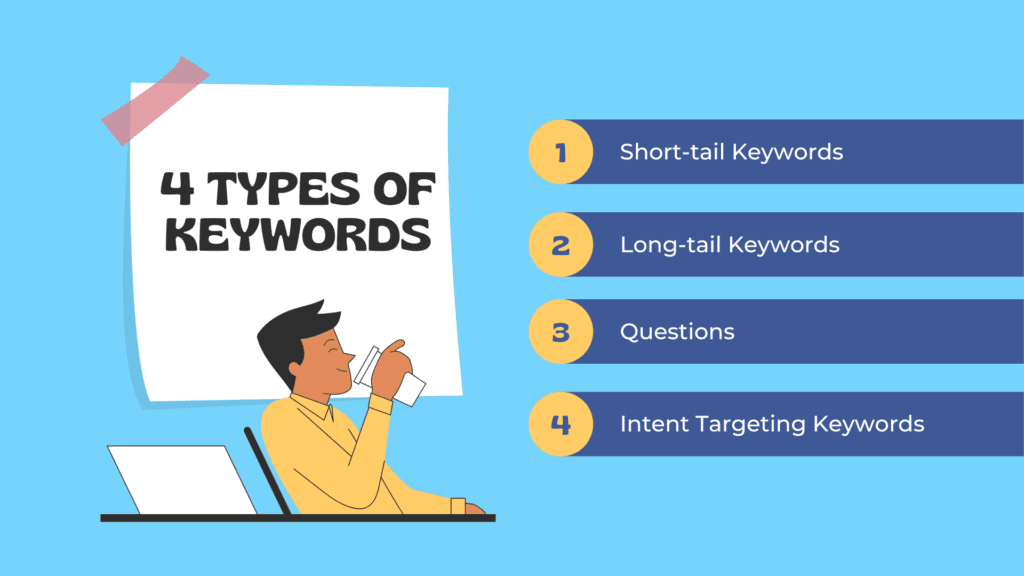
Definition of keyword research
Keyword research is the process of identifying and analyzing search terms that people enter into search engines. The goal is to find relevant and popular keywords that your target audience is searching for. This information is then used to optimize your website’s content, meta tags, and URLs to rank higher on search engine result pages (SERPs) and attract more organic traffic.
Importance of identifying the right keywords
Good keyword research is essential for the success of your SEO strategy. By targeting the right keywords, you can increase your website’s visibility on search engines, attract more targeted traffic, and ultimately increase conversions and sales. Additionally, identifying the right keywords can help you understand your audience’s needs and preferences better, which can inform your content creation and marketing strategies.
Best Tools for Keyword Research
There are several tools available for keyword research, ranging from free options to paid tools. Some popular options include:
Google Keyword Planner: This free tool inside Google Ads shows search volume ranges and lets you research keywords for your website and create keyword-focused content.
Ahrefs: A paid tool that provides comprehensive keyword research, including search volume, difficulty, and keyword suggestions.
SEMrush: A popular SEO tool that offers keyword data, competitor analysis, and backlink analysis.
Moz Keyword Explorer: This tool offers in-depth keyword research and analysis, including search volume, difficulty, and SERP analysis.
Ubersuggest: A free tool that provides keyword suggestions, search volume, and difficulty analysis.
Using a combination of these tools can help you gain a better understanding of your target audience and identify the right keywords to optimize your website’s content. Ultimately, keyword research is an essential aspect of any successful SEO strategy, and investing time and resources in this area can pay off in increased traffic and conversions.
How to Do Keyword Research Step by Step
You do not need expensive software to start. This simple keyword research process works for a blog, an online store or a local business website.
- List your seed topics: write down the main products, services or topics your audience cares about.
- Expand with Google autocomplete: type each topic into Google and note the suggestions, plus the questions in the People also ask box.
- Check search volume: use Google Keyword Planner to see rough monthly searches for India and the level of competition.
- Study the results page: search the phrase yourself. If forums, Quora and small blogs rank, you have a real chance; if only big brands appear, look for a more specific phrase.
- Match the intent: decide whether the searcher wants a guide, a comparison or a product, and plan the right type of page.
- Pick one main keyword per page: support it with a few related phrases, and keep a simple sheet so two pages never target the same term.
Repeat this keyword research every few months, because search habits change. New questions appear, and older phrases may lose interest.
Keyword Research for Indian Audiences
Indian searchers often mix English and Hindi, so include Hinglish phrases such as “reels kaise banaye” or “online paise kaise kamaye” when they fit your audience. Many of these phrases have good volume and far less competition than English terms.
Our guide on WordPress SEO plugins shows how to add your chosen keyword to titles and descriptions once your research is done. Google also explains how search works in its free SEO Starter Guide.
Free Sources for Keyword Research
- Google autocomplete and the People also ask box.
- Google Search Console, which shows queries you already appear for.
- Google Trends, to compare interest over time and by state.
- YouTube search suggestions, useful for video and how to topics.
How to Use Keywords to Boost SEO
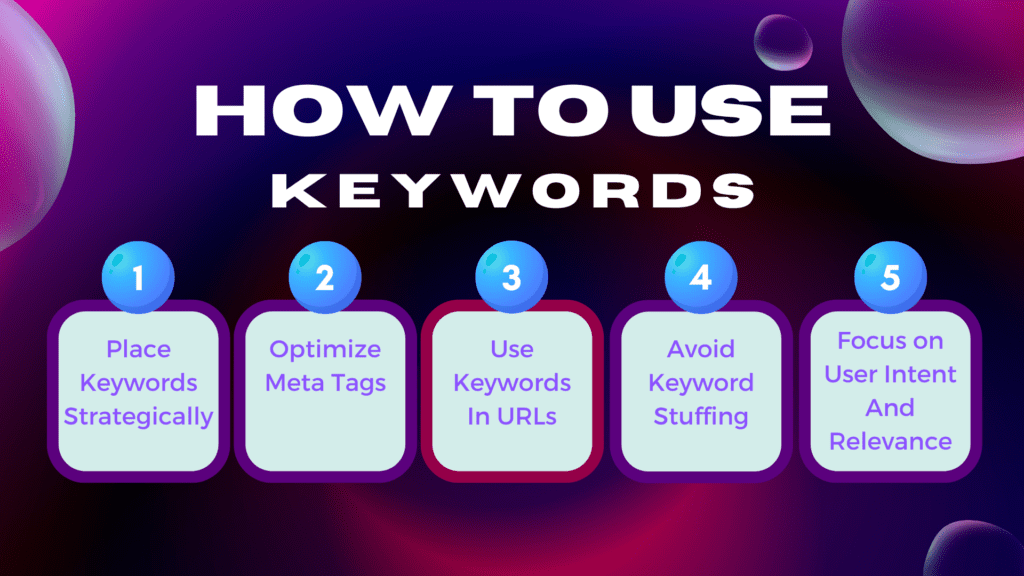
Keyword placement in content
Once your keyword research is done, place keywords strategically within the body of your website’s content. The key is to use keywords naturally and not force them into your content. Keywords should be incorporated in the headline, subheadings, and throughout the body of the text in a way that makes sense and provides value to the reader. This helps search engines understand the topic of your content and improve your website’s ranking in search results.
Optimizing meta tags
Meta tags are pieces of HTML code that provide information about your website to search engines. Optimizing meta tags involves including the phrases from your keyword research in the title tag, description tag, and other relevant tags. This helps search engines understand the content of your website and display relevant information in search results, which can lead to increased clicks and traffic.
Using keywords in URLs
Using keywords in URLs is another way to signal to search engines what your website is about. Including relevant keywords in your URLs can help search engines understand the content of your website and improve your website’s ranking in search results. It’s important to keep your URLs short and descriptive and avoid using unnecessary words or characters.
Avoiding keyword stuffing
Keyword stuffing refers to the practice of overusing keywords in an attempt to manipulate search engine rankings. This can result in penalties from search engines and negatively impact your website’s ranking in search results. Instead, focus on using keywords naturally and providing value to your readers.
Importance of user intent and relevance
While using keywords strategically is essential for SEO, it’s equally important to consider user intent and relevance. Search engines prioritize websites that provide relevant and valuable content to their users.
Therefore, when using keywords, it’s important to think about what your target audience is searching for and how you can provide them with the information they need. By focusing on user intent and relevance, you can create content that not only ranks well in search results but also provides value to your readers.
Best Practices for Keyword Usage
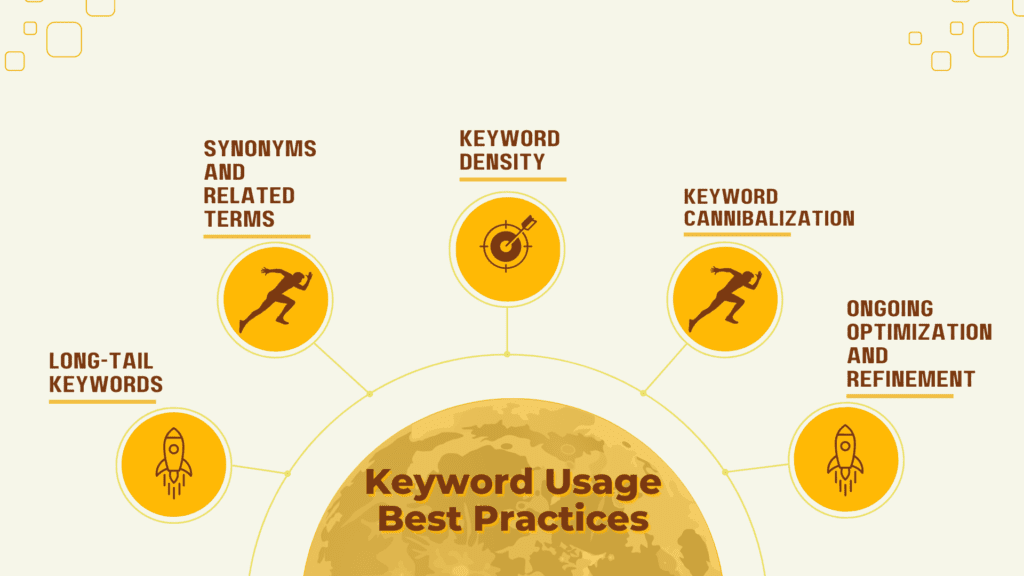
Long-tail keywords
Long-tail keywords are longer, more specific search phrases that are typically less competitive than shorter, more general keywords. Using long-tail keywords in your content can help you target more specific and motivated audiences, which can lead to higher conversion rates. For example, instead of targeting the keyword “shoes,” you might target “women’s red high-heeled shoes” to attract a more specific audience.
Synonyms and related terms
Keyword research also reveals synonyms and related terms, and including them in your content can help you rank for a broader range of keywords and improve the overall relevance of your content. This approach can also help you avoid keyword stuffing and create more natural-sounding content that provides value to your readers.
Keyword density
Keyword density refers to the percentage of times a keyword appears on a web page compared to the total number of words on the page. While there is no specific ideal keyword density, overusing keywords can lead to penalties from search engines and negatively impact your website’s ranking. As a general rule, it’s best to use keywords naturally and avoid overusing them in your content.
Keyword cannibalization
Keyword cannibalization occurs when multiple pages on your website are targeting the same keyword, which can lead to confusion for search engines and negatively impact your website’s ranking. To avoid it, map each phrase from your keyword research to one page only, so every page has a unique focus.
Ongoing optimization and refinement
SEO is an ongoing process that requires ongoing optimization and refinement. This includes monitoring your rankings, repeating your keyword research and making changes to your content and strategy accordingly.
Regularly reviewing and updating your content, analyzing your website’s analytics, and staying up-to-date with industry trends can help you stay ahead of the competition and continue to improve your website’s ranking and visibility.
Conclusion

Recap of the importance of keywords for SEO
Keyword research matters because keywords signal to search engines what your content is about. By using relevant and targeted keywords in your content, meta tags, URLs, and other on-page elements, you can improve your website’s ranking in search results and attract more qualified traffic to your website. However, it’s important to use keywords strategically and avoid overusing them or engaging in manipulative practices that could result in penalties from search engines.
Final thoughts and recommendations
To achieve success with SEO, it’s important to focus on creating high-quality content that provides value to your readers and incorporates relevant and targeted keywords naturally. In addition to using keywords strategically, it’s also important to stay up-to-date with best practices, monitor your website’s performance, and continually refine and optimize your strategy to stay ahead of the competition.
Call to action to implement best practices for keyword usage
If you haven’t already, now is the time to start implementing best practices for keyword usage in your content and SEO strategy. This includes regular keyword research, incorporating keywords naturally in your content and meta tags, using long-tail keywords and related terms, avoiding keyword stuffing and cannibalization, and regularly monitoring and refining your strategy.
By focusing on these best practices and continually optimizing your approach, you can improve your website’s ranking in search results, attract more qualified traffic to your website, and achieve greater success with your online marketing efforts.
Read More: The Evolution Of SEO: What You Need To Know
FAQs Related To The Power Of Keywords
What are keywords and how do they impact SEO?
Keywords are phrases or words that users type into search engines to find relevant information. They impact SEO because search engines use them to determine the relevance and quality of a webpage.
How do I conduct keyword research for my website?
To conduct keyword research, start by brainstorming a list of relevant topics and phrases related to your business or industry. You can also use tools such as Google Keyword Planner or SEMrush to discover new keywords and evaluate their popularity and competitiveness.
Can I use the same keywords for all pages on my website?
No, it’s important to use unique and relevant keywords for each page on your website to improve their visibility in search results and avoid keyword cannibalization.
What is the optimal keyword density for my content?
There is no specific keyword density that guarantees SEO success, but experts recommend using keywords naturally and strategically throughout your content without overusing them or compromising the quality of your content.
How do I avoid keyword stuffing in my content?
To avoid keyword stuffing, use keywords naturally and strategically throughout your content, and avoid repeating them excessively or using them in irrelevant contexts.
What are long-tail keywords and how can I use them to improve my SEO?
Long-tail keywords are longer and more specific phrases that target a specific audience and have lower competition. Using them in your content and SEO strategy can help you attract more qualified traffic and improve your rankings in search results.
Should I use synonyms and related terms in my content to improve my SEO?
Yes, using synonyms and related terms in your content can improve your website’s relevance and visibility in search results, and help you avoid overusing the same keywords.
What role do meta tags and URLs play in keyword optimization?
Meta tags and URLs provide important signals to search engines about the content and relevance of your webpage. Including relevant and targeted keywords in your meta tags and URLs can help improve your SEO and attract more qualified traffic.
How often should I update my keyword strategy to stay competitive?
Keyword trends and search algorithms change frequently, so it’s recommended to regularly monitor and update your keyword strategy to stay competitive and maintain your website’s visibility in search results.
Can I use paid keyword research tools to improve my SEO efforts?
Yes, paid keyword research tools can help you discover new keywords, evaluate their competitiveness, and refine your SEO strategy to achieve better results. However, it’s important to use them in combination with other SEO best practices and avoid relying on them exclusively.
Read More: Do You Understand The Power Of Keywords